

Natural Gas Prices Ticked Up on Shipping Risks
Monday, July 13, 2026
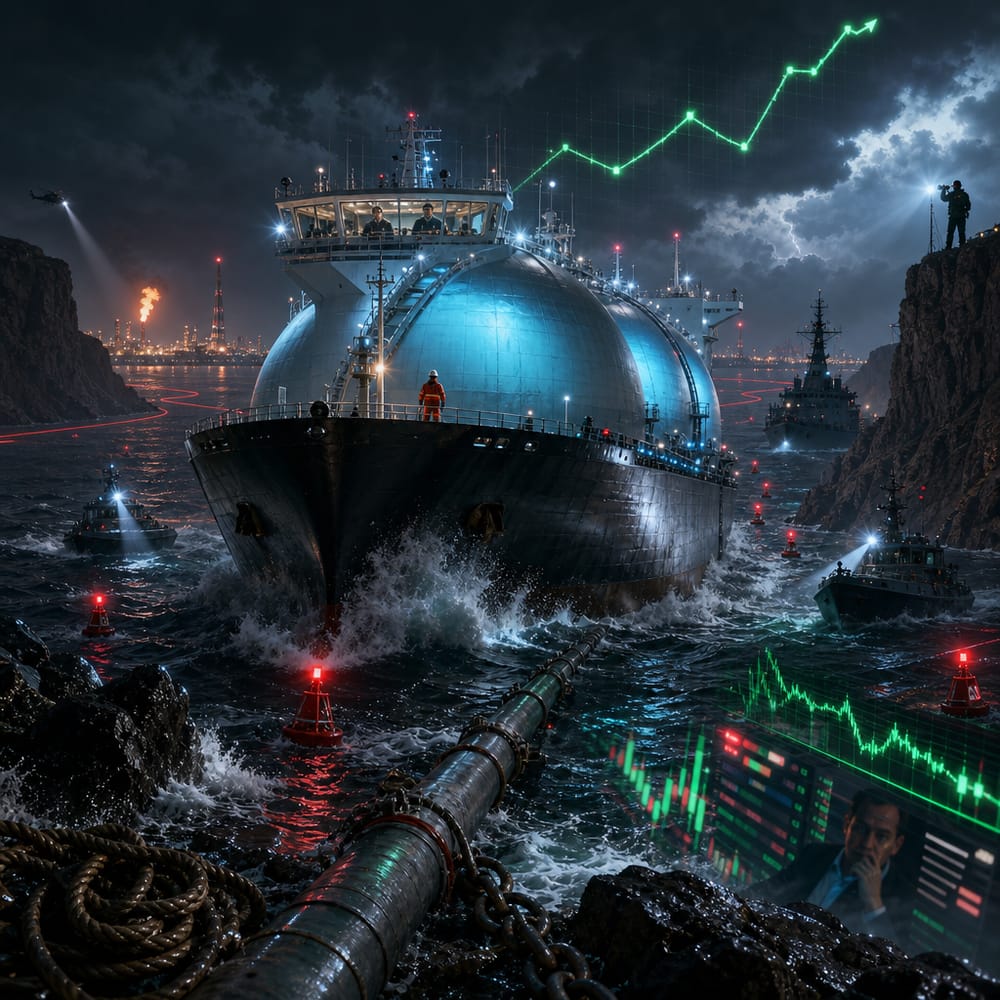
TENSIONS IN STRAIT OF HORMUZ SEND NATURAL GAS PRICES ON A WILD RIDE
If the Middle East were a game of chess, the Strait of Hormuz would be the queen. It's strategic, powerful, and, when things get heated, it can control the board. Right now, it's got the energy markets in a spin, with natural gas prices doing their best impression of a rollercoaster. Buckle up, folks, because things are getting bumpy.
This week, as if escalating geopolitical tensions were insufficiently dramatic, Iran and the U.S. decided to exchange a few more strikes. What’s at stake? Only the smooth flow of about a fifth of the world's liquefied natural gas (LNG) and a third of its oil. No biggie.
Here's the skinny: the Strait of Hormuz is that pesky chokepoint through which a hefty chunk of the world's energy supplies merrily sail. When Iran threatens to shut it down, the global market doesn’t just get nervous—it panics. And when the market panics, prices go up.
So, while oil has been hogging the limelight—after all, it's the diva of energy commodities—natural gas is quietly slipping on its running shoes, ready to outpace its slick cousin. Why? Because when the shipping lanes look wobbly, everyone starts worrying about how they're going to keep the lights on and the heaters running.
But could natural gas really outperform oil under these tense circumstances? Let’s pull back the curtain on this possibility. Unlike oil, natural gas isn’t just a one-trick pony for transport and energy. It’s crucial for heating, electricity generation, and as a raw material in industries. Add in the winter heating season on the horizon, and you have a recipe for demand that’s about to sizzle.
Now, let's talk infrastructure, or rather, the lack thereof. Despite the grand symphony of renewables, we’re still reliant on good old-fashioned fossil fuels for a lot of our needs. And that means pipelines, storage facilities, and shipping routes are the unsung heroes—or villains—of this act. Chokepoints like the Strait of Hormuz highlight our infrastructure’s Achilles’ heel. If it’s blocked, natural gas prices won’t just tick up; they’ll skyrocket faster than a SpaceX launch.
Europe, for example, is already eyeing its wafer-thin jet fuel stocks nervously as tensions rise. With less than a month's supply of fuel, a disruption doesn’t just mean higher prices; it can mean shortages. And in the dead of winter, that’s not just a nuisance—it’s dangerous.
As retail investors, what does this mean for you? This geopolitical flair could be your cue to eye the natural gas sector more closely. Producers and midstream companies that deal with storage and transportation might just be the underdogs poised to make a splash. When supply gets shaky, those who control the flow and hold the reserves often come out on top.
But let's not get ahead of ourselves. With great profits come great risks. Investing in energy stocks, especially during geopolitical tension, can be as volatile as a teenager’s mood swings. Today's surge could be tomorrow's dip—thanks to a sudden ceasefire or agreement. It's the wild west out there, and the only sure thing is uncertainty.
So, while natural gas gears up to potentially steal oil’s thunder, keep your eyes peeled and your ear to the ground. This isn't just about heating homes or keeping the lights on. It's about understanding the currents of global politics and energy demands, and maybe scoring a win on the stock market while you’re at it.
The Strait of Hormuz might be thousands of miles away, but its impact hits close to home. As the drama unfolds and prices fluctuate, remember: in the game of energy, nothing is ever truly set in stone. Or, in this case, gas.
This article is for informational purposes only and is not investment advice. Always do your own research or consult a licensed financial professional before making investment decisions.
© Copyright 2024. All Rights Reserved.
© Copyright 2024. All Rights Reserved.