

NATO's Diplomatic Challenges
Friday, July 10, 2026
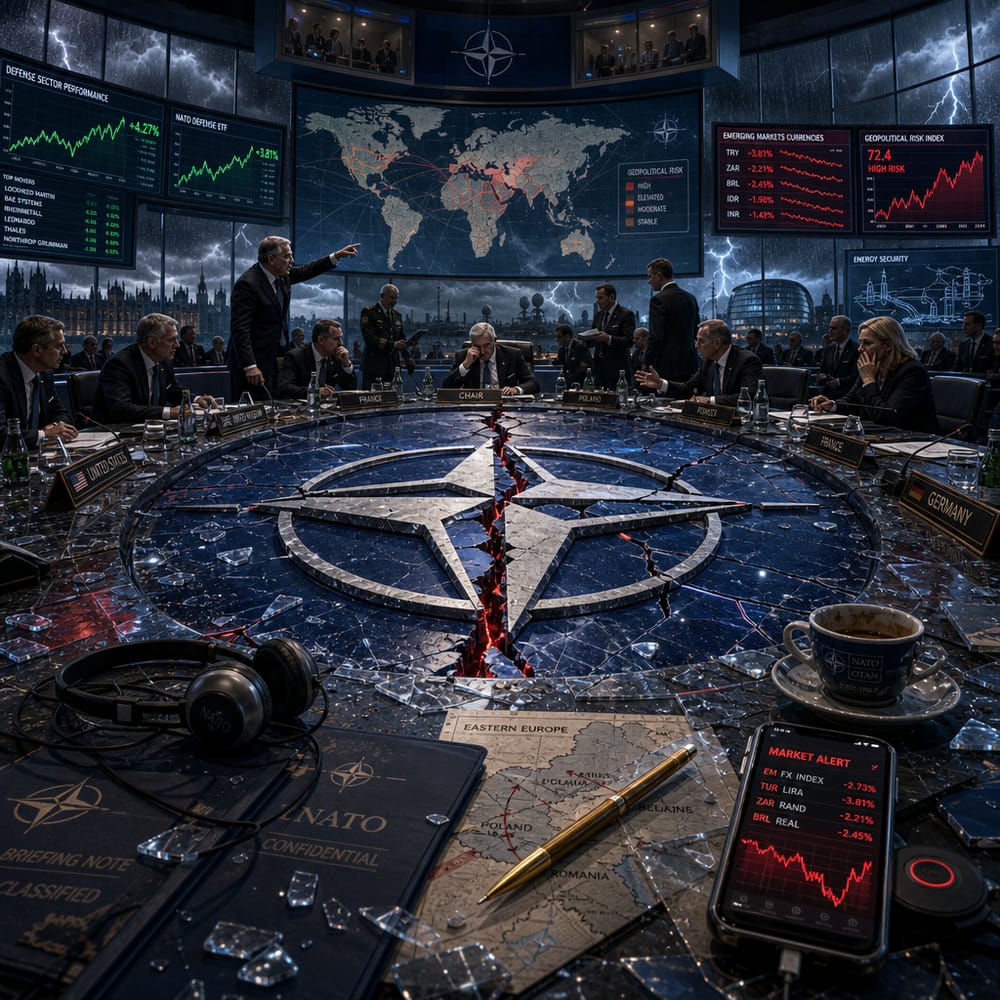
WHEN THE DIPLOMATIC DINNER PARTY GOES SIDEWAYS: UNDERSTANDING NATO'S NEWEST HICCUP
It’s all fun and games until someone mentions Article 5. If you've ever watched a diplomatic snafu unfold in real time, you know it resembles a dinner party where everyone simultaneously spills their wine and blames the host. Welcome to NATO's latest gathering — a masterclass in alliance anxiety that's left markets and investors scratching their heads.
THE DIPLOMATIC DANCE GONE AWRY
Picture this: 30 countries squidged into a conference hall in Ankara, Turkey. There’s tension in the air thicker than a trader's coffee, with everyone side-eyeing each other like middle schoolers at a dance. And just when you think it’s all about synchronized speeches and handshakes, President Trump wades in with the diplomatic equivalent of a cannonball into a kiddie pool, declaring the Iran ceasefire kaput. Cue global whiplash.
But this isn’t just about one man's unpredictable diplomacy. Something more seismic is unfolding within the NATO ranks, as old and new tectonic plates of global power slowly grind against each other. The result? A ripple effect that could send shockwaves through security policies and the markets alike.
UNCHARTED TERRITORY FOR GLOBAL STABILITY
Diplomatic tensions within NATO could be the geopolitical equivalent of playing Jenga on a vibrating table. It's not just about whether the alliance stays intact; it's about the potential for a cascading effect that could impact everything from defense budgets to global security strategies.
Consider the implications for defense stocks. As nations brace for blockades and burgeoning tensions, defense contractors like Lockheed Martin and Raytheon might find themselves in the limelight. Increased demand for military hardware could lead to a spike in these stocks, benefiting those keen on riding the "military industrial complex" train. Just remember, it’s a long ride, and the bumps might be bigger than expected.
THE MARKET'S JITTERY NATURE
In times of geopolitical uncertainty, investors often seek refuge in assets that promise stability — think U.S. Treasuries over more volatile emerging market securities. But this week’s NATO drama could be shaking that strategy. Emerging markets, with their growth potential, might look less appetizing when conflict looms over key maritime routes like the Strait of Hormuz.
Yet, there's an upside. For those with a taste for risk, geopolitical ETFs — funds that invest based on geopolitical trends — could present a unique opportunity. They balance the tectonic shifts in political landscapes with the potential for economic growth, albeit with a healthy side of unpredictability.
BROADER GEOPOLITICAL INSTABILITY?
Let's not forget the bigger picture. NATO's turmoil isn’t just about alliances of the past; it’s also about the emerging alliances of the future. With countries like India expanding their defense exports in the Indo-Pacific, and Ukraine pulling off Hollywood-grade heists on Russian fuel supplies, the global chessboard is more dynamic than ever.
If this diplomatic melee continues, expect the specter of broader geopolitical instability to haunt investor forums and economic forecasts. The potential for conflict could deter investment in regions already seen as high-risk, even as it offers contrarian investors a chance to capitalize on volatility.
KEEPING YOUR EYE ON THE BALL
So what’s the retail investor to do? For starters, stay informed but don’t let every headline dictate strategy. Keep an eye on defense stocks for their potential uptick, explore how geopolitical ETFs might fit into your portfolio, and remember the old investing adage: the higher the risk, the higher the potential reward.
Ultimately, understanding NATO's diplomatic challenges is like reading the room at that out-of-control dinner party. It’s about knowing when to step in, when to step back, and how to turn the inevitable chaos into an opportunity — or at least, a good story to tell at the next investor meet-up.
This article is for informational purposes only and is not investment advice. Always do your own research or consult a licensed financial professional before making investment decisions.
© Copyright 2024. All Rights Reserved.
© Copyright 2024. All Rights Reserved.