

Nasdaq Underperforms Dow Amid Falling Treasury Yields
Saturday, August 15, 2026
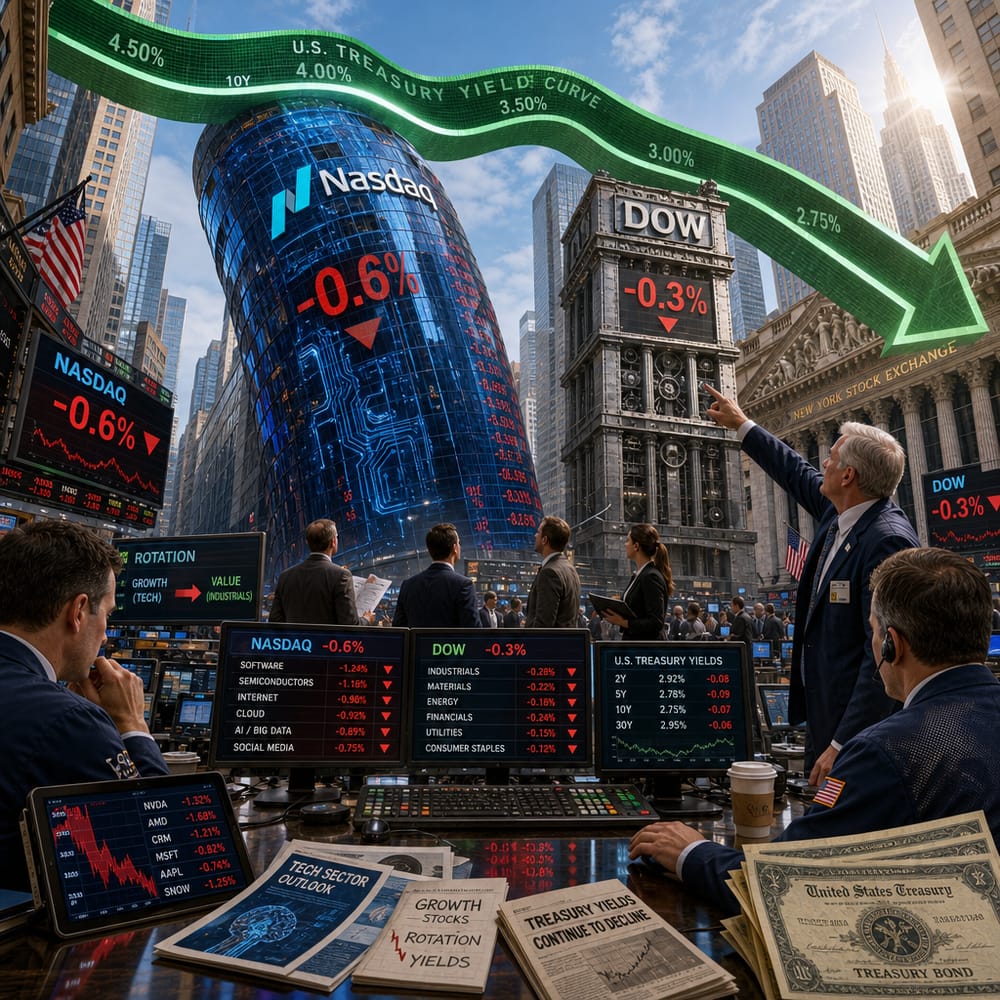
NASDAQ UNDERPERFORMS DOW AMID FALLING TREASURY YIELDS
If Wall Street were a high school, the Dow would be the reliable honor student, while the Nasdaq would be the rebellious kid who makes you question your life choices. But on August 11, it was the Dow getting that gold star, while the Nasdaq found itself in detention. What gives?
Let’s break it down. On a day when the Dow slipped just 0.3%, the Nasdaq took a steeper 0.6% tumble. And while nobody’s throwing a parade for a 0.3% decline, it's almost like the Dow said, “You think that's bad? Hold my root beer," and decided to outperform the Nasdaq. The culprit behind this market musical chairs? Falling Treasury yields.
Now, I get it—Treasury yields might sound like the kind of thing that puts you to sleep faster than an economics lecture, but stay with me. When Treasury yields drop, it's like flashing a giant neon sign that says, “Hey! Maybe it’s time to rethink those tech and growth stocks you’ve been so in love with.” The reason? Lower yields often signal less enthusiasm for economic growth, which can make those high-flying tech stocks lose some of their sparkle.
So why the sudden cold shoulder towards growth stocks? Picture growth stocks as the hare in the classic tale of the tortoise and the hare—fast-moving, exciting, but prone to taking a nap at inconvenient times. Investors flock to these stocks when they're optimistic about the economy's prospects. But throw in a curveball like falling Treasury yields, and they might start eyeing that steady tortoise, a.k.a., defensive sectors, for a safer bet.
Defensive sectors—think utilities, healthcare, and consumer staples—are like your reliable old buddy who brings a calculator to a party. They're not flashy, but they’re rock-solid in uncertain times. When the economic waters look choppy, investors often rotate into these sectors, seeking stability over potential high returns.
But wait, there's more! Treasury yields wield their magical influence over equity markets like a wizard with a wand. When yields fall, borrowing costs typically decrease. That's usually a great thing for companies—they can expand or invest more cheaply. However, it can also mean investors expect slower economic growth, which is not the sort of news that gets growth stock investors dancing in the streets.
And let's not forget inflation's role in this drama. Lower yields can coincide with lower inflation expectations. If inflation's taking a nap, it might mean our economy isn't running as hot as expected. Once again, those high-growth tech stocks—who thrive on the promise of future profits—get a little less appealing.
So, what sectors are reaping the benefits of this love story with defensive plays? Think of the healthcare sector as that sturdy umbrella you finally appreciate when the economic storm hits. Utilities and consumer staples offer similar comforts; they're the essentials, the non-negotiables of investment portfolios when the market starts to hiccup.
What does all this mean for you, the humble retail investor? Well, consider it a reminder to check your portfolio's pulse. If you're heavy on growth stocks, maybe it's time to sprinkle in a little diversification pixie dust. Defensive sectors might not make you rich overnight, but in uncertain times, they can be your financial seatbelt.
The stock market's a complex beast, and no one has a crystal ball. But understanding these economic indicators—and how they can influence market behavior—equips you to make decisions with a little more swagger. So, while the Nasdaq might have hit a rough patch, savvy investors know that's all just part of the adventure.
Whether you're the type to bet on that speedy hare or you prefer the steady tortoise, remember: in the markets, there’s always another race to run. Keep your eyes peeled, your portfolio diversified, and your sense of humor intact.
This article is for informational purposes only and is not investment advice. Always do your own research or consult a licensed financial professional before making investment decisions.
© Copyright 2024. All Rights Reserved.
© Copyright 2024. All Rights Reserved.