

Nasdaq Resilience Amid Rising Treasury Yields
Thursday, September 24, 2026
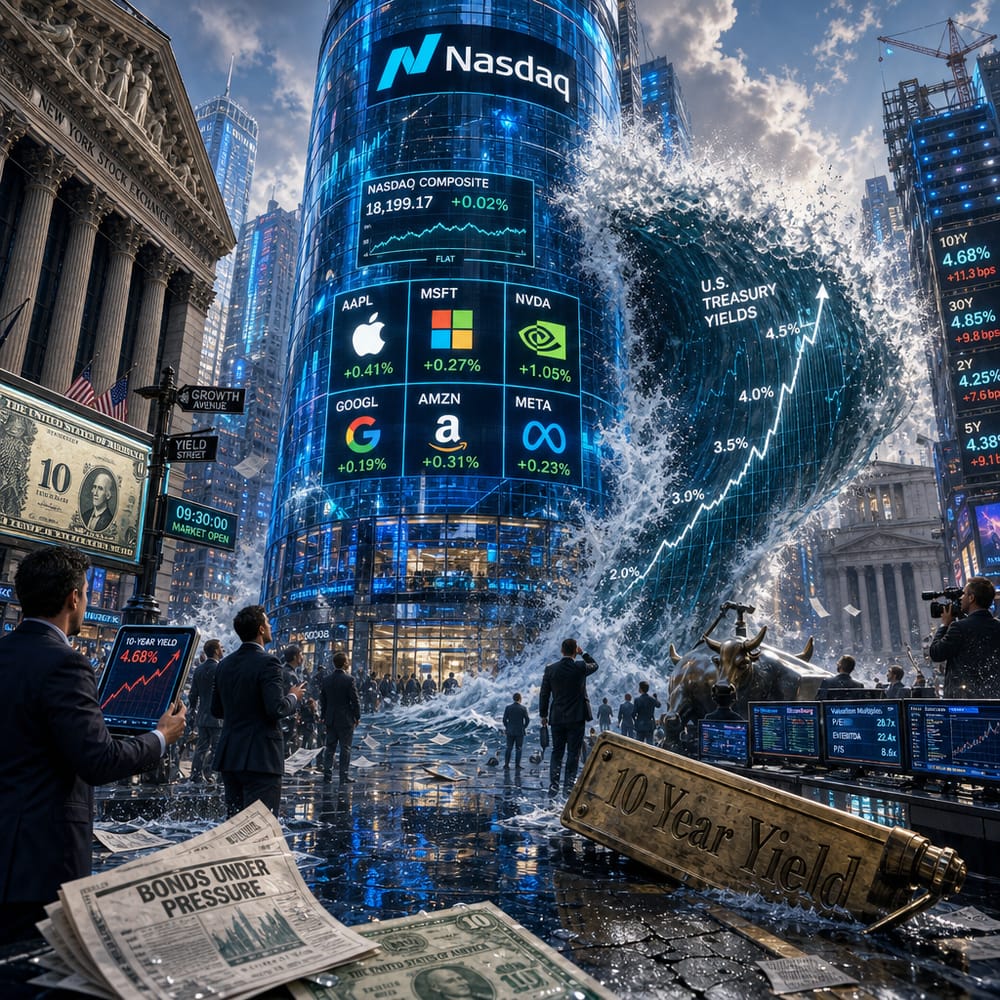
The Nasdaq’s been playing a high-stakes game of “keep calm and carry on” lately, and it’s winning — or at least holding its ground. While Treasury yields soar to heights not seen since the early 2000s, the tech-heavy Nasdaq Composite is showing a lack of concern that’s starting to feel like a superhero's cool nonchalance in the face of danger. But why, exactly, is it keeping its cool when the bond market is anything but? And what does this mean for tech’s glittering valuations?
Let's dive into the paradox of the Nasdaq's curious resilience amid rising Treasury yields. You're probably wondering, how is it possible that an index so sensitive to interest rate changes is the one yawning at recent macroeconomic tremors?
RISING YIELDS? NO BIG DEAL
First things first. When Treasury yields rise, it's often like watching someone yell “fire” in a crowded theater for growth stocks. Long-term bonds, like the 30-year Treasury note, are now yielding at levels last seen in 2004. For tech stocks, this scenario usually means a future where profits are worth less in today’s dollars. Yet, the Nasdaq is hardly flinching.
So what’s the secret sauce? Some analysts suggest it’s all about tech's enduring allure — a tenacious belief that the sector will continue to drive innovation and long-term growth. Investors might just be so smitten by Silicon Valley's promises of tomorrow that they’re willing to weather today’s financial storms.
BALANCING OPTIMISM AND CAUTION
Now, let’s not pretend investors are blind to the risks. They’re well aware that higher yields could make the tech sector seem pricey. Yet, it seems they believe that the tangible innovation from mega-cap tech stocks like Apple, Microsoft, and Alphabet can buffer them against rate hikes. These companies aren’t just throwing spaghetti at the wall to see what sticks; they are churning out products and services that consumers want and need.
Moreover, market optimism is buoyed by the potential thawing of geopolitical tensions, such as the U.S. and Iran’s ongoing negotiations that could lead to the reopening of the Strait of Hormuz. This could ease some pressure on oil prices, offering a sigh of relief for an already teetering global economy.
ANALYST OUTLOOK: A CAUTIOUS TAP DANCE
Analysts have entered the chat, and their perspectives are as mixed as a rocket-fueled smoothie. Some analysts remain skeptical and urge caution, warning of the potential bubble territory for tech stocks. They argue that if inflation doesn’t cool and the Fed decides to hike rates again, it could bring a rain of bricks instead of the expected tech parade.
Others are more optimistic, pointing out that tech giants are wielding hefty cash reserves, allowing them to navigate slower economic environments better than most. These companies have diversified revenue streams and global footprints, which might explain why some investors are not rushing for the exits just yet.
With the Nasdaq maintaining its composure, there’s a silent arm-wrestling match unfolding between investor sentiment and economic reality. Will tech continue to defy gravity, or will rising rates eventually pull it back down to earth?
THE TICKING CLOCK
Investors are left asking: is the market’s confidence in tech’s future misplaced or prescient? The uncomfortable truth is, only time will tell.
While some investors are ready to bet on tech’s resilience, others are hedging their bets, possibly eyeing the bond market for safer returns should the tech facade falter. The one certainty in this financial soap opera is that investors should buckle up for a potential plot twist.
As the Nasdaq keeps its poker face against a backdrop of unsettling economic signals, retail investors might do well to keep diversifying their portfolios. You never know when the market’s favorite will get a wake-up call.
As for now, we're left watching this financial cliffhanger unfold, popcorn in hand, wondering when — or if—the other shoe might drop.
This article is for informational purposes only and is not investment advice. Always do your own research or consult a licensed financial professional before making investment decisions.
© Copyright 2024. All Rights Reserved.
© Copyright 2024. All Rights Reserved.