

Nasdaq Hits Record Highs Amid Weak Jobs Data
Saturday, October 03, 2026
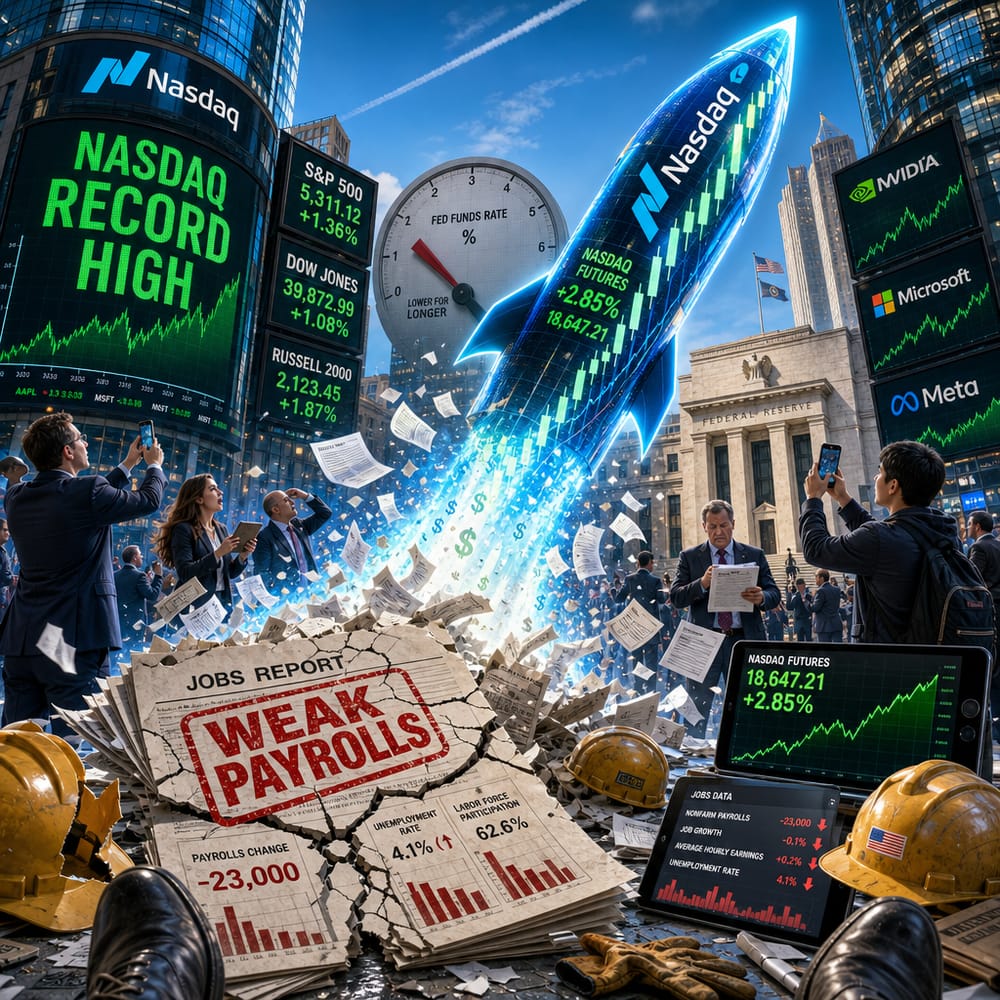
NASDAQ HITS RECORD HIGHS AMID WEAK JOBS DATA
If you thought Wall Street only cared about cold, hard numbers, think again. Sometimes, it dances to a different tune—like a bad jobs report. Just this week, the Nasdaq Composite decided it was feeling extra sprightly and leaped to record highs. This happened right after the announcement that the U.S. economy added a mere 29,000 jobs, leaving the Fed's hawks clipping their wings. It's a paradox: weak jobs data sends the tech-heavy Nasdaq soaring. What's going on here?
Let's set the stage. The latest employment report painted a picture akin to a Monet—beautiful from afar, messy up close. The U.S. economy expected more than 29,000 new jobs; instead, it got an unwelcome surprise, with unemployment nudging up to 4.2%. Cue the collective sigh of relief from investors who’d been holding their breath in anticipation of another rate hike from the Federal Reserve. Why? Because when the job market shows signs of being a little under the weather, the likelihood of the Fed putting the brakes on rate hikes increases. And for tech stocks on the Nasdaq, that's music to their ears.
TECH STOCKS IN THE SPOTLIGHT
See, tech stocks are like your favorite houseplant that thrives under specific conditions—low interest rates being their equivalent of sunshine and water. When rates are low, companies can borrow money cheaply to fuel growth and innovation. It's no wonder that tech giants like Apple, Microsoft, and their entourage danced all the way to the bank with this news.
And it's not just the big names benefiting. The ripple effect of reduced rate hike expectations spills over to the entire tech sector. Smaller firms, like those in the Russell 2000, which often struggle with higher borrowing costs, also get a much-needed break. When investors sniff a potential halt in rate hikes, they flock to tech stocks like moths to a flame, boosting the Nasdaq higher.
THE INVESTOR MOOD SWING
So, what's next? How does this unexpected uptick in the Nasdaq influence investor sentiment moving forward? Well, the answer is a bit like predicting the weather—everyone's got their theory, but no one really knows for sure. However, the current mood suggests investors are cautiously optimistic. The expectation of a stable interest rate environment has many thinking, "Maybe it's time to throw some more chips on the tech table."
But let's not get too carried away. The lower job numbers aren't exactly sunshine and rainbows. They might be buying the market some temporary relief from rate hikes, but they also hint at underlying economic issues that could rear their ugly heads down the line. It's a fine line to walk, balancing the promise of cheaper borrowing against the fear of a slowing economy.
WHAT TO WATCH
For the everyday retail investor, the question is whether to ride the Nasdaq wave or take a more conservative approach. If you're feeling adventurous, this might be an opportune moment to peek under the hood of tech ETFs or individual stocks that could benefit from a low-rate environment. Keep an eye on sectors leveraging artificial intelligence and cloud computing—areas buzzing with potential even as the rest of the economy holds its breath.
Meanwhile, watch the Fed like a hawk. Any hints of future policy shifts could send shockwaves through the market faster than you can say "quantitative easing." If you're in for the long haul, diversify your portfolio to cushion against any unexpected economic downturns. Sure, tech stocks are riding high now, but remember: what goes up, must come down.
THE BOTTOM LINE
The Nasdaq's record highs in the face of weak jobs data remind us that the market is as much about perception as it is about reality. While the current situation offers a breather for growth stocks, it's crucial to stay grounded and watch economic indicators like employment figures and Federal Reserve announcements closely. As always, investing isn't about chasing the latest trend, but about understanding the broader economic symphony and making calculated, informed decisions. So buckle up and enjoy the ride—just keep one hand on the brake.
This article is for informational purposes only and is not investment advice. Always do your own research or consult a licensed financial professional before making investment decisions.
© Copyright 2024. All Rights Reserved.
© Copyright 2024. All Rights Reserved.