

Nasdaq Correction Deepens Amid Tech Sell-Off
Tuesday, November 17, 2026
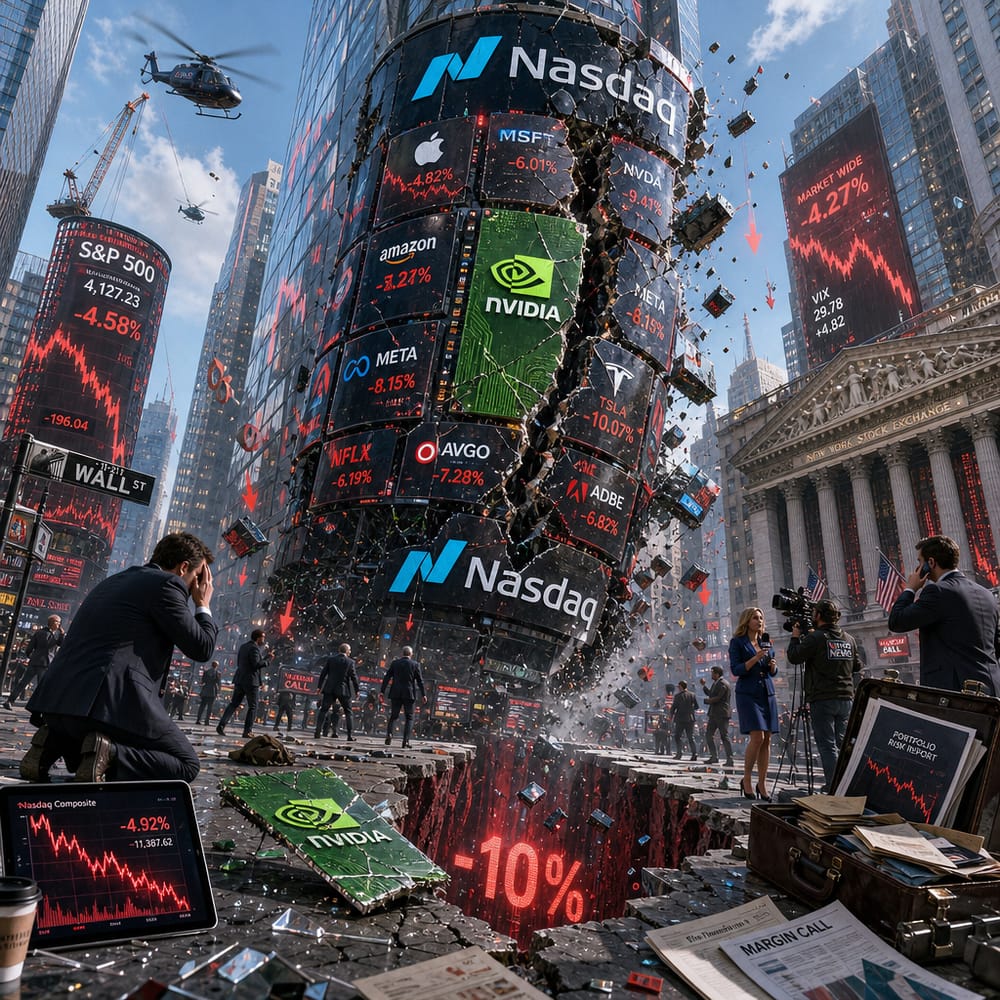
NASDAQ HITS THE PANIC BUTTON: TECH STOCKS TAKE A DIVE
If you thought the stock market was just a place for Wall Street bigwigs in tailored suits, this week's tech sell-off might make you think twice. The Nasdaq Composite has slipped into "correction territory," a fancy way of saying it’s down more than 10% from its recent highs. And trust me, when Nasdaq sneezes, other markets often catch a cold. We’re talking about the S&P 500 and Dow Jones Industrial Average feeling the blues too, as they take unexpected dives. So, what’s lighting up investors’ dashboards with red alerts? Let's break it down.
THE DRIVERS OF THE TECH SELL-OFF
First up, let’s talk about the tech giants that have been looking more like feeble shadows of their former selves. Nvidia, a darling of the AI boom, has been at the heart of the current chaos. With its CEO stepping down under a cloud of scandal (allegedly mixed up with espionage and affairs), Nvidia's stock has been in freefall. The chipmaker's troubles are sending seismic waves through the tech sector, especially for “neocloud” stocks, which rely heavily on Nvidia’s tech. Think of them as the backbone of the AI revolution that's suddenly feeling a little spinal weakness.
Investor Steve Eisman, of "Big Short" fame, didn't sugarcoat it when he said the AI neocloud stocks are in "big trouble." With Nvidia stumbling, these stocks are looking at some dark clouds on the horizon. CoreWeave and Nebius, for example, have seen their valuations cut in half over the past three months. Ouch.
THE RIPPLE EFFECT ON OTHER SECTORS
Now, let’s zoom out a bit. The stock market isn't just about tech, although tech stocks often play the noisy neighbor. With the Nasdaq correction, other sectors are bracing for impact as well. When tech stocks falter, it can drag down market sentiment across the board since tech companies are intertwined with everything from consumer goods to industrials. Just look at how Disney’s shares have taken a hit despite beating earnings expectations. They're feeling the pressure of a market that's jittery about tech's shaky ground.
Meanwhile, investors are eyeing the St. Louis Fed's suggestions of potential rate hikes with suspicion. Nothing gets markets more anxious than the specter of higher interest rates. The prospect of four more hikes in the coming months to tame inflation is enough to make anyone clutch their stock portfolios tightly.
SIGNALS FROM THE VOLATILITY VIXEN
So, what's the market thermometer saying about all this? Enter the VIX, widely known as the "fear gauge." When the VIX climbs, it’s a signal that investors are expecting rough seas ahead. Right now, the VIX is giving a little shimmy upwards, suggesting we might be in for some turbulent times. But don’t start hoarding canned goods just yet—the VIX isn’t screaming panic, more like a gentle warning to fasten your seatbelts.
LET'S STEP BACK
For those of us who aren’t Wall Street insiders but still have skin in the game, what does all this mean? Well, the Nasdaq's correction is a reminder that markets aren't always a one-way street to profits. Tech stocks have been driving a considerable chunk of recent market gains. If they continue to stall, it could weigh on your investment plans, especially if you’re heavily invested in tech-heavy ETFs or funds.
But remember, corrections are part and parcel of investing. They can even be healthy, shaking out excess speculation and paving the way for more sustainable growth. It’s like a market detox, unpleasant in the short term but potentially beneficial over the long haul.
So, while the current downturn might feel like a slap across the face with a cold, wet fish, keep calm. Keep your eyes on the broader market signs and your investment strategy steady. And who knows? This could be a golden opportunity to pick up some blue-chip stocks at a discount.
As always, the key is staying informed and being ready to adapt in a market that's anything but static. Because if investing were predictable, it wouldn't be nearly as thrilling—or profitable.
This article is for informational purposes only and is not investment advice. Always do your own research or consult a licensed financial professional before making investment decisions.
© Copyright 2024. All Rights Reserved.
© Copyright 2024. All Rights Reserved.