

Nasdaq Correction and Modest Rebound: What's Next for U.S. Indices?
Monday, November 09, 2026
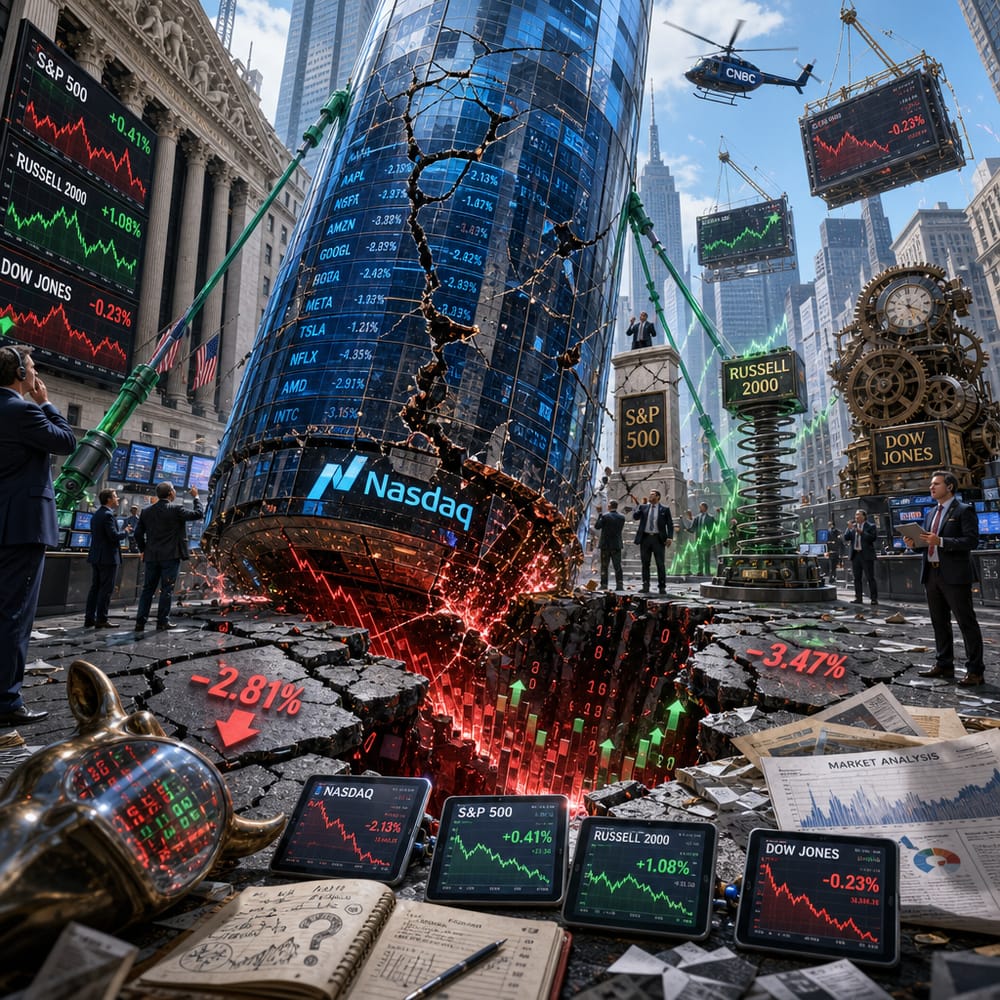
THE NASDAQ YO-YO: WHAT'S BEHIND THE RECENT MARKET MOVES?
If the stock market was a rollercoaster, last week was the kind of ride that leaves your stomach somewhere up around your ears. The Nasdaq Composite took a nosedive mid-week, plunging into correction territory with a 3.4% drop. But just as we were fastening our seatbelts for further dives, Friday saw it claw back 1.1%, dragging the S&P 500 and Russell 2000 along for the ride, while the Dow Jones limped awkwardly behind.
So, what in the world happened? Why did this tech-heavy index take such a tumble, and what made it bounce back? Let's dig into the market machinations.
THE MID-WEEK PLUNGE
First, let's talk about the correction — a fancy term meaning a drop of 10% or more from a recent peak. The Nasdaq's latest flirtation with a correction was driven by growing jitters around artificial intelligence (AI). Yes, that's right — the very tech wunderkind that was supposed to float all boats has started causing some seasickness.
Why the panic? Well, midweek was, shall we say, not the best time to be an AI stock enthusiast. Concerns were swirling around the pace of AI development being reined in by policy changes, public sentiment, and a Democrat sweep in the midterm elections. Investors, it turns out, aren't too keen on the idea of data centers being met with more red tape.
Adding fuel to the fire was Nvidia's little PR fiasco. The company — a major player in the AI gold rush — had to launch an internal investigation into its CEO over foreign intelligence concerns. News like that tends to make even the most loyal shareholders a tad nervous.
FRIDAY'S REBOUND
Fast forward to Friday, and investors must've found their equilibrium or maybe just some Prozac in their portfolios. The Nasdaq's 1.1% gain wasn't exactly a full recovery, but it was a sign that the market's panic attack was easing.
What sparked this turnaround? Partly, it was a bit of good old-fashioned election clarity. The midterms wrapped up with results that gave investors a clearer picture of the political landscape, allowing them to breathe a little easier. A stable political environment, it seems, is as comforting as a plush chair in a dentist’s waiting room.
Moreover, market watchers were eyeing upcoming earnings from major AI players and inflation data from China. Encouragingly, the anticipation of these reports hinted at possible silver linings, giving investors a reason to stay optimistic.
AI SENTIMENT: TRENDSETTER OR TROUBLEMAKER?
AI's influence on the Nasdaq's trajectory can't be overstated. It's been the darling of the market, attracting massive investments and driving up valuations. But this week's market moves serve as a stark reminder: heavy reliance on any one sector or technology can turn from trendsetting to troublemaking faster than you can say "regulatory hurdles."
Investors are learning — or perhaps relearning — the age-old investment lesson: diversification is key. A $2.5 trillion market wipeout underscores the risk of putting all your eggs in the AI basket. The market's rollercoaster might have a few more dips if AI continues to spook investors.
THE ROAD AHEAD
What does Friday's rebound mean for the future? It's a glimmer of hope but far from a guarantee of smooth sailing. The market is still digesting the midterm results, potential policy shifts, and upcoming economic data. If these factors play nicely, we might see a more sustained rally. If not, well, keep your Dramamine handy.
For investors, the message is clear: stay alert, keep diversified, and consider the broader picture. Remember, markets love to swing like Tarzan, but they often find their way back to solid ground eventually.
In the end, investing is a marathon, not a sprint. The Nasdaq's recent yo-yo act might be frustrating, but it's just one chapter in the never-ending saga of market gyrations. So, buckle up, keep your eyes on the horizon, and maybe lay off the AI Kool-Aid — at least until the next earnings report.
This article is for informational purposes only and is not investment advice. Always do your own research or consult a licensed financial professional before making investment decisions.
© Copyright 2024. All Rights Reserved.
© Copyright 2024. All Rights Reserved.