

Muted Markets Amid Lingering Inflation Concerns
Thursday, August 27, 2026
INFLATION: THE PARTY POOPER FOR STOCK MARKETS
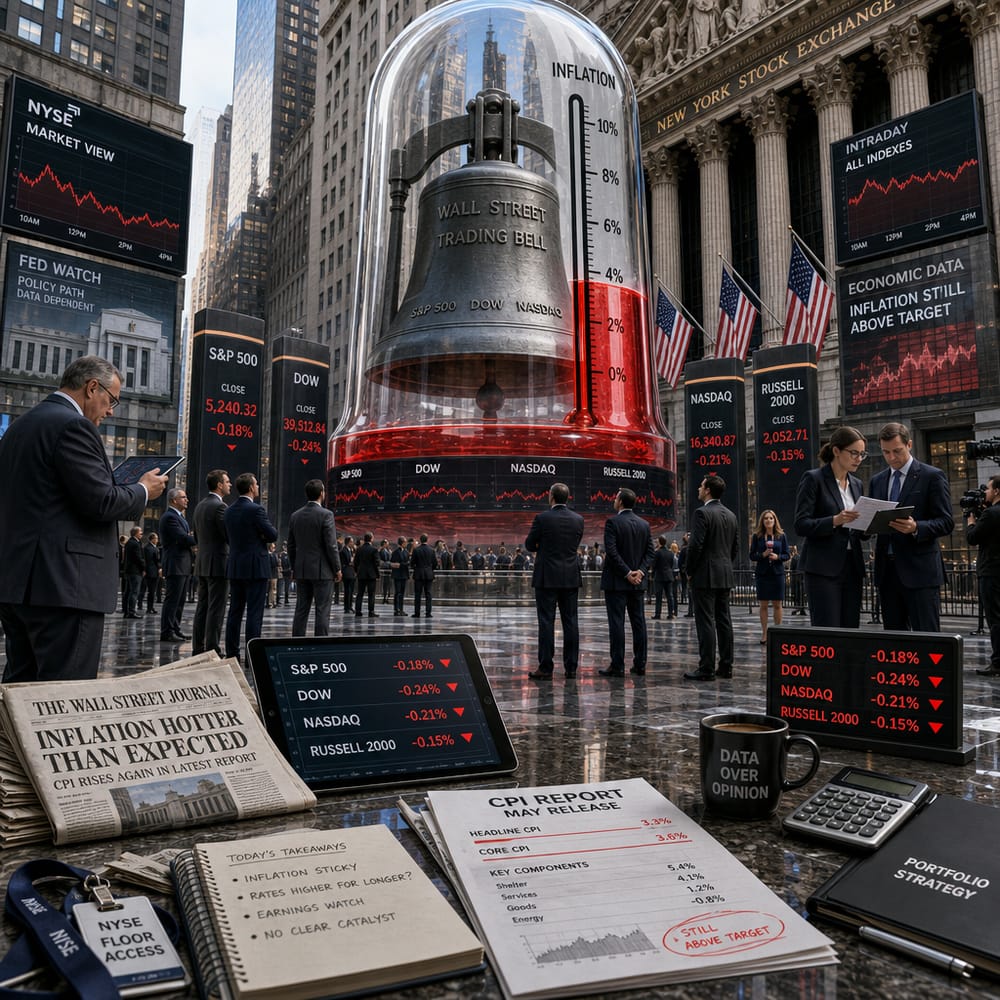
Picture this: Wall Street, usually a bustling party of flashing tickers and fluctuating stocks, decided to take a day off, just kind of... sit there. On August 26, the U.S. stock markets acted more like a teenager being dragged to a family reunion—unmoving, uninspired, and a tad sulky. The S&P 500, Dow Jones, Nasdaq, and Russell 2000 all inched lower, the financial equivalent of nodding off during a sitcom rerun. So, what put the brakes on this bull run? Enter the uninvited guest: inflation data.
WHAT'S INFLATION GOT TO DO WITH IT?
Inflation is that not-so-fun reality check on prices, reminding us that our dollars don't stretch quite as far as they used to. When investors got a whiff of the latest inflation numbers, worse than what they had optimistically penciled in, it was like finding a fly in their Chardonnay. Higher-than-expected inflation figures got everyone wondering if the Federal Reserve might have the same reaction as a parent finding out they’ve been too lenient with curfews—more rules, tighter controls. In market terms, that means interest rates might stay higher for longer.
WHY THE WORRY?
Investors fear inflation like they fear their Thanksgiving turkey drying out—because it has a trickle-down effect that impacts every course of the meal. Higher inflation can lead to increased borrowing costs, stifling consumer spending and corporate profit margins. It's a recipe for a more cautious market mood. Plus, inflation doesn’t just stop at making your groceries more expensive; it can also drag down stock prices, pushing investors to shift from risky assets to safer havens. In this case, our safety net is those attractive certificates of deposit (CDs) with rates of up to 4.50%.
MARKET MOVEMENT: SLIGHTLY SOUTH
Now, let's zoom in on the market's main characters. The tech-heavy Nasdaq, our usual risk-taker, was just marginally down, despite Nvidia flexing its silicon muscles with impressive earnings. Chip stocks had a mini celebration, but the confetti was sparse. Nvidia's earnings gave the Nasdaq a bit of a pep talk, but it wasn't enough to turn the sentiment fully positive. The Dow and S&P 500 joined the Nasdaq in this lackluster parade, slipping just enough to remind everyone that inflation isn't just a phantom menace—it's real.
THE INFLATIONARY RIPPLE EFFECT
What’s an investor to do? Well, shifting strategies could be the name of the game. As inflation fears loom, defensive plays become more appealing. Think utilities, healthcare, and other sectors that aren't as exposed to consumer whims. On the flip side, the tech sector, buoyed by AI optimism and Nvidia’s performance, remains a focal point, even if the road looks a bit bumpy.
GOING FORWARD: WHAT TO WATCH?
The million-dollar question—or perhaps the trillion-dollar one, adjusted for inflation—is how markets will behave moving forward. Investors will be on hyper-alert for any hints from the Federal Reserve about interest rate trajectories. If the Fed decides to dress up in its hawkish costume, maintaining or even increasing rates, the markets could face more volatility. But hey, it’s not all doom and gloom. Some savvy market participants might see this as an opportunity to buy the dip.
THE PORTFOLIO PUZZLE
Adjust your investment lens to accommodate the inflation landscape. With interest rates potentially staying high, the lure of high-yield savings accounts and CDs is undeniable. Locking in those rates could be a smart move for those looking to secure returns without the rollercoaster ride. Meanwhile, those with a taste for adventure might want to keep an eye on tech stocks, as they’re poised to ride the AI wave – a splash of excitement in a sea of market uncertainty.
In conclusion, while inflation might be the party pooper for the moment, knowing how to dance around it is key. Whether it’s reallocating to defensive stocks or locking in solid fixed-income options, adjusting to the tempo is what will keep investors in tune with their financial goals. So, keep that finger on the pulse of the Fed and stay nimble; it’s going to be an intriguing dance through the economic landscape.
This article is for informational purposes only and is not investment advice. Always do your own research or consult a licensed financial professional before making investment decisions.
© Copyright 2024. All Rights Reserved.
© Copyright 2024. All Rights Reserved.