

MSCI EM FX Index Gains as Dollar Weakens and Carry Trades Revive
Thursday, August 20, 2026
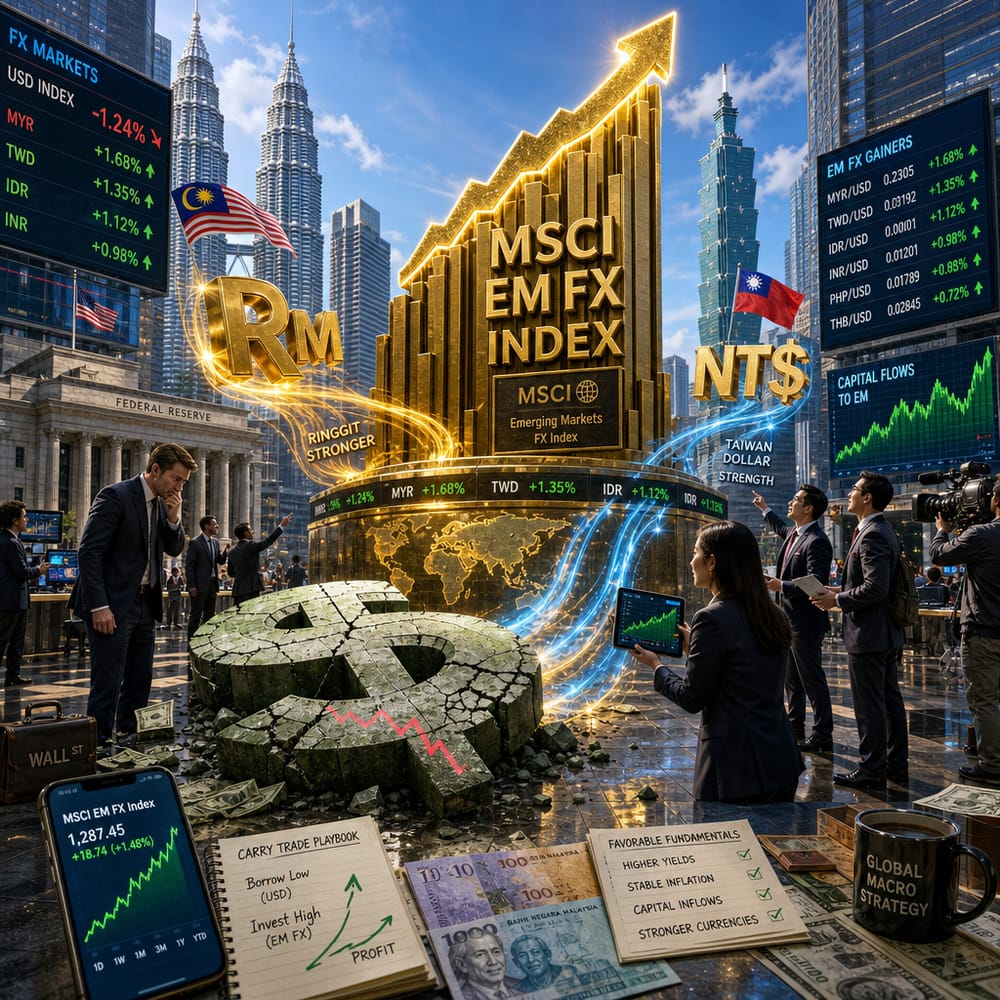
Ding dong, the dollar's dip has come calling, and it's shaking up the currency markets in ways that might just revive your faith in riskier assets. If you've been snoozing through the forex market drama, it's time to sit up and pay attention to what's happening with the MSCI Emerging Markets Currency Index — the bellwether that's been on the rise as the dollar weakens.
The U.S. dollar, that mighty greenback, has been looking a little less mighty lately. Why should you care? Because when the dollar loses some muscle, emerging-market currencies bulk up. This seesaw action has given a lift to currencies like the Malaysian ringgit and the Taiwan dollar. So, if you're still clutching your dollar bills, consider how global investors are flipping the script and showing some love to those riskier currencies.
CARRY TRADES ARE MAKING A COMEBACK
Ready to unpack why carry trades are back on the menu for adventurous investors? A carry trade is financial jargon for borrowing a currency at a low-interest rate and investing it in a currency with a higher interest rate. It's like picking up a boring, low-yield savings account to fund a venture in a high-flying startup. When the U.S. dollar was strutting around, all buffed up thanks to high-interest rates, carry trades looked pretty unappetizing. Why take on risk when you can park your money in something safe and still get paid?
But now the tables have turned. Expectations for U.S. interest rates are getting softer, casting a rosy glow over the carry trade landscape. Investors are dusting off their playbooks and giving emerging markets another look — and currencies like the Malaysian ringgit and Taiwan dollar are reaping the benefits. Simply put, as the prospect of massive returns in the U.S. dims, the allure of chasing gains in spicier markets grows stronger.
THE DOLLAR'S DOMINO EFFECT
So how exactly does a dollar dip shake up the emerging-market neighborhood? Let's break it down. A stronger dollar tends to suck the oxygen out of emerging market assets, as debt in these regions is often denominated in dollars. When the dollar strengthens, it becomes more expensive for these countries to service their debt, and investors seek shelter in safer assets. But, with the dollar taking a breather, the debt burden lightens, and investors feel encouraged to scout for higher yields elsewhere.
The U.S. Treasury's recent maneuverings — promising to buy back boatloads of longer-term debt to tame ferociously high yields — have added more folds to an already complex fabric. It’s a move designed to calm the jitters over borrowing costs, but it has also effectively turned the spotlight on emerging markets as a haven for those hunting for better returns.
As the dollar softens, emerging-market currencies get a chance to shine, and investors hungry for higher interest rates are eyeing these opportunities. It’s a domino effect that starts with the dollar and spreads across the globe.
IS THE REBOUND SUSTAINABLE?
The million-dollar question (or should we say the ringgit and Taiwan dollar question) is whether this rebound in emerging-market currencies is built to last. If the Federal Reserve pivots back to a hawkish stance or if geopolitical tensions — like the U.S. doing a tango with economic sanctions — heighten risk aversion, we might see the dollar regaining its swagger, and the emerging-market currencies could retreat.
But for now, the sentiment is that emerging markets have room to run. As long as the dollar stays on its current trajectory, investors will likely continue to flirt with emerging currencies, hoping to lock in those juicy yields.
THE TAKEAWAY
So, what's the play here for retail investors watching from the sidelines? Keep an eye on the dollar’s moves; it's the linchpin for emerging-market currencies. If you’re feeling bold and have a taste for the exotic, this could be your moment to explore options that were once too risky for comfort.
In a world where the dollar doesn't reign supreme, there's a new game in town, and it's all about taking calculated risks. So go ahead, think beyond the buck, and consider dabbling in the dynamic, albeit unpredictable, world of emerging-market currencies. After all, when the usual suspects start looking stale, it's the underdogs that often steal the show.
This article is for informational purposes only and is not investment advice. Always do your own research or consult a licensed financial professional before making investment decisions.
© Copyright 2024. All Rights Reserved.
© Copyright 2024. All Rights Reserved.