

Morgan Stanley Downgrades Apple to Underweight
Tuesday, August 25, 2026
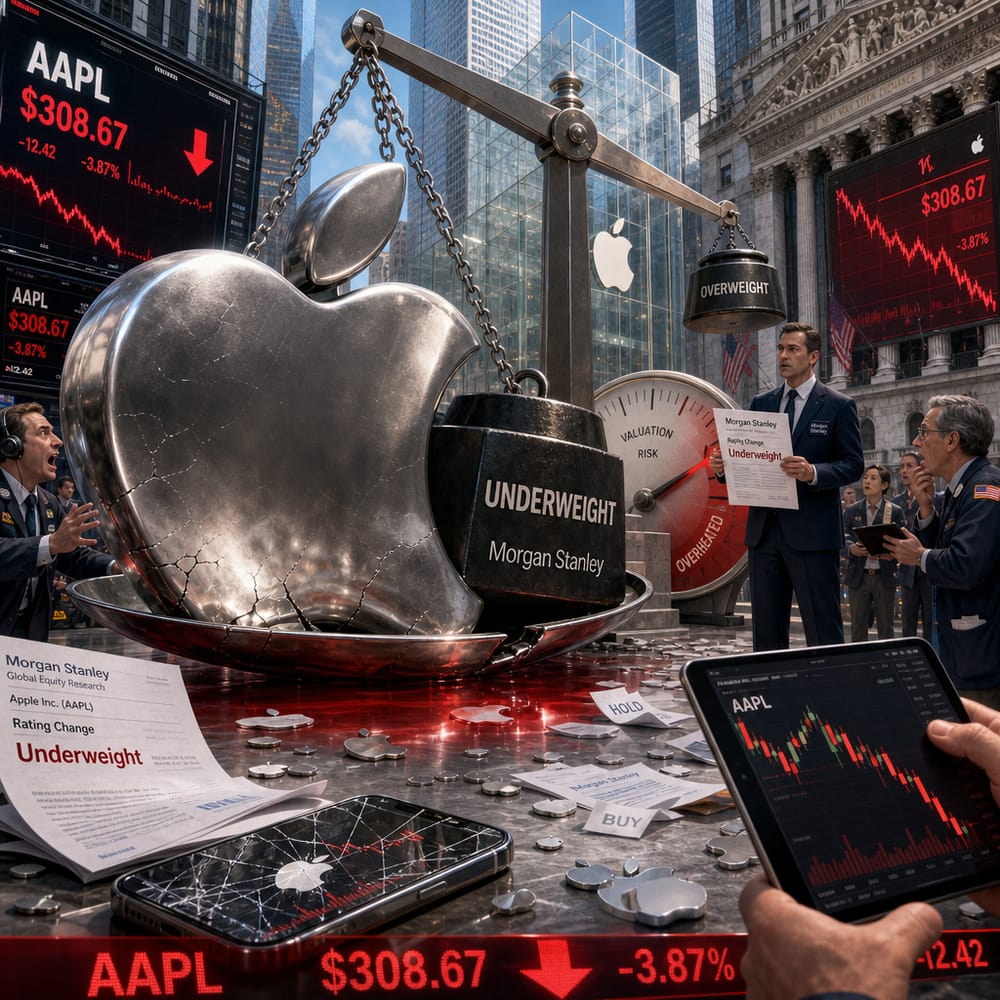
Morgan Stanley Downgrades Apple: Is It a Rotten Call or a Golden Opportunity?
Picture this: you're sipping your morning coffee, casually scrolling through your investment app, when suddenly a headline slaps you awake: Morgan Stanley has downgraded Apple from Overweight to Underweight. If you’ve ever seen Apple’s stock chart, you’d know it’s been soaring higher than a drone at a Fourth of July show. So, what gives? Why would a heavyweight like Morgan Stanley throw a wet blanket on Apple’s stock party?
Let’s break it down. The reason Morgan Stanley is giving Apple the cold shoulder isn't because Tim Cook picked the wrong turtleneck for his latest keynote. No, the bank is worried that Apple’s valuation, which is essentially the price investors are willing to pay for its shares, has gotten way ahead of itself. With shares hovering around $308.67, they believe the stock is overpriced — like paying five bucks for a cup of plain coffee. Sure, it’s premium, but is it really worth that much?
Let’s put it in simpler terms: imagine buying a car that’s priced higher than a Ferrari, but it’s actually a Toyota. Morgan Stanley thinks investors are overvaluing Apple. The downgrade from Overweight (which is Wall Street speak for “buy more, it’s a winner!”) to Underweight (“sell some, it might be a bummer!”) suggests they see limited upside in the near future.
Now, what does this mean for Apple’s stock performance? Well, it’s a bit like predicting the weather in San Francisco – tricky. In the short term, such a downgrade can make investors jittery, leading to a dip in stock price as they reassess their positions. Think of it as the stock market’s version of musical chairs, where everyone scrambles to find a seat before the music stops.
But let's not rewrite history here — Apple isn't new to this rodeo. It’s faced downgrades and skeptical analysts before, only to rise from the ashes like a phoenix with an iPhone in hand. The tech titan has a habit of proving naysayers wrong with a well-timed product launch or a juicy earnings report. So, while some investors might hit the sell button, others might see it as an opportunity to buy on the dip, betting on Apple's ability to innovate its way out of this valuation concern.
Don't forget about the ripple effect. When a tech giant like Apple catches a cold, other tech stocks might start sneezing too. It’s all connected — like a big family reunion where everyone shares the same potato salad. With Apple being a benchmark for tech valuations, other companies could find themselves under scrutiny as investors reevaluate their enthusiasm for tech stocks. It could spark a sector-wide reassessment, pushing valuations to more reasonable levels. Or, it might just be a brief shower on an otherwise sunny tech landscape.
However, let’s not lose sight of the broader picture. This isn't a one-way ticket to tech apocalypse. Investors may simply become more selective, scrutinizing tech stocks that might be riding Apple’s coattails without a robust business model of their own. Companies with strong fundamentals and growth prospects could still shine, like diamonds in the digital rough.
In the end, Morgan Stanley’s downgrade of Apple is shaking things up, but isn’t that what the market is all about? Ups and downs, bulls and bears, and the thrill of the trade—it’s like Wall Street’s own reality TV show. So, whether you’re holding onto your Apple shares or considering what to do next, remember this: the only constant in the market is change. Stay informed, stay sharp, and don't forget to charge your phone — you wouldn't want to miss the next juicy headline.
This article is for informational purposes only and is not investment advice. Always do your own research or consult a licensed financial professional before making investment decisions.
© Copyright 2024. All Rights Reserved.
© Copyright 2024. All Rights Reserved.