

Monday Futures Mixed: Risk Appetite Edges Higher Amid Global Caution
Monday, August 17, 2026
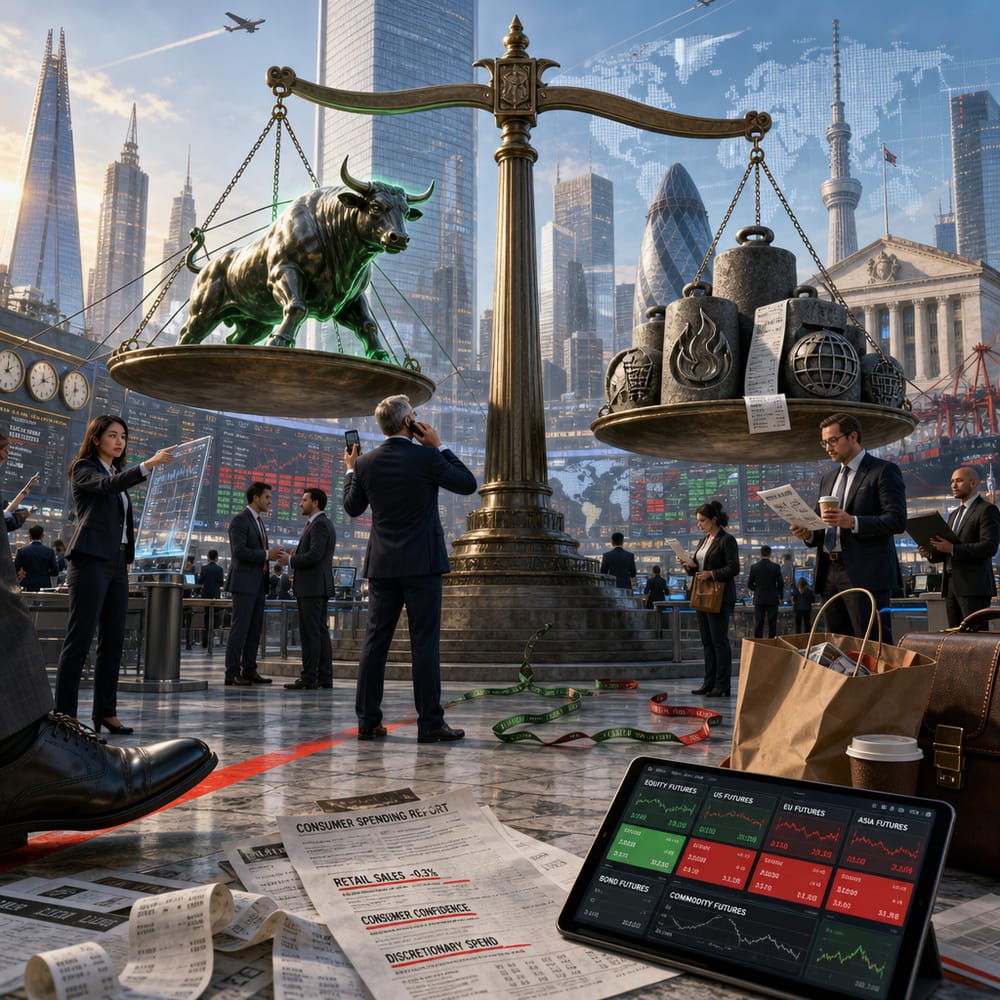
MONDAY FUTURES MIXED: RISK APPETITE EDGES HIGHER AMID GLOBAL CAUTION
Welcome to the glorious unpredictability of Monday mornings, where the stock futures are about as predictable as a cat with a laser pointer. This past Monday, as you scrolled through your morning feed, you might have noticed that U.S. stock futures were playing a game of mixed signals. The S&P 500 and Dow futures were behaving like teenagers—you know, one moment they’re excited, the next they're a bit moody, leaving everyone guessing their next move.
So, why all the confusion in the futures? Two words: global caution. Investors are navigating a world where stagflation fears loom like an awkward relative at a wedding—ever-present and hard to ignore. Stagflation, that nasty cocktail of stagnant economic growth and inflation, is enough to make anyone's hair stand on end. It's not just an economic buzzword; it's a potential game-changer that can influence markets and rattle investor confidence faster than you can say "portfolio diversification."
WHAT'S DRIVING THE MIXED PERFORMANCE?
First up, let's talk about the elephant in the room: consumer spending. Recent reports show it's been weaker than expected. When consumers hold onto their wallets, it sends shivers down the spine of the market. After all, consumer spending accounts for about two-thirds of the U.S. economy. If the consumer isn't spending, the economy isn’t growing—or at least not as robustly as investors would like.
Then there's the added suspense of earnings season. Some companies have delivered delightful surprises, while others have dropped the ball like a wide receiver in a snowstorm. The earnings bonanza that pushed the market to new heights? Well, it might not just be the fairy tale it appears on the surface. It was more like a "Subtraction of All Fears" rally. Investors got a temporary relief as tech giants stopped hemorrhaging cash on AI and semiconductor stocks started to heal from their recent bruises. But as Mike Santoli pointed out, this might be more of a trust exercise than a sustainable rally.
HOW STAGFLATION FEARS INFLUENCE MARKET BEHAVIOR
Let's dive into that gnarly stagflation topic. Picture this: inflation's up, but growth isn't, and you can't just blame it on the Federal Reserve's interest rate hikes. With stagflation, it feels like the economy's trying to drive with the parking brake on. This fear can make investors jittery, keeping them from committing wholeheartedly to stocks. They're hedging bets, playing it safe, and often parking more money in cash or safer assets, like bonds, which doesn't exactly make for a dynamic stock market.
On a broader scale, global economic conditions are adding to the mix. China’s economic woes, as reported recently, are further evidence that challenges aren't just local. The drag in their growth impacts everything from manufacturing to commodities, influencing cross-asset sentiment worldwide. It's a reminder that what happens across the Pacific doesn’t stay across the Pacific.
CROSS-ASSET SENTIMENT IMPLICATIONS
The mixed futures and stagflation fears also have broader implications for cross-asset sentiment. When equities are in limbo, investors often look elsewhere for returns, and this is where it gets interesting. Recently, corporate bond sales have been up, and there's speculation that this could keep U.S. Treasury yields high. High yields can attract investors away from stocks, potentially slowing down stock market rallies and putting downward pressure on stock prices.
And let's not overlook the crypto world, where Bitcoin and Ethereum continue their roller coaster rides. A bit of extra turmoil in traditional markets can sometimes send investors running to crypto as either a hedge against inflation or simply as a shot at high returns. Bitcoin's seen its ups and downs, but at over $63,000, it's still a player on the field.
BOTTOM LINE
As always, futures markets are more of an early morning crystal ball than a definitive map. They're an indicator of market sentiment—a hint at what might move the broader market trends. Mixed futures could leave your portfolio on edge, or they might just be a blip on your robust investment radar. The key is keeping an eye on the underlying economic data, staying informed about global influences, and of course, not letting market jitters dictate your entire investment strategy.
So as you sip your Monday morning coffee, remember: mixed futures are just another part of the investing adventure. They remind us that markets are full of surprises, and understanding them means juggling a bit of geopolitical savvy, a dash of economic insight, and a heaping spoonful of patience. Happy investing!
This article is for informational purposes only and is not investment advice. Always do your own research or consult a licensed financial professional before making investment decisions.
© Copyright 2024. All Rights Reserved.
© Copyright 2024. All Rights Reserved.