

Monday.com Beat and “Sell the News” Reaction
Tuesday, August 11, 2026
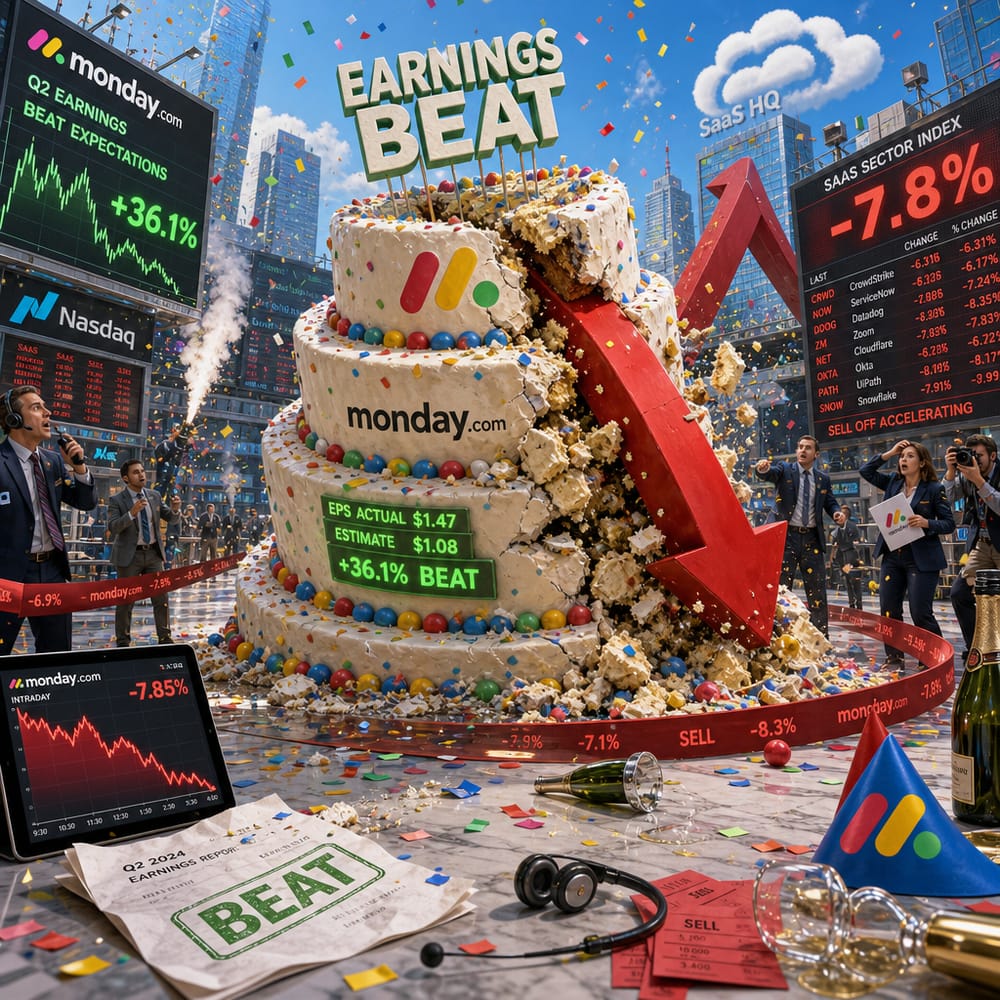
When Monday.com unveiled its earnings with a flourish, it seemed destined to have Wall Street singing its praises. The company, known for its colorful project management platforms, had not only met expectations but surpassed them, flashing results that would make any CFO beam with pride. But instead of investors popping champagne, Monday.com stock took a nosedive, shedding 7.8% of its value faster than you can say "sell the news." What gives?
SELLING ON GOOD NEWS?
Think of it as inviting everyone to your birthday bash, only to find your guests swiping the snacks and dashing for the door. Monday.com wasn't the first to experience this conundrum. The 'sell-the-news' phenomenon, where investors cash out after positive announcements, has had a grip on the SaaS (Software as a Service) sector recently, leaving many to scratch their heads.
So why did investors react this way? Well, it's a bit like buying into the hype of a blockbuster movie only to find it a tad overrated. Monday.com’s results were undoubtedly impressive, but in a market buzzing with lofty expectations and valuations that would make a Hollywood diva blush, impressive just doesn’t cut it anymore. The whisper on the street is that the sector might be a bit too frothy, with investors growing skittish about whether these companies can keep pace with their sky-high valuations.
But Monday.com isn’t an isolated case. The SaaS sector, as a whole, has seen a rollercoaster of emotions. These companies have been the darlings of the tech world, promising explosive growth and the allure of recurring revenues — the financial equivalent of hitting the jackpot. But as their valuations climb to stratospheric levels, every earnings report becomes a test of whether they can justify their price tags.
TRENDING IN THE SAAS SECTOR
The SaaS world isn't just facing the 'sell-the-news' syndrome. It's navigating a landscape where investor sentiment is shifting faster than a teenager's TikTok feed. For years, these companies have enjoyed a generous growth narrative. However, with interest rates and inflation rearing their less-than-charming heads, investors are taking a closer, more skeptical look at who’s genuinely poised for long-term success and who’s riding on borrowed time.
The broader trend is that as SaaS companies grow, the pressure mounts. Investors want to see not just ambitious growth, but sustainable, profitable growth. SaaS companies are like those fascinating houseplants that everyone wants: they need attention, nurturing, and occasionally, a financial reality check to survive long-term. Monday.com's slip might indicate that investors are starting to demand more than just promises — they want results that align with the market's wild expectations.
WHERE DO WE GO FROM HERE?
So, what's a retail investor to do in this topsy-turvy SaaS landscape? For starters, patience is a virtue. In the world of investing, especially in volatile sectors like SaaS, timing can be as important as the stock itself. While 'sell-the-news' moments can be deflating, they also present opportunities for the prudent investor ready to separate the wheat from the chaff.
Look for companies with solid fundamentals, not just flashy growth figures. Are their revenues sustainable? Do they have a plan to turn a profit? And crucially, are they reasonably valued for their growth prospects? The SaaS sector is still full of potential, but the key is identifying which players are set to thrive and which are simply a flash in the pan.
Moreover, consider diversifying your investments to hedge against sector-specific risks. As enticing as the SaaS story is, having a balanced portfolio can help mitigate the impact of these sharp market reactions.
In essence, Monday.com's slip is a wake-up call for investors to sift through the hype and pay attention to the core business strengths. As splashes of cash and early growth stories give way to demands for profitability and realistic valuations, the SaaS sector is poised for a reckoning. And for retail investors, it’s not just about riding the waves but knowing when to hang ten and when to head back to shore.
This article is for informational purposes only and is not investment advice. Always do your own research or consult a licensed financial professional before making investment decisions.
© Copyright 2024. All Rights Reserved.
© Copyright 2024. All Rights Reserved.