

Modest July CPI Increase Amid Persistent Inflation
Saturday, August 29, 2026
INFLATION'S UNRELENTING GRIP: WHAT JULY'S CPI REALLY MEANS
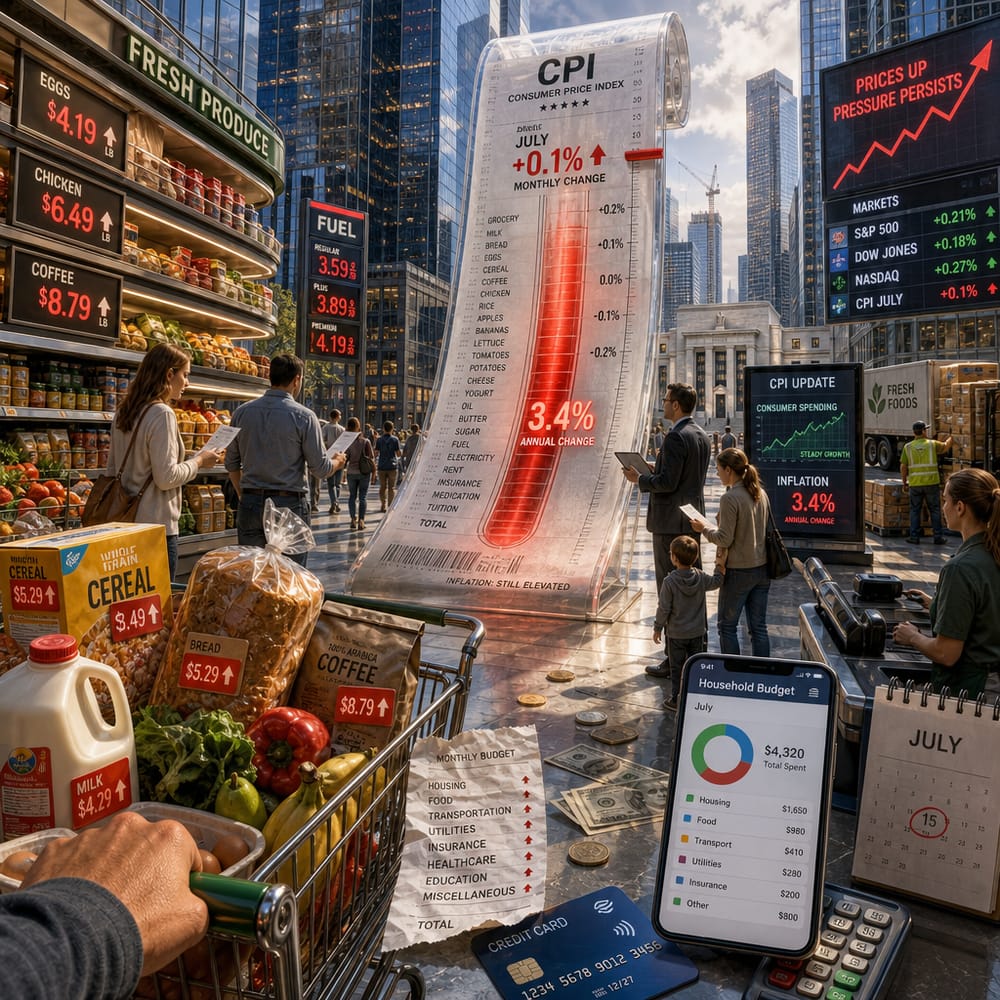
If you blinked, you might have missed it. July's Consumer Price Index (CPI) rose by a modest 0.1% from the previous month, but don’t mistake this tiny percentage increase for a sign that inflation is backing off. Inflation isn't so much sprinting ahead as it is stubbornly refusing to leave the party. And it’s time we unpack what this means for us mere mortals trying to budget for our morning lattes and weekend getaways.
For those who skipped Econ 101, the CPI measures the average change in prices paid by urban consumers for goods and services — think rent, groceries, and healthcare. In other words, it’s a key indicator of inflation. Compared to last year, July's prices bubbled up by 3.4%. That might not sound like a lot, but it’s a bit like finding out your favorite streaming service is jacking up prices for the third time this year — irritating and definitely noticeable.
But why should you care? For one, inflation eats into your purchasing power, making everything from breakfast burritos to Broadway tickets just that little bit pricier. And secondly, the Federal Reserve is all eyes and ears on these numbers, as they could sway the big kahuna of interest rate decisions. Ignore inflation rates at your own peril, or face potentially higher borrowing costs down the line.
THE CPI VS. THE PCE: WHO WEARS THE CROWN?
In the inflation ring, the CPI and its lesser-known sibling, the Personal Consumption Expenditures (PCE) index, are duking it out for the title of most reliable indicator. While both aim to measure inflation, they take different paths to get there.
The PCE tends to be the Fed's favorite child. It captures a broader range of expenses, giving it the vibe of an overachiever who can’t wait to tell you about its wider sample size and lower variability. Meanwhile, the CPI is like that friend who always has the latest gossip — a bit more volatile but straight to the point with its focus on out-of-pocket expenditures.
When we pit July’s CPI against the PCE, the trends are clear: inflation is definitely overstaying its welcome. Both indexes point to persistent price pressures, but the PCE often shows a slightly more subdued inflation rate. The Fed uses the PCE as its guide, so if you're trying to anticipate which way interest rates might swing, keep one eye on both numbers.
WINNERS AND LOSERS IN INFLATION'S GAME
Persistent inflation has a way of shaking up the economy like a snow globe, leaving some sectors in a flurry while others shine like the last kid left standing at musical chairs. So, who’s feeling the heat the most?
Consumer staples — those basic goods like toilet paper, toothpaste, and cereal — are often caught in the inflation crossfire. They’re the bread and butter of daily life, yet they’re seeing cost hikes that can pinch the wallets of everyday consumers. The consumer staples sector, represented by ETFs like iShares U.S. Consumer Staples (IYK), is often seen as a safe playground during inflationary times. While not immune to price hikes, these basic goods are necessities, thus people continue buying them, albeit with a grimace.
On the flip side, luxury goods and non-essential services often feel the burn when inflation refuses to take a back seat. When faced with higher living costs, consumers typically tighten their belts, cutting back on things that don’t immediately impact their daily lives.
WHAT DOES THIS MEAN FOR YOUR PORTFOLIO?
If you're an investor, you're likely wondering how to navigate these choppy inflationary waters. Defensive sectors like consumer staples and healthcare might just be the life jackets worth grabbing. Meanwhile, the broader market volatility triggered by inflation concerns might open opportunities elsewhere.
As for the Federal Reserve, they're playing this inflation game close to the chest. Fed Chair Kevin Warsh recently described inflation as "concerning," but kept his cards close about future interest rate hikes. This approach keeps investors on their toes, as any surprise rate increase could ripple through the stock market like a caffeine-fueled jolt.
In short, don’t let a seemingly small CPI increase lull you into a false sense of security. Inflation is still very much in the room — and it's not going away without a fight. For retail investors and main-street consumers alike, it's essential to stay informed, diversified, and perhaps most importantly, flexible. Because in this economy, change is the only constant.
This article is for informational purposes only and is not investment advice. Always do your own research or consult a licensed financial professional before making investment decisions.
© Copyright 2024. All Rights Reserved.
© Copyright 2024. All Rights Reserved.