

Moderation in July CPI Signals Reduced Pressure for September Fed Rate Hike
Tuesday, August 18, 2026
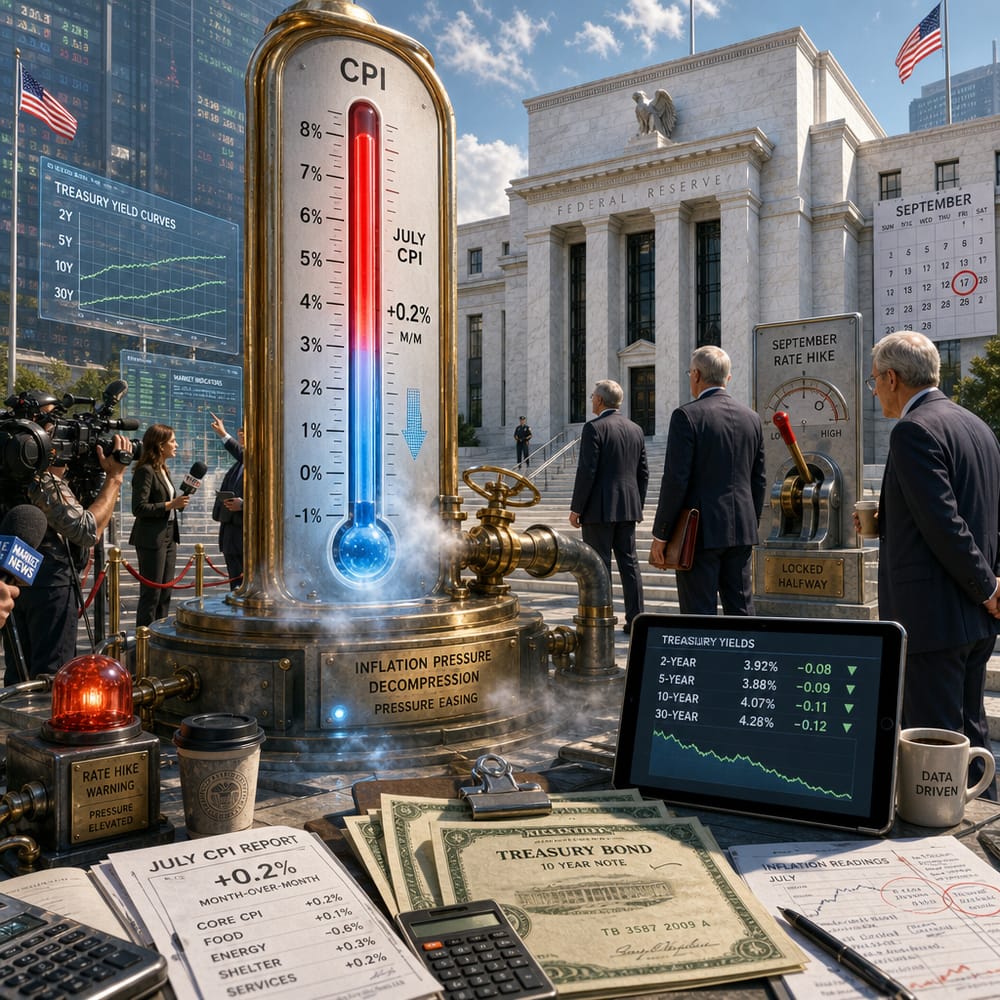
MODERATION IN JULY CPI SIGNALS REDUCED PRESSURE FOR SEPTEMBER FED RATE HIKE
Hold onto your wallets, folks — the latest Consumer Price Index (CPI) report just dropped, and it's not exactly the shocker we feared it might be. Cue the collective sigh of relief from Wall Street. This July, inflation tiptoed in at a modest pace, and it's making the Federal Reserve reconsider reaching for their rate-hike hammer in September.
For those who don't speak financial-ese on the daily, the CPI is like the vital signs monitor of our economy, measuring the average change over time in the prices paid by urban consumers for a market basket of consumer goods and services. Translation: it's what you and I pay for stuff. And since inflation's been the naughty word of the day for quite some time, the Fed has been playing rate hike whack-a-mole, trying to keep it in check.
This time around, the July CPI report had a gentler story to tell. Prices rose at a more leisurely pace compared to the months when inflation had the audacity of a Black Friday sale. Compared to the chaos of last year or the first wave of this year, the July numbers are the equivalent of a cool breeze on a hot summer day — subtle, but definitely welcome.
Now, you might be wondering, what does this mean for the Federal Reserve and its seemingly endless battle with inflation? Well, the Fed's been swinging its interest rate hammer for the past year, each hike a jab at inflation's relentless rise. But with July's milder CPI figures, the Fed might just put that hammer down, at least for September. Federal Reserve chair Jerome Powell and his team are likely sipping their chamomile tea, knowing they might not have to sweat bullets over the next policy meeting.
So, what does this mean for you, the retail investor looking to make a buck or two? First off, if the Fed decides to take a breather on rate hikes, we could see a bit of a silver lining in the bond market. Treasury bonds, those faithful old-school investments that grandpas swear by, might become a bit more appealing. Lower inflation pressure means bond yields, which move inversely to bond prices, won't be climbing the treacherous hill they have been. Translation: your bond holdings might not take the beating they did when rates were on the up and up.
But hang on — it’s not just about bonds. The Fed's interest rate antics have been reshaping the broader market, too. Fewer rate hikes mean less angst about borrowing costs for companies, and that might just perk up the markets as a whole. Stocks have been jittery like a cat at a dog convention with every Fed meeting, but a pause in rate hikes could mean a more stable, predictable path for equities.
Now, let’s not get ahead of ourselves. It's still too early to break out the party hats and confetti. The road to taming inflation is long and winding. The global economy's intricate dance (with a salsa step here and a waltz there) keeps adding twists and turns. Not to mention the wild card factors like geopolitical tensions or the odd pandemic resurgence that can throw everyone's calculations out the window.
Investors, keep your eyes sharp and your portfolio diversified. Whether it's through bonds or stocks or squirrelly alternative investments, staying versatile is more important than ever. And as always, keep an ear to the ground for what the Fed will do next. The July CPI was a soft whisper rather than a shout, but market dynamics can roar back at any moment.
So, for now, enjoy the calm, but keep an eye on the horizon. The economy, much like a classic Hollywood plot twist, is never really predictable.
This article is for informational purposes only and is not investment advice. Always do your own research or consult a licensed financial professional before making investment decisions.
© Copyright 2024. All Rights Reserved.
© Copyright 2024. All Rights Reserved.