

Mixed Market Sentiment Amid Geopolitical Tensions and AI Optimism
Thursday, August 20, 2026
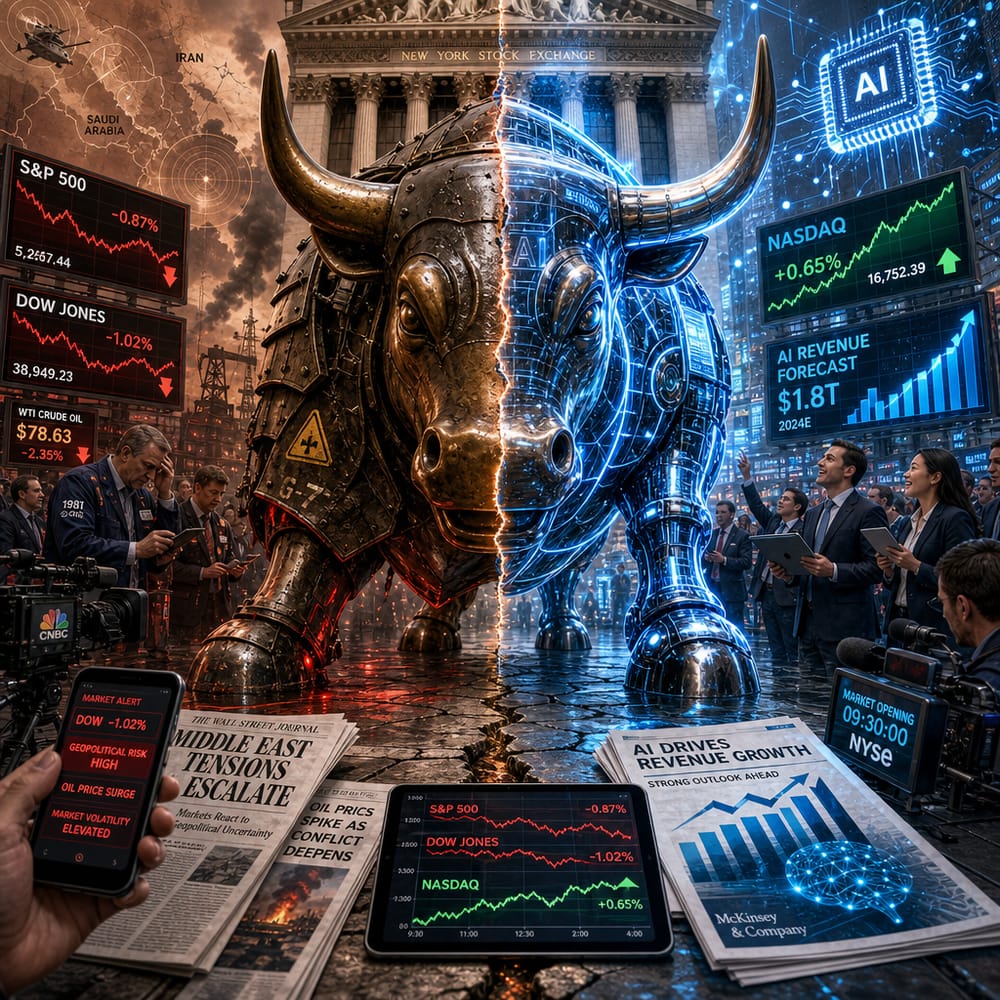
THE NEVER-ENDING TUG-OF-WAR: MARKETS CAUGHT BETWEEN MIDDLE EAST TENSIONS AND AI OPTIMISM
If you've ever watched a tug-of-war match, you know the thrill lies in the struggle, the constant back-and-forth until one side finally prevails. The U.S. stock market this week is a bit like that game, with geopolitical tensions and AI-driven optimism tugging from opposite sides, leaving investors and analysts scratching their heads in the middle.
Let's start with the geopolitical elephant in the room. U.S. President Donald Trump is back on the offensive, promising a "crushing economic operation" against Iran. The Middle East is no stranger to tension, but the stakes are higher this time with players like the United Arab Emirates suspending trade with Tehran. The oil market is feeling it hard – prices have shot up with Brent crude oil hovering over $94 a barrel. It's a stark reminder that geopolitical tensions can send ripples through global markets faster than a teenager's TikTok dance challenge goes viral.
Now, you might be asking, how does this geopolitical chaos impact my portfolio of carefully selected stocks? Well, when the oil prices spike, it's not just about the cost of filling up your tank. Higher energy prices can lead to increased costs across a slew of industries, from manufacturing to transportation. And as companies grapple with these rising costs, investor nerves get frayed, often leading to sell-offs in the stock market.
On the flip side, there's that glimmer of sunshine peeking through the clouds: artificial intelligence. Tech giants like Alibaba are pouring billions into AI tech, despite recent profit declines. Their hefty spending reflects the broader market sentiment that sees AI as a golden goose laying future profit eggs. Sure, Alibaba's net income dropped 75% last quarter, leaving some scratching their heads. But their commitment to AI paints a picture of long-term vision over short-term pain.
AI isn't just a buzzword anymore. It's a driving force that companies are betting their futures on. Need proof? The revenue forecasts for AI-related products have been skyrocketing, and the investment isn't stopping. As AI continues to integrate deeper into sectors like healthcare, finance, and even retail, the optimism surrounding its revenue potential keeps markets buoyant and investors hopeful.
So, how does an investor navigate these bipolar signals from the market? It's the million-dollar question, isn't it? When oil prices rise and AI spending surges, diversification becomes more crucial than ever. Savvy investors are like chess players, thinking several moves ahead. They hedge against geopolitical risks with investments in stable sectors like utilities and consumer staples while riding the AI wave by backing tech innovators.
Let's not forget about the major indices in this drama. The S&P 500, Dow, and Nasdaq are all reflecting this push and pull. The tech-heavy Nasdaq, buoyed by AI exuberance, shows signs of optimism, while the Dow, more sensitive to old-school industrial and energy sectors, echoes the jitters of geopolitical unrest.
Even retail behemoths like Walmart are shimmying in this unpredictable dance. With a revised bullish outlook and a strategic play on tariffs to keep prices low, Walmart is another piece of the puzzle showing how companies adapt to the ever-shifting economic landscape.
In this environment, it's easy to feel like a spectator to a game with no clear outcome. But remember, markets are inherently volatile, and the best strategies are often built on flexibility and foresight. When geopolitical storms threaten, and tech sectors shine, the key for investors is a balanced approach – keeping an eye on global events while staying open to the opportunities emerging from innovation.
So, whether you're a seasoned trader or just someone glancing at your investment app during your lunch break, remember: while markets may feel like a tug-of-war, it's the savvy, informed moves that ensure you end up on the winning side.
This article is for informational purposes only and is not investment advice. Always do your own research or consult a licensed financial professional before making investment decisions.
© Copyright 2024. All Rights Reserved.
© Copyright 2024. All Rights Reserved.