

Mixed Indicators: Wholesale Cooling vs. Consumer Resilience
Sunday, August 16, 2026
MIXED INDICATORS: WHOLESALE COOLING VS. CONSUMER RESILIENCE
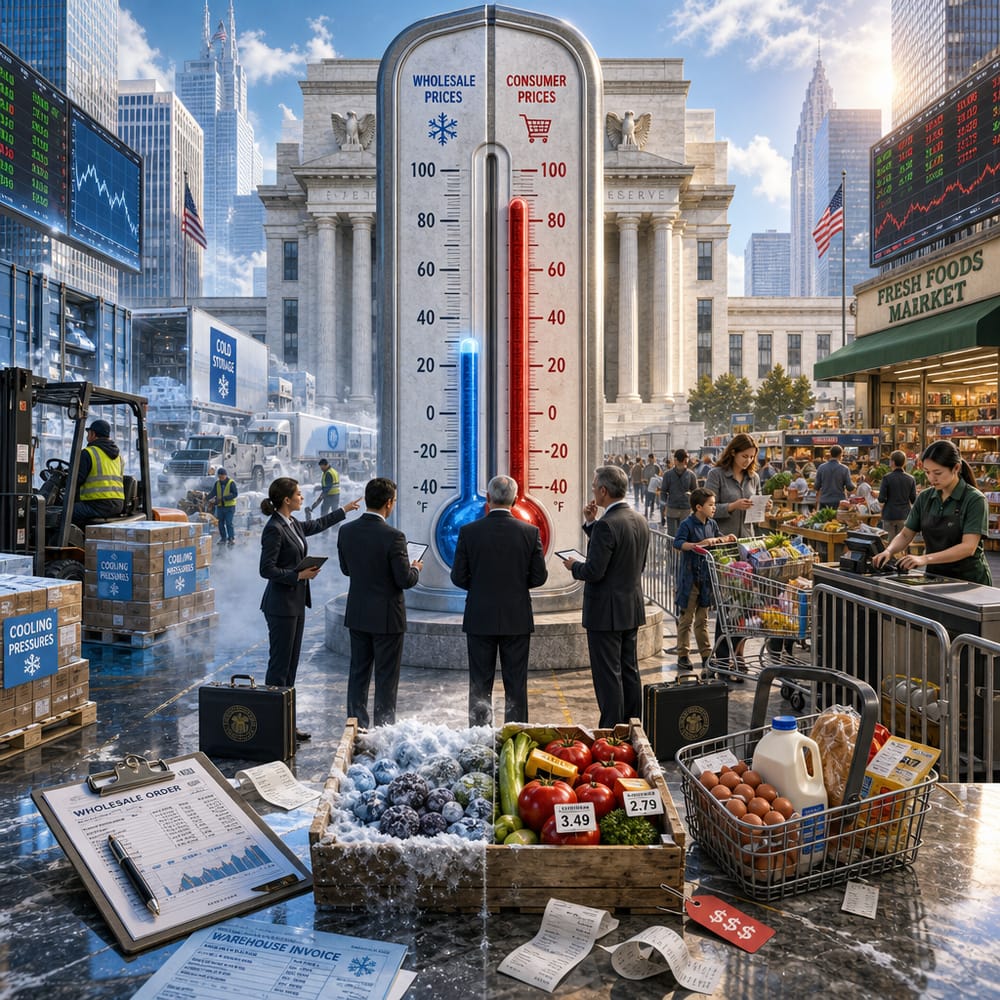
Somewhere between your morning coffee and doomscrolling on your smartphone, inflation has been doing the cha-cha. On one side, wholesale inflation, like a diet that actually works, is slimming down. Meanwhile, consumer inflation stubbornly holds its ground, like your favorite pair of jeans that refuse to fit after the holidays. This love-hate relationship between the Producer Price Index (PPI) and Consumer Price Index (CPI) is tossing the Federal Reserve into a dance of its own, trying to manage the financial moves with grace, or at least without tripping over its feet.
So, what’s the big deal? Well, the Federal Reserve, or as you might know it, the financial world’s DJ spinning our economic tunes, is in a bit of a jam. They’ve got to decide whether to speed up, slow down, or hit the pause button on interest rate hikes while keeping the economy from spinning out of control. And mixed signals from PPI and CPI are making it hard for them to pick the right record.
The PPI, which measures the average change over time in the selling prices received by domestic producers for their output, has been showing signs of cooling. It’s like the bulk section of your local supermarket having a sale. If producers are paying less for raw materials, they might eventually pass those savings onto us, the consumers. That’s the theory anyway. But the CPI, a measure that examines the weighted average of prices of a basket of consumer goods and services, is still hanging tough, as if it didn’t get the memo.
These divergent signals are the equivalent of driving with one foot on the gas and the other hovering over the brakes. So, what’s a Fed to do? When the Fed sees inflation easing on the wholesale level, it may be tempted to hold off on raising interest rates. But persistent consumer inflation might demand a different approach, like raising rates to keep the economy from overheating.
The stakes? Oh, just the future of economic growth and stability. No biggie. If the Fed gets it wrong, we could see slower economic growth or a full-blown recession. On the flip side, underestimating inflation could fuel it even further, eroding purchasing power and potentially forcing consumers to tighten their belts.
Now let's talk about the markets. It's like a reality show where drama is just one Fed announcement away. If the Fed decides to press on with rate hikes, brace yourself. Higher rates mean higher borrowing costs, which can slow down corporate investments and consumer spending. Stocks could get jittery, especially in sectors sensitive to interest rates, like tech and real estate. If the Fed takes a more dovish approach, meaning they decide to keep rates steady or even cut them, markets might get a sugar rush, propelling equity prices higher.
Investors have already been on a rollercoaster ride with record highs and a streak of wins that make you think they’ve got a lucky charm somewhere. The S&P 500, once again hitting all-time highs amidst geopolitical tensions and AI trade concerns, reflects the investor optimism. It's like the bulls are gearing up for a marathon, but with one eye on the clock, wary of any unexpected turns.
Here’s the million-dollar question: Could there be a Fed pivot? Might they signal a pause or even a reversal in their rate hikes if they see that inflation pressures are genuinely abating? Or will stubborn CPI figures push them to hike further, risking an economic slowdown? This is the calculus that Jerome Powell and his merry band of economic wizards are puzzling over.
Meanwhile, as retail giants like Walmart and Target prepare to share their earnings, all eyes will be watching for clues on consumer behavior. Are shoppers splurging or tightening their wallets? These insights could offer more pieces to the inflation puzzle.
In this dance of economic indicators, it's clear that the Fed is not just playing by ear but is forced to rely on every piece of data to guide its choreography. Whether you're a day trader, a long-term investor, or just someone trying to make sense of your grocery bill, what the Fed decides next could ripple through the markets and impact your wallet. As they say, stay tuned — the Fed’s next move could set the tempo for the market's next big number.
This article is for informational purposes only and is not investment advice. Always do your own research or consult a licensed financial professional before making investment decisions.
© Copyright 2024. All Rights Reserved.
© Copyright 2024. All Rights Reserved.