

Midweek Drift: Inflation Concerns Weigh on Markets
Sunday, August 30, 2026
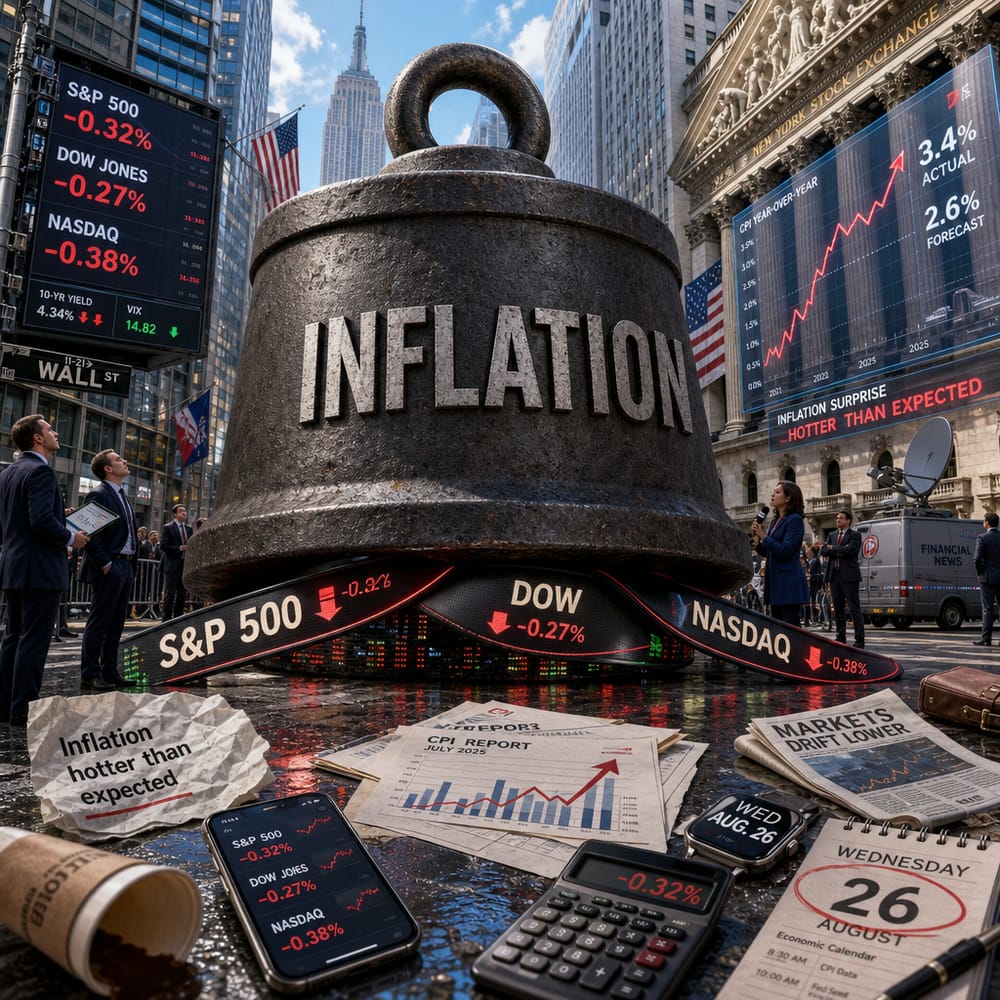
MIDWEEK DRIFT: INFLATION CONCERNS WEIGH ON MARKETS
Just when you thought the market rollercoaster had stabilized, here comes inflation, strapping you back in for another ride. On August 26, U.S. stocks took a hit from an unexpected foe: inflation data that came in hotter than a jalapeño on a summer day. The S&P 500, Dow, and Nasdaq all slipped, as wary investors hit the pause button on their enthusiasm.
You might ask, how does inflation manage to rain on the market's parade? Well, think of it as the party crasher every investor dreads. When inflation ticks up more than expected, it signals that prices are rising faster than our wallets can keep up. The Federal Reserve starts to sweat as it might need to yank interest rates higher to cool things down. Higher rates mean more expensive borrowing and less consumer spending, chilling out the economy and, yes, the stock market.
On that fateful Wednesday, the numbers didn't lie: inflation was up, and the market felt the heat. For investors, this was like finding a surprise extra topping on your pizza—not always welcomed when you're not a fan of anchovies. With stocks nearing their all-time highs, any sign of inflation overshooting could be enough to make investors question their risk appetite—a financial version of feeling too full to finish that last slice.
Long-term, persistent inflation can be more than just a smudge on an otherwise sunny financial forecast. If left unchecked, it can erode purchasing power, squeeze profit margins, and create a ripple effect that can hit everything from your grocery bill to your 401(k). It’s like the financial boogeyman lurking under the bed, ready to jump out when you least expect it.
But why are markets particularly sensitive to inflation jitters when the indices are eyeing those record highs? Simple—even at the peak, there’s a fear of heights. Investors know the higher you climb, the farther you can fall. Inflation whispers can turn into screams, spooking investors who fear that the Fed might throw a wrench in the works with sudden interest rate hikes.
This particular midweek wobble had traders clutching their smartphones and refreshing news feeds like their lives depended on it. Everyone's trying to parse Fed Chairman Kevin Warsh’s latest cryptic remarks about inflation. His comments sounded more like a Shakespearean riddle than a clear economic directive, leaving market players guessing when interest rates might actually rise. Thanks to Warsh’s vow of silence, the markets are left in a state of disarray that would make even the Bard himself envious.
Now, you might be wondering which sectors are feeling the inflationary pinch the hardest. Generally, tech stocks, perched like nervous birds on a high wire, tend to be sensitive to rate hikes. They thrive in low-rate environments where growth feels limitless and borrowing is cheap. But throw in the risk of higher rates, and tech stocks can quickly find themselves in free fall.
Meanwhile, sectors like utilities and consumer staples—those solid, boring bits of your portfolio—tend to hold up a bit better. They're like the tortoises of the stock market: slow and steady, but less likely to get flustered by inflationary hares darting across the field. When inflation fears mount, investors often seek refuge in these havens until the economic skies clear.
Of course, it's not all doom and gloom. For the savvy investor, inflationary periods can offer unique opportunities. Commodities and real assets often do well when prices rise—they’re like the hedges against your inflation-driven headaches. And companies with robust pricing power, those that can pass on higher costs to consumers without batting an eyelash, can still shine.
So what’s an investor to do amid all this inflation-induced chaos? Stay calm, stay informed, and maybe consult with that sharp friend who knows the markets (or read a witty article like this one). As with most matters of money, the key is diversification and not putting all your eggs—or stocks—in one basket. The market's mood swings may unsettle, but a balanced strategy can help keep you steady.
Remember, market tremors like these aren't just about numbers on a screen; they reflect the larger economic stories unfolding around us. For now, it’s time to buckle up, keep an eye on those inflation numbers, and watch how the Fed’s next moves play out. After all, every twist and turn is part of the bigger ride.
This article is for informational purposes only and is not investment advice. Always do your own research or consult a licensed financial professional before making investment decisions.
© Copyright 2024. All Rights Reserved.
© Copyright 2024. All Rights Reserved.