

Midterm Election Rally Reverses: A 3,400-Point Round Trip Across U.S. Markets in 48 Hours
Sunday, November 08, 2026
MIDTERM ELECTION RALLY REVERSES: A 3,400-POINT ROUND TRIP ACROSS U.S. MARKETS IN 48 HOURS
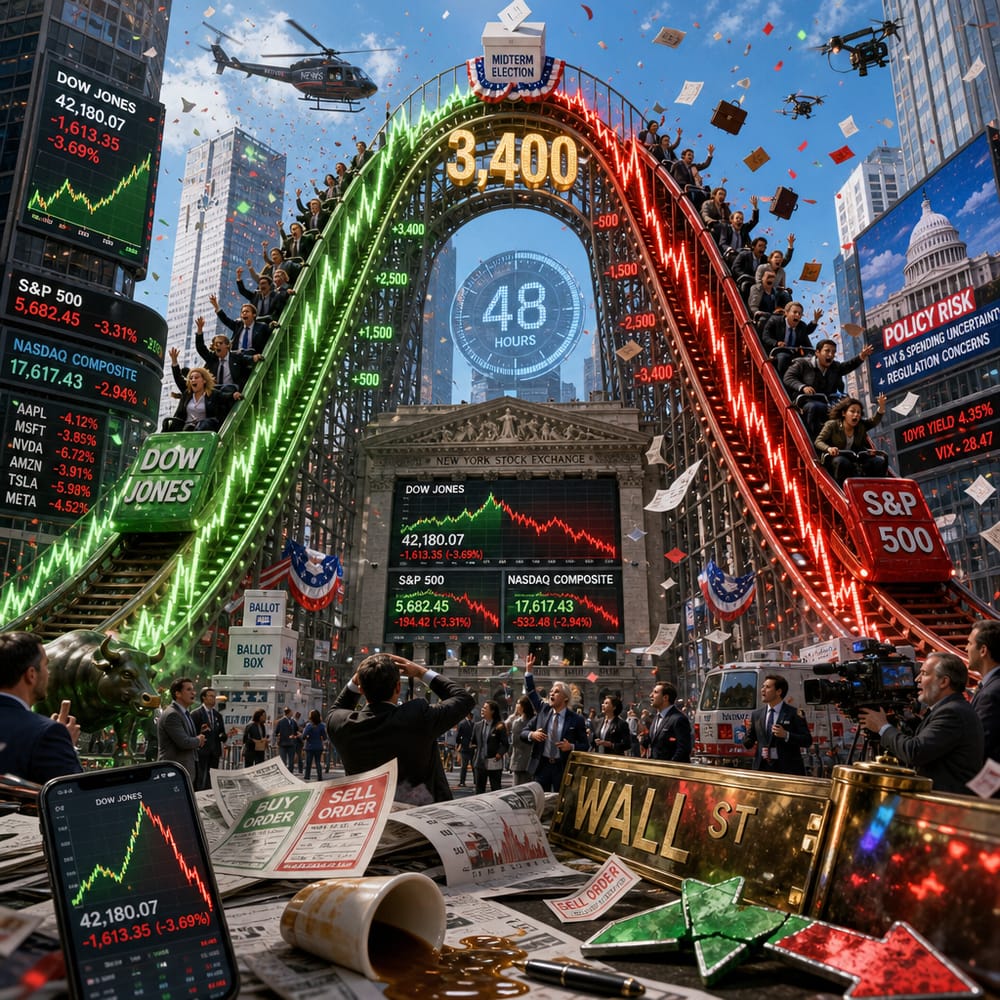
Remember the physics lesson about equal and opposite reactions? Markets just gave us a masterclass with a 3,400-point round trip in less than two days. It’s like a rollercoaster ride that starts with euphoria and ends with your stomach in your throat. Why such a wild ride? Let's break it down, because the answer is part politics, part psychology, and a good dash of market magic.
HOW'D WE GET HERE?
The midterms came in with a bang, handing the Democrats a "blue tsunami" that washed across the political landscape. Texas blue? Who saw that coming? Investors, caught in the moment, reacted like someone just told them every birthday from now until eternity would include free cake and puppies. The Dow Jones soared, the S&P 500 joined the party, and even the Nasdaq Composite decided to get in on the action.
Why the late-night celebration? Hope, mainly. The market loves stability, and a Congress more aligned with the White House seemed like a recipe for predictable policy and economic growth. Investors envisioned the floodgates opening for infrastructure spending and green energy investments while expecting a more diplomatic tone that could ease global tensions.
THE PARTY'S OVER: WHY THE SHARP REVERSAL?
But wait — what goes up, must come down. All it took was a blink, and suddenly, everyone was clutching their pearls and wondering if they'd overdone it. The vibe shifted dramatically when investors realized that this blue wave could also mean stricter regulations on sectors like technology, especially AI. And, oh boy, did it hit hard. The Nasdaq saw a $2.5 trillion wipeout as AI stocks took a nosedive, reminding everyone that there’s no such thing as a free market lunch.
But AI wasn’t the only suspect. Cue the geopolitical drama. President Trump, in a candid interview, suggested that renewed conflict with Iran wasn’t off the table. The mere whiff of conflict in the Middle East, a critical region for global oil supplies, was enough to send oil prices — and investor anxiety — soaring.
POLITICAL RIPPLE EFFECTS: A MARKET REALITY CHECK
Political outcomes steer market sentiment like a moody captain navigating a foggy sea. Elections matter because they signal policy changes that can ripple through industries. The AI sector, which has become the darling of investors, suddenly found itself in the crosshairs of regulatory scrutiny. Texas, a major hub for data centers, now faces potential slowdowns in new projects, courtesy of local leaders promising to rethink data-center approvals.
Investors got a harsh reminder that policy shifts can quickly turn perceived opportunities into liabilities. The markets reacted not just to what happened, but what might happen — a classic case of buy the rumor, sell the news, or in this case, panic-sell when the news changes.
SO, WHAT NOW?
How do you play this game without losing your shirt? Diversification. It’s an age-old lesson that gets a refresher every time volatility spikes. Spreading bets across sectors — tech, energy, healthcare — and asset classes can help cushion the blow when one market darling turns into a problem child overnight.
Political events will always have the power to jolt markets, a truth as reliable as gravity. Understanding the knock-on effects of policy changes is key to anticipating market moves. In times of volatility, staying informed and agile is your best strategy.
For now, we find ourselves back at pre-election market levels, but wiser — or at least a bit more cautious. The real takeaway? Markets might be unpredictable, but that doesn’t mean you have to be unprepared.
This article is for informational purposes only and is not investment advice. Always do your own research or consult a licensed financial professional before making investment decisions.
© Copyright 2024. All Rights Reserved.
© Copyright 2024. All Rights Reserved.