

Middle East Geopolitics Back in Focus—Market Fragility Returns
Tuesday, July 14, 2026
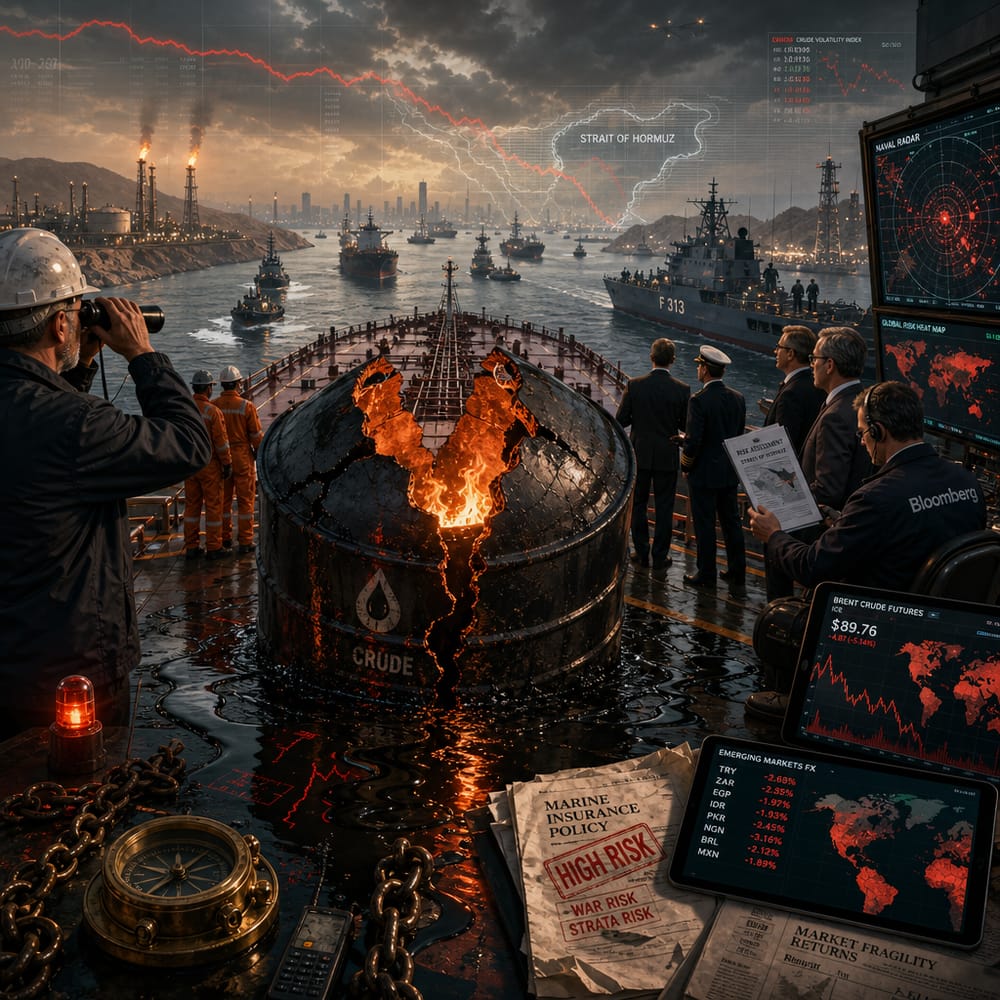
Is there anything like a geopolitical flashpoint to jolt financial markets from their summer slumber? Late-night tweets from the Oval Office have once again turned Wall Street into a swirling hive of activity as President Trump's latest proclamation has set investors on edge. Talk of tolls, blockades, and a bit of maritime muscle-flexing in the Strait of Hormuz have revived fears of disruption in the world's most crucial oil chokepoint.
For those whose geopolitical knowledge is a tad rusty, the Strait of Hormuz is the narrow sea passage that links the Persian Gulf to the open ocean. It's a critical artery through which about a fifth of the world's oil flows. So, when Trump rolls up his sleeves and starts talking about toll fees and blockades, it's like someone pulling the fire alarm at a crowded market; everyone starts scrambling.
THE INSTANT WINNERS
Now, let's talk winners and losers in this geopolitical drama. First up in the winner's circle are the defense stocks. Every time geopolitical tensions bubble up, it's like ringing a dinner bell for defense contractors. If you're looking to hedge against global uncertainty, companies like Lockheed Martin and Raytheon Technologies often become go-to options. Given the current atmosphere, these stocks are likely to see a surge in investor love.
Oil companies are also gleefully riding the wave. With Brent crude prices spiking, firms like ExxonMobil and Chevron find themselves in an enviable position. Higher oil prices mean higher profits, plain and simple. But it's not just the big names—refiners, who can pass on cost increases to consumers, are also in a sweet spot. As Jim Cramer said, it's all about Pavlovian trades; investors are conditioned to pile into these stocks when the oil market gets jittery.
SAFE HAVENS AND STRATEGY SHIFTS
Now, if you're an investor who's more risk-averse than a cat in a room full of rocking chairs, you might be looking at safe-haven assets. Gold, the age-old refuge, is seeing renewed interest. As tensions in the Middle East escalate, demand for the shiny metal often climbs, which in turn drives up prices.
But let's not forget about Treasuries. U.S. government bonds have long been considered a safe harbor in stormy seas. With yields on the rise amid rate hike expectations, they could offer a stable, if not thrilling, investment opportunity.
DIVERSIFICATION: THE NAME OF THE GAME
This latest strait drama serves as a potent reminder of the importance of diversification. Investors who've put all their eggs into riskier emerging market baskets might find themselves scrambling for cover. Emerging markets tend to feel the pinch harder when global tensions rise, and that can mean a rough ride if you've overindulged in these assets.
So, how should you play your hand? Well, a diversified portfolio that balances risk and reward across sectors and geographies is always wise. You don't want to be the investor who put everything into oil-tied stocks and watched in horror as a diplomatic breakthrough sent prices tumbling.
COMPLACENCY CHECK
The real question is, have investors grown too complacent? After years of relative calm and buoyant markets, it's easy to get lulled into a false sense of security. But the Strait of Hormuz is a stark reminder that geopolitical hot spots can flare up without much warning, sending shockwaves through markets.
It's time for investors to check their portfolios and strategies. Are you prepared for increased volatility? And are the "what ifs"—like a sudden oil supply disruption or further escalation in tensions—factored into your investment strategy? If the answers aren't comforting, it might be time for a quick portfolio check-up.
In the end, financial markets are like a high-stakes poker table, where the players are constantly trying to read each other's minds while keeping a straight face. And with the geopolitical stakes raised, every investor must decide whether to double down, fold, or call the bluff. Just make sure you’ve got a few aces up your sleeve.
This article is for informational purposes only and is not investment advice. Always do your own research or consult a licensed financial professional before making investment decisions.
© Copyright 2024. All Rights Reserved.
© Copyright 2024. All Rights Reserved.