

Middle East Flashpoints and Market Fragility: Risk Premium Rising
Tuesday, July 14, 2026
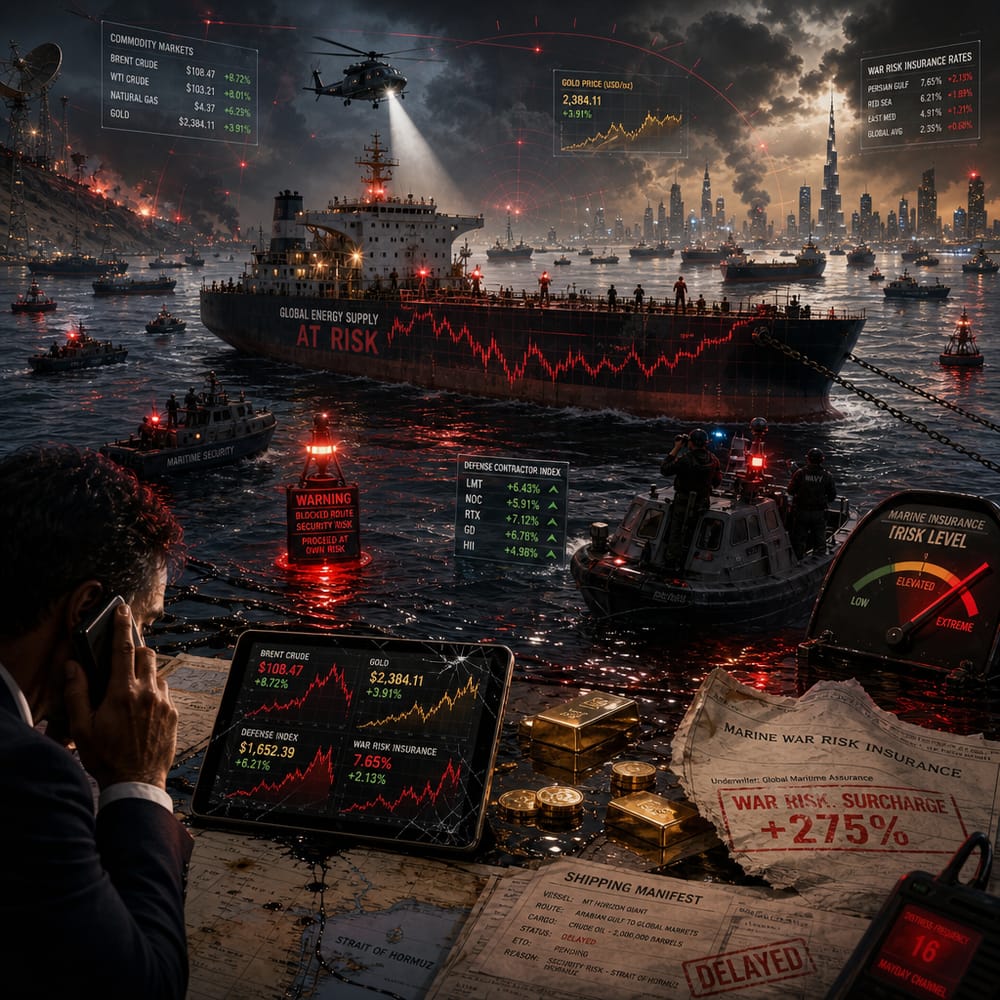
MIDDLE EAST FLASHPOINTS AND MARKET FRAGILITY: RISK PREMIUM RISING
In the age-old dance between oil and global geopolitics, President Trump's latest move has thrown a spiked heel into the mix. The Strait of Hormuz, that notorious bottleneck of oil transport, is once again the stage of international theatrics, leaving investors less than thrilled about the drama spilling into their portfolios. With threats to impose a hefty fee on cargo passing through the Strait, geopolitics are tightening their grip on market sentiment. It's time to ask: Are the markets too complacent, or are investors just waltzing blindfolded?
Oil prices are acting like a teenager on a rollercoaster, with Brent crude recently skyrocketing by over 9% in a single session, confounding the cool heads of Wall Street. As President Trump’s blockade talk heats up, the market's risk premium is being recalculated in real time. For those unacquainted, a risk premium is essentially the extra return investors demand for putting their money in more volatile or risky assets. Think of it as the financial equivalent of “danger pay.”
With oil prices on the rise, it's time for a gut check: is it still rational for investors to cling to the status quo? After all, the ‘Pavlovian trades’ — where investors instinctively dive into sectors like oil and defense every time Middle East tensions flare — can't be the only strategy on the menu. Jim Cramer, CNBC's own market maestro, points to refiners like Valero Energy, which are likely winners in this tumultuous market. They can comfortably pass the buck of fuel cost hikes onto consumers, leaving investors with that warm, fuzzy feeling of financial safety.
But what about diversification? It's the buzzword we all love to hate, but in times like these, it feels less like a choice and more like a necessity. When oil prices spike, insurance companies often face the brunt of increased claims and risk. Meanwhile, defense stocks tend to rally, with investors betting on increased government spending to fortify defenses. Gold also glitters in uncertainty, as investors flock to the age-old safe haven when markets start to wobble with geopolitical jitters.
Yet, it’s not just about parking your money in oil, defense, and gold. The real question is—are we overdue for diversification, and how do we hedge against these wild market swings? While U.S. markets are grappling with the Hormuz hangover, there are whispers of resilience from unexpected quarters. Taiwan's second-largest chipmaker, UMC, is ramping up its game in Singapore, hinting at a promising future for tech stocks, especially those tied to AI and data centers.
On the other side of the globe, China is riding high on an AI export boom, even as its domestic economy stumbles. For the savvy investor, this could signal opportunities to diversify into tech and semiconductors—sectors less susceptible to the fiery whims of Middle Eastern politics.
Despite all the action, are markets too complacent? With U.S. stock futures performing the fiscal equivalent of a high-wire act, the question is whether traders are simply holding their breath for the June inflation data and upcoming bank earnings, or if they're truly underestimating global risks. The U.S. Chamber of Commerce is lobbying against defense constraints like stock buybacks and dividends, keeping Pentagon contractors on tenterhooks. Could this be a sign that markets are too absorbed in domestic squabbles while ignoring the broader global standoff?
Investors might want to keep an eye on treasury yields, rising as the Federal Reserve contemplates further interest rate hikes. Higher yields could become a double-edged sword, offering attractive income to bond investors but also signaling tighter economic conditions ahead.
At the end of the day, balance is key. The current market fragility isn't just about oil and politics; it's about how intertwined the world's economies have become. Reassessing portfolios, exploring diversification, and staying nimble could be the best strategies as the Strait of Hormuz once again reminds us of the thin line between stability and chaos. Because in the unpredictable dance of global markets, nobody wants to be caught without a partner when the music stops.
This article is for informational purposes only and is not investment advice. Always do your own research or consult a licensed financial professional before making investment decisions.
© Copyright 2024. All Rights Reserved.
© Copyright 2024. All Rights Reserved.