

Microsoft’s Surface Laptop Ultra: AI-Powered PCs Hit the Market
Thursday, October 08, 2026
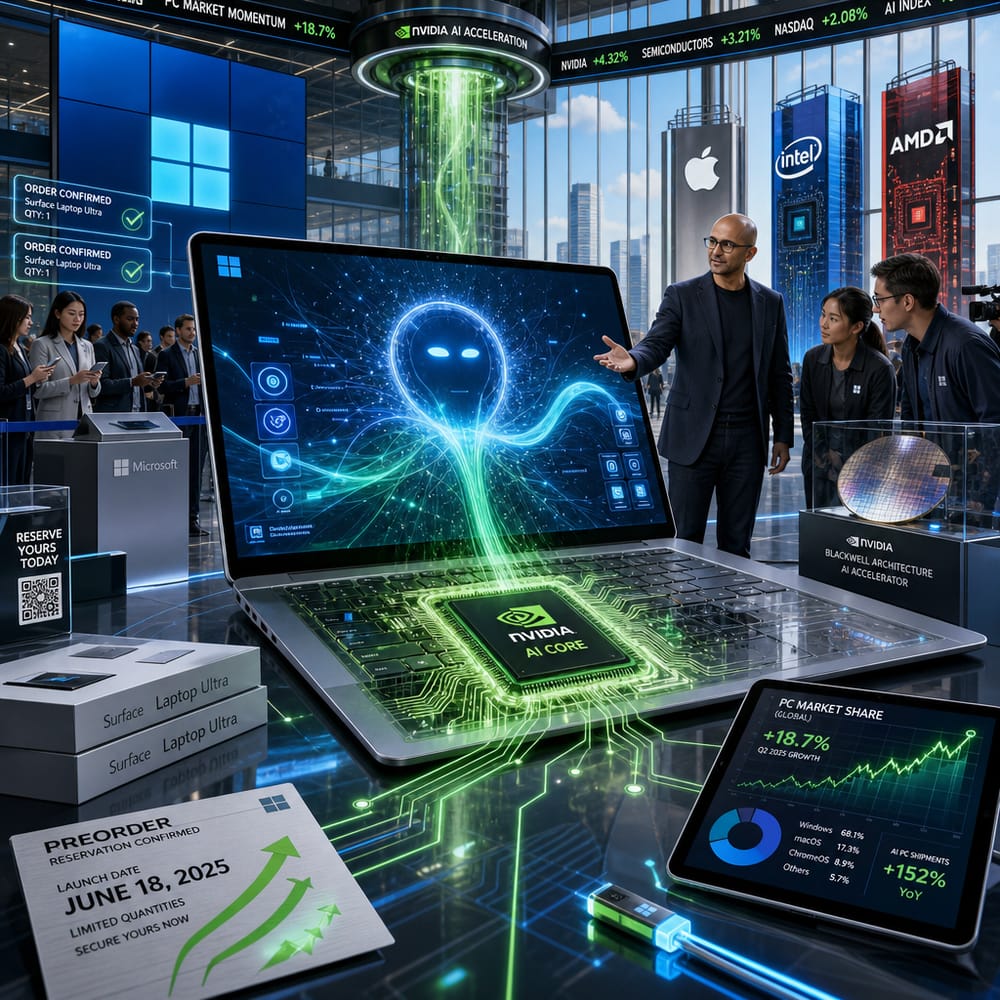
MICROSOFT’S SURFACE LAPTOP ULTRA: AI-POWERED PCS HIT THE MARKET
Picture this: Your laptop no longer just whirs away, processing your incessant Google searches. Instead, it predicts your needs, schedules your meetings, and maybe—just maybe—suggests the perfect spicy meme for your group chat. This isn't science fiction. This is Microsoft's new Surface Laptop Ultra, now powered with an Nvidia AI chip. And yes, it’s about to hit your nearest tech retailer.
Microsoft officially launched its new AI-integrated beast for preorders, coming to consumers with a starting price tag of $2,599.00. It’s not just a shiny new toy; this might just be the initiation of a new era in consumer electronics, where artificial intelligence isn’t just in the cloud but right in the machinery you use daily.
But what does this mean for your wallet, your inbox, and the crowd of tech giants eyeing your every click? Strap in as we delve into this AI odyssey.
AI, BUT MAKE IT PORTABLE
We’ve seen AI help with everything from writing bad poetry to ordering tacos with extra guac, but now it’s lodged in the heart of your laptop. The Nvidia AI chip promises to bring a kind of intelligence to personal computing that’s been, until now, more smoke than fire. Imagine your device learning your work habits, optimizing battery life, and even suggesting the best time to take a break based on your productivity cycles.
Of course, integrating such tech wizardry into the consumer market isn’t exactly free. Microsoft is betting that this leap will justify a price tag that can make your bank account wince. At a dazzling $2,599, it’s clear Microsoft believes AI in your pocket is worth the splurge. The real question is, will the average consumer buy into it, especially when their trusty, albeit less savvy, PC still does the job?
THE PRICE OF TECH PERFECTION
So, how does AI integration actually affect PC pricing and margins? For Microsoft, and the industry at large, the pathway is crystal clear: early adopters fund innovation. First-mover advantage in tech often means charging a premium for the fancy new features, which, in turn, pads the profit margins. But it’s a gamble—consumers need to see real added value to open their wallets further. If the AI offers substantial performance enhancements that align with the hefty price, Microsoft might just be onto a winner.
For competitors like Apple, Intel, and AMD, this maneuver is the shot across the bow. They're now pressed to either join the AI parade or risk being left in its digital dust. Apple, with its penchant for innovation (and for never being outdone), will likely rush to integrate similar capacities, setting the stage for a tech showdown.
THE NEW CONSUMER DEMAND
This also nudges us to ponder how consumer demand for AI-enabled devices will evolve. Some of us are still figuring out smartwatches and Alexa. Now we need to grapple with the idea of our laptops having more brainpower than a hyper-caffeinated teenager. But jokes aside, there's a real appetite for smarter tech that can genuinely make life easier—if it delivers on its promise.
The surge in AI consumer equipment is not just a fad; it's a pivot. Buyers will soon expect even basic devices to have some level of 'smarts.' As prices for AI-driven products drop over time, this expectation might transform into demand, much like how streaming services became the norm over DVDs.
THE CHALLENGE FOR TECH GIANTS
What does this mean for the competitive landscape? Well, Microsoft’s move with Nvidia loosens the status quo. Intel and AMD, long-time champions of the chip game, will need to either innovate or start sending thank you notes to Nvidia for their newfound fame. We're talking about a market metamorphosis where the previously clear lines between hardware and software blur, with AI being the connective tissue.
For PC manufacturers, it’s a mixed bag. On one hand, they can ride this AI wave to create highly differentiated products. On the other, the R&D costs might deter some from diving into the deep end too quickly. Yet, as Microsoft leads the charge, the rest of the herd will likely follow, sooner rather than later.
AI in consumer PCs isn’t just about creating a hyper-efficient experience; it’s about reshaping the future of personal computing. Microsoft’s Surface Laptop Ultra is more than a gadget; it's a bold statement of where tech is headed. The question is, are we ready to embrace our new AI overlords—at least the ones that fit in our backpacks? Stay tuned, and keep your devices charged. This ride is just getting started.
This article is for informational purposes only and is not investment advice. Always do your own research or consult a licensed financial professional before making investment decisions.
© Copyright 2024. All Rights Reserved.
© Copyright 2024. All Rights Reserved.