

Microsoft's Shift to In-House AI Chips
Monday, October 12, 2026
MICROSOFT'S SHIFT TO IN-HOUSE AI CHIPS
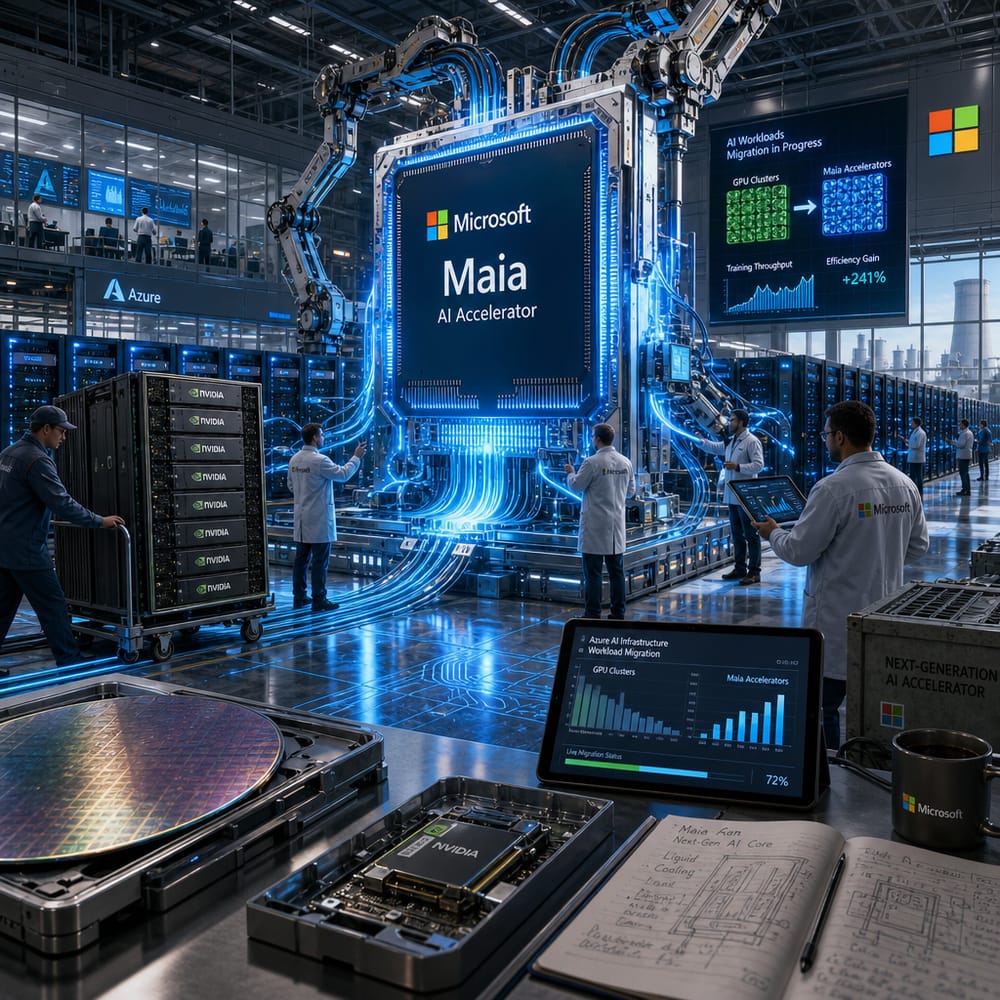
Microsoft, the tech behemoth brewing innovation as casually as you stir your morning coffee, just brewed a fresh pot of disruption, and it's piping hot. With its recent announcement of the third-generation Maia AI accelerator, Microsoft is boldly stepping away from its reliance on Nvidia's GPUs. This move is not just a page-turner—it's a whole new chapter in the story of AI computing. What does this mean for the market? Buckle up, because we're diving into a tech tale that's about to get spicy.
Microsoft's game plan here is as slick as it is strategic. They're swapping out Nvidia's graphics processing units—which are basically the muscle cars of AI computing—for their own homegrown silicon. Think of it as trading in a rental car for a custom-built speedster. By using its own chips, Microsoft is not only tightening the bolts on its AI stack but also signaling a seismic shift that could rattle Nvidia's empire of silicon supremacy.
Now, before you start picturing Nvidia execs breaking out into cold sweats, let's break it down. Nvidia's GPUs have long been the go-to for AI workloads, powering up everything from facial recognition to autonomous vehicles. They're so entrenched in the market that you could call them the Starbucks of silicon—ubiquitous and caffeinating digital dreams everywhere. But if Microsoft’s bold gambit pays off, it could mean some serious headwinds for Nvidia’s revenue stream.
The potential impact on Nvidia is like a plot twist no one saw coming. If Microsoft successfully reduces its dependency on Nvidia’s GPUs, it’s waving goodbye to a significant portion of its business. This doesn't just create ripples; it creates waves in the sea of tech competition. Nvidia's stockholders might start watching Microsoft with the intensity of a hawk eyeing a juicy mouse. Suddenly, Nvidia's top-dog status in the AI race might not be as unshakeable as once thought.
On the flip side, Microsoft could be setting itself up for a major win. By going the DIY route with their chips, they’re paving the way for potential cost savings. The cost of using third-party GPUs isn't just about the upfront price—there's also the ongoing licensing fees and the general hassle of depending on another company’s production schedule. It’s like renting an apartment with neighbors you didn’t choose. Sure, it’s convenient, but owning your own place? That’s financial freedom, baby.
Moreover, Microsoft’s bet on their own chips could be a massive value-add for its Azure cloud services, making them even more attractive to clients hungry for AI-driven solutions. With in-house chips optimized for their specific needs, Microsoft might just have the secret sauce to lure even more customers into their cloud ecosystem.
But here's the million-dollar question: will other tech titans follow Microsoft's lead? Is there a Silicon Valley domino effect in the making? If Microsoft nails this landing, don't be surprised if companies like Amazon or Google start considering similar paths. After all, Los Angeles has its movie stars, and Silicon Valley has its trailblazers.
Let's not skip over the fact that this move is also a testament to the insatiable demand for advanced processors. The AI space is like a high-stakes poker game, and Microsoft just threw in a big bet. This unfolding drama isn't just about chips; it's a snapshot of a greater tech evolution, one where innovation is the currency and everyone is racing to mint their own.
While we can’t predict the future with the precision of a well-tuned algorithm, one thing is clear: the tech landscape is shifting, and the players are repositioning themselves. Whether you're a shareholder, a tech enthusiast, or someone who just loves a good underdog story, this is one saga you're going to want to follow closely. Microsoft is playing the long game, and as always with tech, the smart money knows where to watch. Stay tuned, because the next chapter promises to be just as thrilling.
This article is for informational purposes only and is not investment advice. Always do your own research or consult a licensed financial professional before making investment decisions.
© Copyright 2024. All Rights Reserved.
© Copyright 2024. All Rights Reserved.