

Microsoft's Maia 300 Chip Reveal on Horizon
Thursday, August 20, 2026
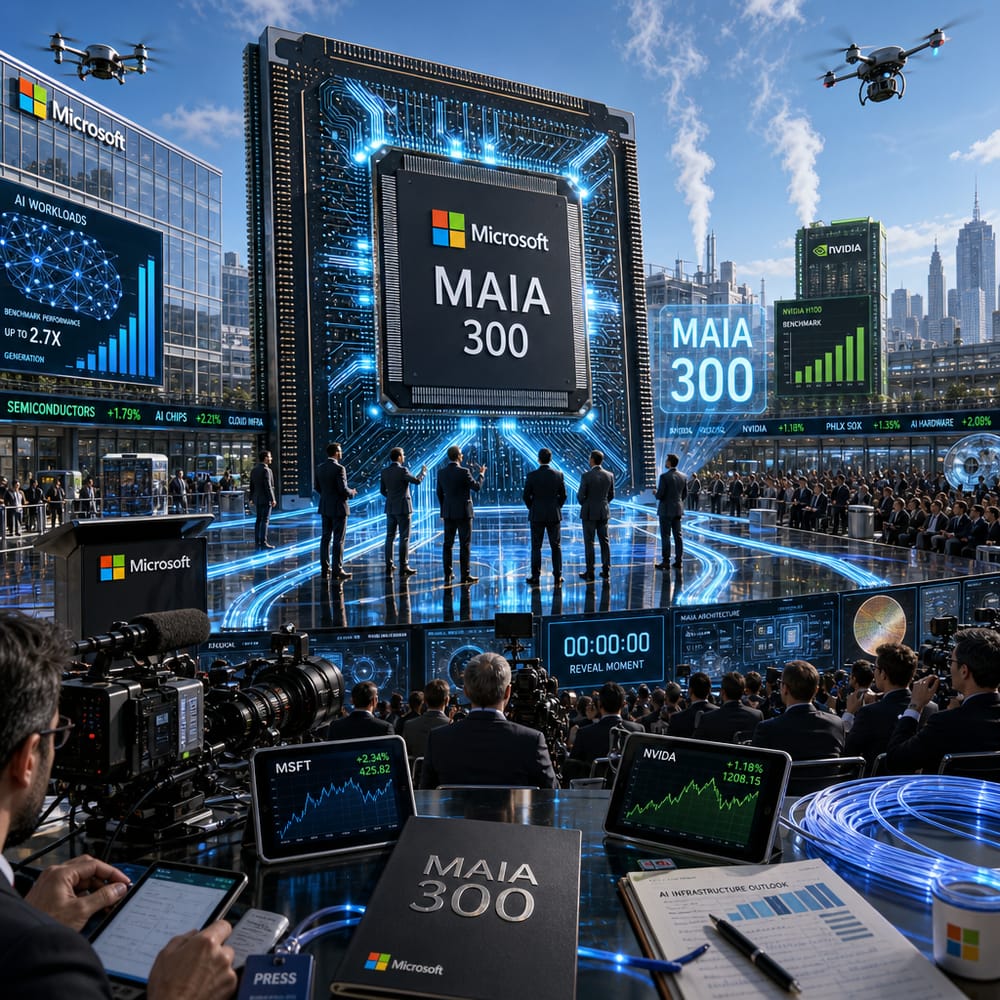
MICROSOFT'S MAIA 300: READY TO RUMBLE WITH NVIDIA?
Alright, folks, grab your popcorn because the showdown of the year is about to begin: the tech titan Microsoft is set to unveil its next-generation AI chip, the Maia 300, and it's coming for Nvidia's crown. It's like the opening scene of a blockbuster where you can feel the tension crackling in the air. An AI chip heavyweight match, and Microsoft is ready to rumble.
Now, we all know Nvidia has been the long-reigning champ in the AI chip arena. Its chips have been the powerhouse behind everything from self-driving cars to cutting-edge data centers. But with the Maia 300 stepping into the ring, Microsoft is making it clear that it's no longer content to sit back and watch Nvidia hog all the glory—and profit margins.
So, what exactly is the Maia 300 packing under the hood? In the world of AI, it's like asking what's in grandma's secret cookie recipe. The specifics are still tightly under wraps, but what we do know is that Microsoft has been cooking up something special in its labs. The Maia 300 is expected to boast enhanced performance and efficiency metrics to tackle heavy-duty AI tasks like natural language processing and computer vision. And the buzz is that it could give Nvidia's top dogs a run for their money.
Speaking of which, let's size up the competition. Nvidia's current lineup isn't just any pushover; we're talking about the kind of tech that practically runs Silicon Valley. Its top-of-the-line chips, like the A100 and the newly released H100, are the Usain Bolts of the semiconductor world—blisteringly fast and ruthlessly efficient. The question on everyone's mind is, can the Maia 300 compete?
Microsoft's move is more than just a tech flex. It's a strategic play straight out of the big leagues. By developing its own AI hardware, Microsoft is not only looking to cut costs by reducing its dependence on Nvidia but also aiming to capture a slice of the ever-expanding AI market pie. And that's not a bad pie to have a piece of—AI hardware is expected to be a multi-billion-dollar market in the coming years.
But what does this mean for Microsoft's market share? Well, it could be a game-changer. If the Maia 300 delivers on the hype, Microsoft might just entice other tech companies to bet on its chips over Nvidia's. That could mean new partnerships, bigger contracts, and potentially a bump in those stock prices retail investors love to watch.
For Nvidia, the introduction of Microsoft's chip could mean a tougher landscape. The company has been ruling the roost largely unchallenged, but Microsoft entering the fray means Nvidia will need to innovate at an even faster pace to maintain its market dominance. Competition, after all, is the engine of innovation.
The ripple effects could extend beyond just the tech companies themselves. For everyday investors, the emergence of new players in the AI chip space could mean more volatility and, potentially, more opportunities. As Microsoft flexes its muscles, its stock might become an interesting proposition for those looking to add a bit of tech spice to their portfolios. On the other hand, Nvidia's stock could become a bit of a rollercoaster as it navigates the newfound competition.
In the end, the big question is whether Microsoft can deliver a knockout punch with its Maia 300 or if it will just be a flash in the pan. As for investors, keeping an eye on this unfolding drama could be the key to spotting the next big trend in tech. With the AI revolution in full swing, the only thing certain is that the race is far from over and the stakes have never been higher.
So, fasten your seatbelts and get ready for the battle of the chips. Microsoft's Maia 300 is making its debut, and the tech world is watching with bated breath. Who will come out on top? Only time will tell, but one thing's for sure—it's going to be one heck of a ride.
This article is for informational purposes only and is not investment advice. Always do your own research or consult a licensed financial professional before making investment decisions.
© Copyright 2024. All Rights Reserved.
© Copyright 2024. All Rights Reserved.