

Micron Warns of Prolonged Memory Supply Constraints
Friday, October 02, 2026
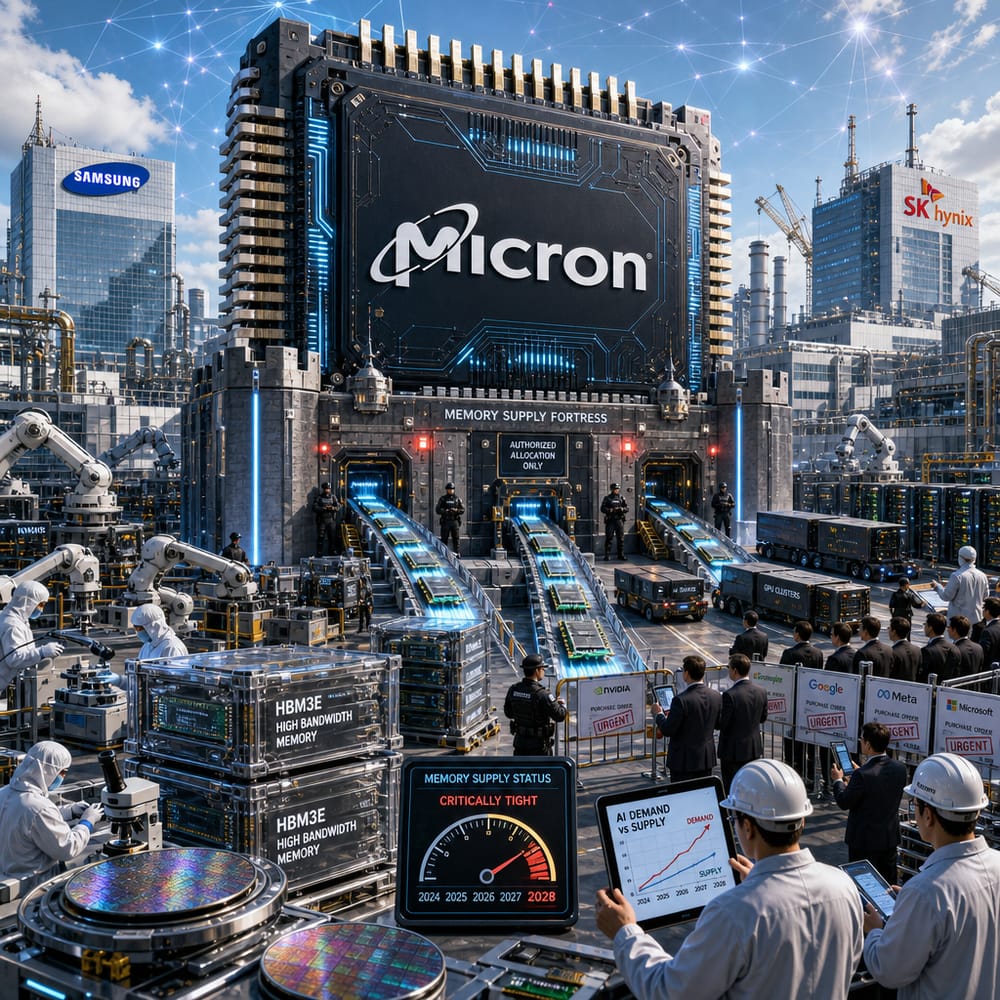
WHEN MEMORY ISN'T SERVING: MICRON'S LOOMING MEMORY CRUNCH
Warning: the future of memory chips might be less like a streamlined race car and more like a clogged traffic jam. In a world where every new AI gadget seems to demand its own mini supercomputer, memory chip maker Micron has sounded the alarm on future supply constraints. And we all know what happens when supply takes a hit—prices go through the roof faster than you can say "inflation."
In a recent earnings call that rippled through the tech world faster than a viral TikTok, Micron forecasted a tighter memory supply-demand balance sticking around until 2028. They've got a crystal ball and it’s showing a whole lot of pressure on the production of those tiny yet mighty chips that keep our devices smarter than us.
So why does this matter for you, the everyday investor scrolling through potential stock picks while waiting for your latte? Because memory chips are the secret sauce behind everything from your smartphone to the data centers powering your favorite cat video streaming site. When the sauce runs low, it's not just tech companies like Apple or Google that feel the pinch, it’s everyone down the line—right to your wallet.
THE PRICE OF MEMORY: HOW TECH GIANTS WILL COPE
Prolonged supply issues in memory chips translate to higher costs for tech giants. And historically, what do companies do when they face rising costs? They either pass them on to consumers in the form of pricier gadgets or eat the costs, which doesn’t exactly make shareholders do a happy dance. Therefore, brace yourself for potentially higher prices on everything tech, from your next smartphone upgrade to the cloud storage you didn't realize you were maxing out.
But don’t count out these tech behemoths just yet. They’ve been through the proverbial supply chain wringer over the past few years. Many of them have already started crafting their own buffer zones against future supply shocks. Think diversifying suppliers or even offloading some production in-house—because sometimes if you want something done right, you’ve got to do it yourself.
STRATEGIC SHIFTS: TECH COMPANIES' PLAYBOOK
Memory supply constraints are like that tricky question on a final exam: unavoidable and requiring a plan. So what's in the playbooks of these tech companies? First, expect more long-term deals with memory suppliers. Locking in contracts early at fixed prices will be key in avoiding the volatility of sudden price spikes. And don't be surprised if some companies start investing directly in memory manufacturing—becoming part owner in the supply chain itself.
Additionally, firms might double down on efficiency, optimizing their products to squeeze out the most performance per byte of memory. This not only helps mitigate costs but could also lead to innovative breakthroughs in tech design.
A LOOK AHEAD: THE AI CONNECTION
The elephant in the room wearing AI-colored pajamas is that much of this memory demand is driven by artificial intelligence. As more companies race to integrate AI into their products—thank you, ChatGPT—demand for memory chips skyrockets. So alongside energy efficiency, companies may pivot towards developing AI capabilities that require fewer memory resources, though this would be like trying to make a gourmet meal out of a Lunchable—it can be done, but it's not easy.
In the interim, companies like Micron, Samsung, and SK Hynix will be watched closely by investors, as their ability to ramp up production could directly impact tech prices and availability. If they can navigate these potentially choppy waters, it’s not just their bottom line that will benefit, but the entire tech ecosystem—consumers included.
BOTTOM LINE FOR INVESTORS
If you're an investor eyeing tech stocks, the balance of memory supply and demand could be more influential than ever. Companies that can effectively manage these constraints may emerge as winners, while those caught off guard could face price pressure. Keep an eye on who’s making strategic supplier agreements and investing in alternative tech solutions—these moves could be the breadcrumbs leading to future success.
So, whether you're holding shares in Micron or just a curious spectator, these memory shortages are a reminder that in tech, memory isn't just a store of information—it’s the currency of the future.
This article is for informational purposes only and is not investment advice. Always do your own research or consult a licensed financial professional before making investment decisions.
© Copyright 2024. All Rights Reserved.
© Copyright 2024. All Rights Reserved.