

Micron's Strategic Agreements Highlight Memory Market Tightness
Friday, August 21, 2026
Micron's Strategic Agreements Highlight Memory Market Tightness
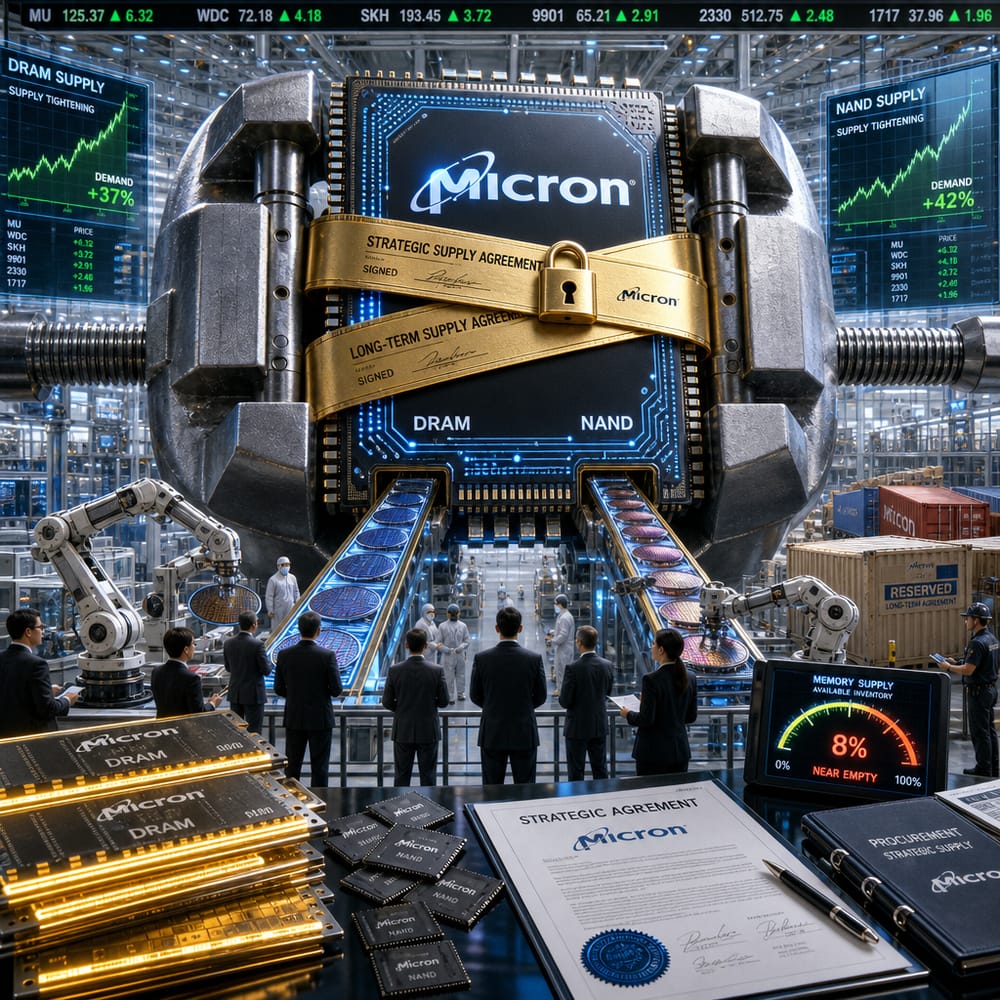
In the high-stakes poker game of the semiconductor industry, Micron Technology just threw down a full house. The memory chipmaker announced strategic agreements that lock up a hefty chunk of its DRAM and NAND production for years to come, and it’s making investors' ears perk up like dogs hearing a can opener.
These agreements aren't just about securing future business—though that’s certainly a nice bonus. What they really do is put Micron in the driver's seat, giving it both supply chain clarity and a solid grip on pricing power. In an era where supply chain disruptions are as frequent as plot twists on a reality TV show, that's a big deal.
WHY THE AGREEMENTS MATTER
Here's the tea: Micron's new deals effectively act as an insurance policy against the roller-coaster ride of supply shortages. By locking in these agreements, Micron sidesteps the supply constraints that could leave others scrambling. Remember the chip shortage of 2021 that had carmakers and gadget producers pulling their hair out? Micron's not about to repeat that chapter in the memory market playbook.
But wait, there's more. With these agreements in place, Micron can forecast its future like a fortune teller with a crystal ball—though with less mysticism and more spreadsheets. This multi-year visibility into supply offers a rare certainty in a notoriously volatile industry, and that’s pure gold for both Micron and its investors.
THE UNSEEN EDGE
Micron’s strategic maneuvering doesn’t just strengthen its own position; it sends a ripple effect through the entire memory market. Competitors, brace yourselves. With Micron hogging a significant portion of the supply, others might find themselves reaching for scraps, potentially driving prices up.
And when prices rise, guess who gets to benefit? Hint: it's not the competitors desperately rummaging for DRAM and NAND like they're on a frantic supermarket sweep. Micron, with its agreements, has a first-class ticket in controlling the pricing narrative—at least for now.
PRICING TRENDS: THE GOOD, THE BAD, AND THE UGLY
In this game of silicon, pricing trends are the reigning monarch. Given Micron's newly fortified position, expect some turbulence in the price skies. Supply constraints often lead to higher prices, which, in turn, could pad Micron's bottom line nicely. So, if you're an investor, you might be grinning like a kid with an extra scoop of ice cream.
Yet, while Micron could thrive in this environment, its customers might feel the pinch. Higher memory prices can drive up the cost of everything from smartphones to data centers. And dear tech enthusiasts, if a new gadget purchase suddenly feels like a wallet-busting decision, you know whom to thank.
LOOKING AHEAD
So, what's the forecast? With Micron having anticipated these market dynamics, it’s playing chess while others are stuck on checkers. The company's strategic agreements make it clear: they're not just participants in the memory market—they're aiming to be the puppet masters.
For investors, the implication is clear: Micron’s tactical moves are not just temporary headlines but potentially indicative of long-term trends. As DRAM and NAND demand remains robust, Micron sits pretty, well-poised to exploit the tightening grip on supply.
In the grand theater of global markets, Micron's latest agreements are more than just strategic—they're a compelling act in a drama where supply, demand, and pricing duke it out in real-time. And as we watch this saga unfold, Micron is emerging not just as a player, but as a director calling the shots from behind the scenes. Pass the popcorn, because this is one market narrative that’s bound to keep us entertained.
This article is for informational purposes only and is not investment advice. Always do your own research or consult a licensed financial professional before making investment decisions.
© Copyright 2024. All Rights Reserved.
© Copyright 2024. All Rights Reserved.