

Micron's Stock Soars on AI Memory Demand
Wednesday, August 12, 2026
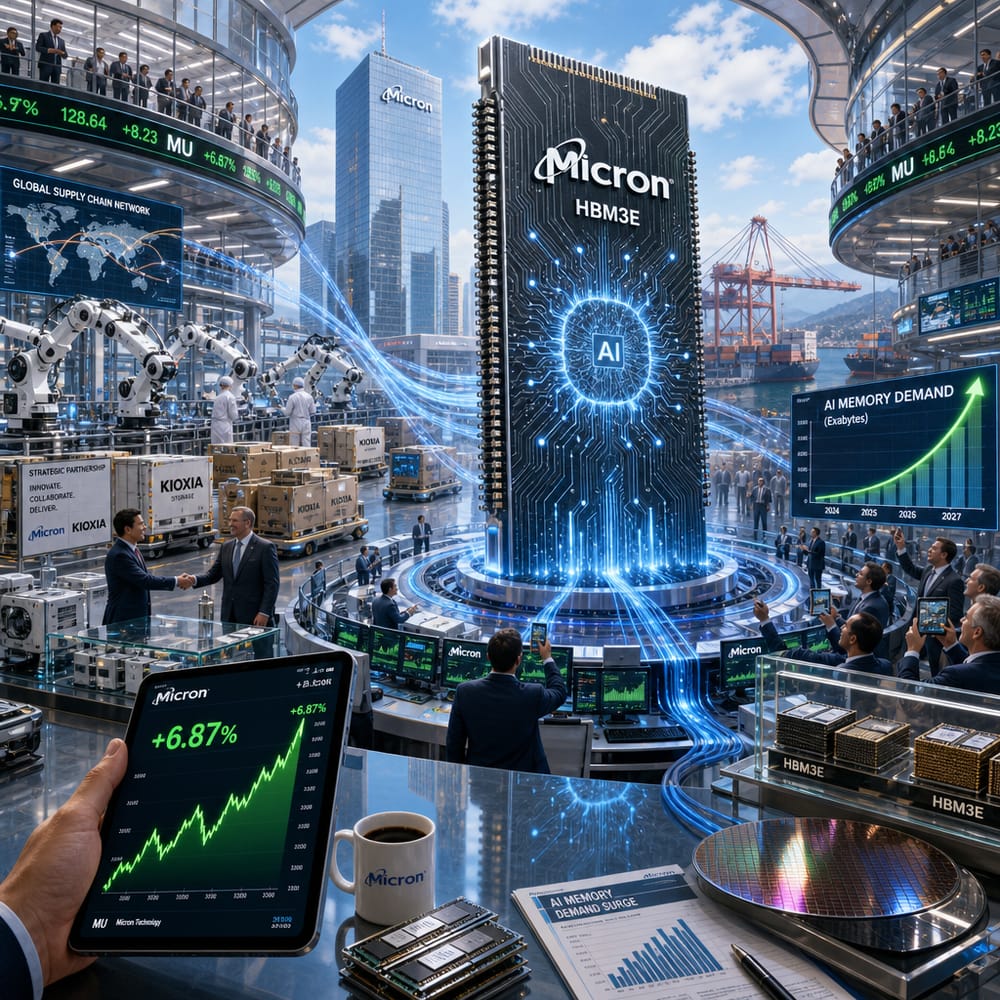
AI is the siren song of the stock market these days, and Micron Technology is dancing to its tune. Just recently, Micron's stock price went on a joyride, jumping nearly 7% overnight. The reason? An AI-fueled demand for memory and storage solutions, which Micron just so happens to be perfectly positioned to supply. If you’ve been tracking Micron—or if you just like your stock charts looking like mountain ranges—this is the story for you.
First off, let’s talk about why Micron is suddenly getting this rockstar treatment. The magic word here is “AI.” Yes, the same buzzword that's got everyone from tech geeks to Wall Street bigwigs all hopped up on potential. AI needs a ridiculous amount of data processing, and that requires massive memory and storage. Enter Micron, with its shiny memory solutions that are as essential to AI as caffeine is to a Monday morning.
This isn’t a stroke of luck; it’s a strategy. Micron has been playing a long game here, silently bolstering its expertise in memory tech while others were just testing the AI waters. And now, with the AI tide rising, Micron is catching that wave like a pro surfer. But even the best surfers need a good board, and for Micron, that board has been its strategic partnerships.
Micron's recent tango with Kioxia, a flash memory giant, is a case in point. This alliance isn’t just about tech consolidation; it’s about cornering a market that’s poised to explode. Collaborations like these spell out “R-E-S-P-E-C-T” in the tech world, enhancing Micron's credibility and market positioning. As memory demands skyrocket, having a partner like Kioxia isn’t just an asset; it's a superpower.
Okay, let’s zoom out a bit. What does all this mean for the broader semiconductor industry? For starters, it's a wake-up call. Forget the old days of cyclical booms and busts driven by gadget sales. The new semiconductor game is about ecosystems—AI, machine learning, and other next-gen tech are the arenas where fortunes will be won or lost.
Micron’s rise might just push others in the industry to rethink their strategies. After all, being the memory supplier in an AI-driven world is akin to being the gold dealer during a gold rush. The catch? You’ve got to dig your own mine first. Companies will have to invest heavily in R&D, supply chains, and partnerships to not only compete but to stay relevant.
While some might be scratching their heads wondering if this AI thing is just the latest tech fad, the smart money—Micron's, for instance—is betting that this is only the beginning. AI doesn't just drive demand for memory and storage; it changes the way we think about data itself. And as the world becomes more data-centric, those who control the data highways are destined for the fast lane.
But don't get it twisted: This is no time to pop the champagne just yet. The semiconductor world is fiercely competitive, and while Micron is having its moment in the sun, staying there requires constant innovation and agility. The AI landscape is evolving quicker than a TikTok trend, and staying ahead means anticipating the next big turn before it becomes a sharp corner.
In conclusion, Micron’s stock surge isn't just a fleeting market blip; it’s a signal of something much more profound. The company's strategic focus on AI memory solutions isn’t just smart; it’s visionary. As AI continues to weave itself into the fabric of our digital lives, companies like Micron that provide the essential infrastructure for this revolution will likely see their fortunes rise.
So, for the everyday retail investor wondering if Micron is worth a second glance, the answer seems to be a resounding yes. In a sector where yesterday’s innovation quickly becomes today’s norm, Micron is not just keeping up; it’s setting the pace. And in case you were wondering, that's the kind of stock story that’s hard to ignore.
This article is for informational purposes only and is not investment advice. Always do your own research or consult a licensed financial professional before making investment decisions.
© Copyright 2024. All Rights Reserved.
© Copyright 2024. All Rights Reserved.