

Micron's Record Q4 Performance—What It Signals for AI Memory Demand
Friday, October 02, 2026
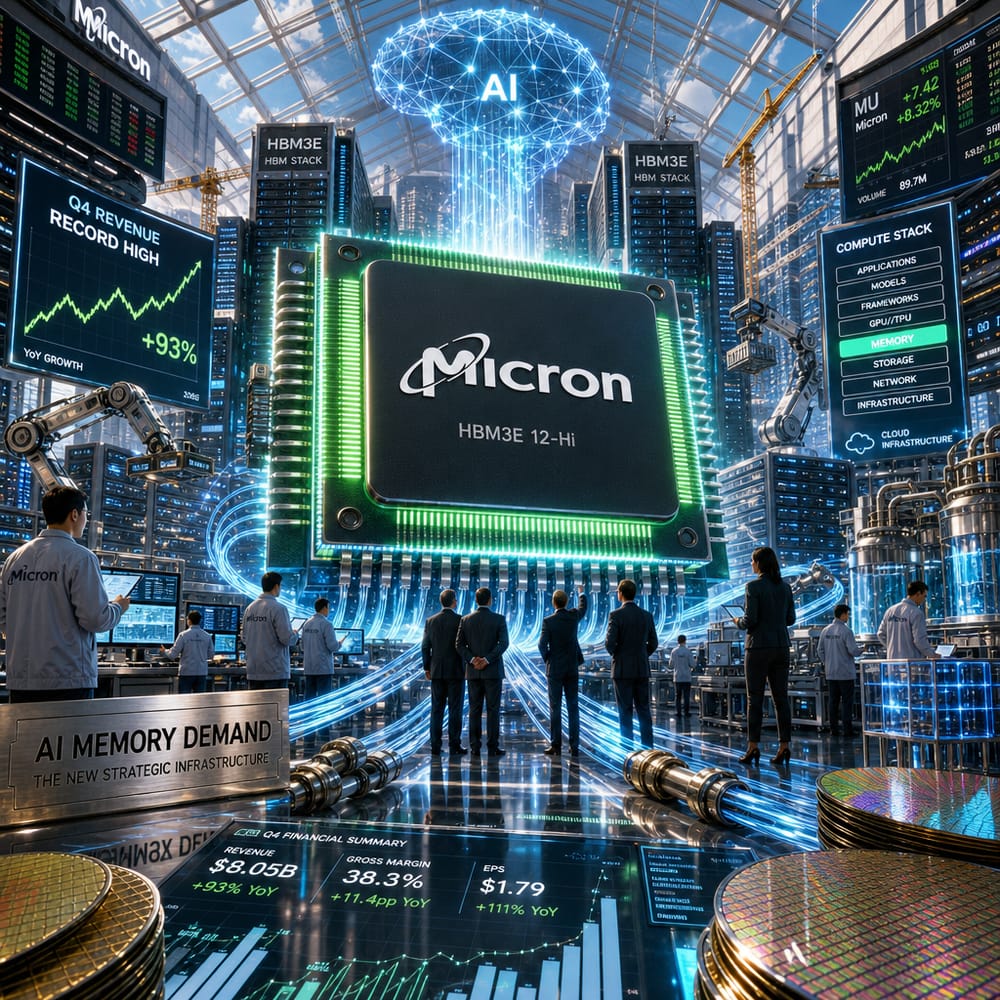
MICRON'S RECORD Q4 PERFORMANCE—WHAT IT SIGNALS FOR AI MEMORY DEMAND
You might think the revolution would be televised, but it turns out it’s more about terabytes than TV screens. Welcome to the age of AI, where the real stars are the quiet memory chips making all the neural magic possible. And no one’s playing this game harder than Micron Technology, which just dropped a fiscal fourth-quarter revenue like a mic drop—$54.23 billion. Yeah, you read that right. Let’s dig into why this isn't just a one-off win, but a sign of times to come.
So, what’s in the water at Micron that's got them pulling in record numbers? The answer, my friends, lies in the ever-expanding universe of artificial intelligence. While everyone’s busy ogling GPUs (those graphic processing units that make your gaming rig look like a shrine), it’s easy to overlook the silent workhorse: memory. Memory chips are like the skeletal muscles for AI. They do the heavy lifting, processing vast amounts of data required to train those ever-so-clever algorithms.
In the past, GPUs were the bottleneck in AI systems, like the cork in a bottle of Champagne. But AI's appetite is insatiable, and as it grows hungrier, it’s not just GPUs feeling the stretch. We’re hitting memory walls, folks. This isn’t just about faster algorithms; it’s about the infrastructure—data centers equipped to handle enormous data loads that demand next-level memory performance. This is where Micron comes in as the knight in silicon armor.
Micron’s stellar performance in Q4 isn't happening in a vacuum. It’s a bellwether for the sector. The demand for AI memory is like a freight train barrelling down the tracks—with no intention of stopping. Investors looking to ride the lightning might want to consider memory equities seriously. We're talking about a market poised to expand as AI workloads grow more complex, necessitating memory solutions that can keep up.
Let’s talk implications, shall we? If memory is the new darling of AI, then the market is wide open for those who dare to innovate. Micron’s latest haul suggests that investing in memory isn't just playing the penny slots—this is high stakes poker. As AI expands into everything from autonomous vehicles to chatbots, the thirst for robust memory solutions will only intensify. That spells opportunity for both established players in the sector and those daring enough to enter the race.
Micron's capital expenditure (capex) and new product rollout plans are also worth watching closely. Any significant capex signals an intent to meet future demand head-on, expanding production capacities, and innovating product offerings. This is more than just numbers on a balance sheet. It’s a declaration of intent. Micron is betting big, and if they play their cards right, the payout could be immense.
The world of AI hardware is a cutthroat arena. It’s not just about who can make the fastest chip but who can integrate seamlessly into the compute stack—a fancy way of saying ‘play nice with other tech.’ Memory is pivotal here, making it a strategic asset in the grand chess game of tech innovation.
As Micron rides the wave of AI-driven demand, the broader question looms: how will other players in the memory sector adapt? Will they step up to the challenge or get lost in the shuffle? For investors, keeping an eye on how companies like Micron are positioning themselves in the AI landscape could make all the difference between a solid stock pick and a missed opportunity.
Micron’s record Q4 numbers aren't just a flash in the pan—they’re a sign of the shifting tides in tech. While the world keeps one eye on flashy AI developments, the other should be watching the humble memory chip silently orchestrating it all. It's a game of brains and bytes, and Micron is proving that when it comes to AI, memory matters—a lot.
So, as you ponder your next market move, remember this: in the rapidly evolving AI narrative, sometimes the unsung heroes are the ones you want to hitch your wagon to. Who needs a crystal ball when you’ve got a solid silicon chip?
This article is for informational purposes only and is not investment advice. Always do your own research or consult a licensed financial professional before making investment decisions.
© Copyright 2024. All Rights Reserved.
© Copyright 2024. All Rights Reserved.