

Micron's Decline Amid AI Memory Bottleneck Concerns
Monday, August 24, 2026
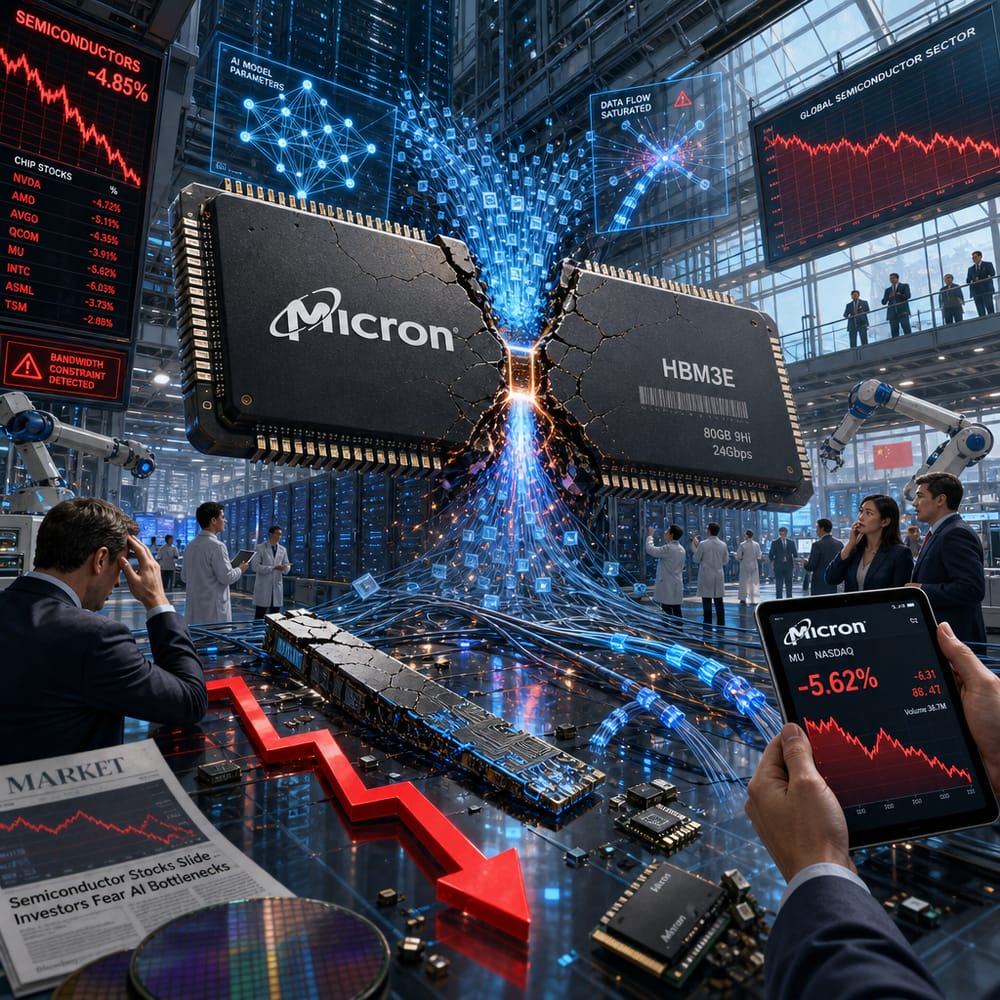
MICRON'S DECLINE AMID AI MEMORY BOTTLENECK CONCERNS
If Wall Street had a drama department, this would be its Shakespearean tragedy. Micron Technology, the poster child of memory chip production, has just taken a nosedive — and it’s not a small one. We’re talking a 5-6% drop, which, in stock market lingo, is the kind of plummet that makes even seasoned investors frown at their screens. But what exactly is causing this sharp decline, and should you be worried if you’re invested in the semiconductor sector?
THE MEMORY BOTTLENECK
Let’s cut to the chase. The core issue here is memory bandwidth. For those of us who don’t speak fluent tech, think of bandwidth as the highway that data travels on. When your highway gets jammed, traffic slows, and in the world of artificial intelligence (AI), slowed data means slowed progress. AI systems demand lots of data to make those jaw-dropping decisions that feel almost human (except without the bad puns).
Micron, a major player in memory chips, is smack dab in the middle of this traffic jam. The concern is that their chips may not be able to keep pace with the demands of next-gen AI systems. This isn't just a speed bump; it's a potential roadblock that could impact their bottom line and shake investor confidence.
CHINA IN THE RACE
But wait, there's more. As if potential memory constraints weren't enough to keep Micron’s execs awake at night, enter China. The world's most populous nation is not just sipping its tea while the West makes tech headlines. China is sprinting in the semiconductor race, and with Beijing’s backing, it’s pushing hard on the accelerator.
Increased competition from Chinese firms could drive down prices, squeeze profit margins, and put pressure on non-Chinese companies to innovate or risk being left in the digital dust. For Micron, this means more competition, more pressure, and potentially more headaches.
WHY IT MATTERS
So, why should you, the everyday investor, care about Micron's woes and Chinese competition? The answer lies in the ripple effect. Micron’s struggles are a microcosm of broader challenges in the semiconductor industry. If data is the new oil, then semiconductors are the pumps. They drive everything from your smartphone to cloud computing to autonomous vehicles.
If Micron stumbles, it could spell trouble for the whole sector. Stocks of memory chip manufacturers might quiver in sympathy, and your tech-heavy portfolio could take a hit. It’s like a domino effect, and Micron just knocked over the first tile.
WHAT’S NEXT FOR SEMICONDUCTORS?
Now, it's not all doom and gloom. The semiconductor sector has been on a rollercoaster, and seasoned investors know that what goes down often comes back up. The industry's innovation track record is solid, and companies are racing to solve these bandwidth issues.
Moreover, Nvidia, one of Micron’s peers, has been making strides with its acquisition of Groq, making headlines with its low-latency tech designed to make AI systems more responsive. If they solve the bandwidth puzzle, Nvidia and others could spearhead a new wave of AI advancements, setting the stage for potential recovery and growth.
BOTTOM LINE
So, what should the savvy investor do? Keep an eye on developments in AI technologies and semiconductor advances. If companies like Micron can get a handle on the bandwidth issue, we might see a strong rebound. But for now, this is a wake-up call that the tech industry still has hurdles to leap through.
The takeaway? Stay informed, stay agile, and remember, the tech world is a fascinating saga of innovation — one where the next plot twist could be just around the corner.
This article is for informational purposes only and is not investment advice. Always do your own research or consult a licensed financial professional before making investment decisions.
© Copyright 2024. All Rights Reserved.
© Copyright 2024. All Rights Reserved.