

Michael Burry Warns of Market Calm in Tech Sector
Wednesday, August 12, 2026
MICHAEL BURRY WARNS OF MARKET CALM IN TECH SECTOR
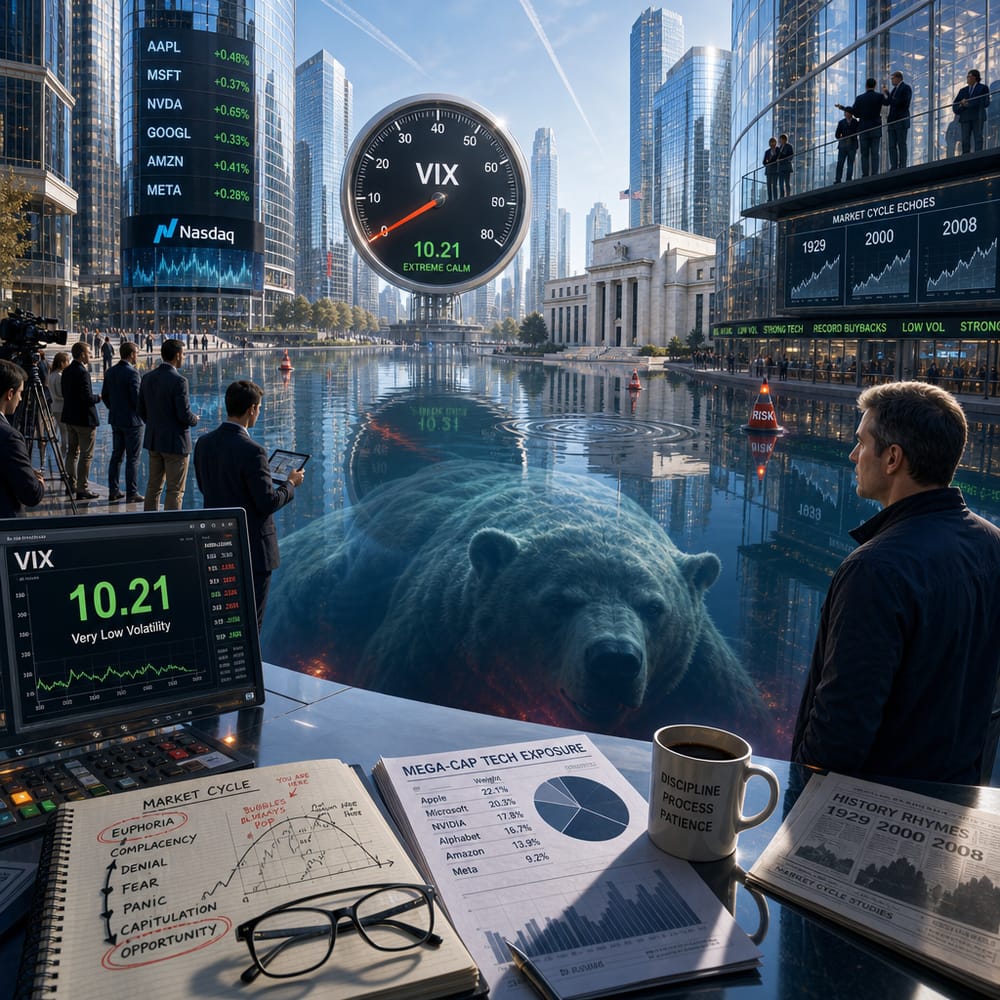
If you’re feeling a bit too cozy with the tranquility in the stock market, Michael Burry's here to rain on your picnic. You might remember Burry as the guy who made a fortune betting against the housing market before the 2008 financial crisis – so when he speaks, people tend to listen. His latest eyebrow-raiser? The eerie calm in the tech sector that smells suspiciously like the calm before a storm.
WHAT’S GOT BURRY SPOOKED?
Everybody loves the big-name tech stocks. Apple, Microsoft, Amazon – these trillion-dollar behemoths have been as steady as your favorite comfort food. But Burry draws a red line on viewing this period of tranquility as a good thing. Why? Because history shows us that calm waters can quickly turn into choppy seas.
Let's rewind to the late '90s. Tech stocks were the darlings of Wall Street, much like today. They ebbed and flowed with a grace that lulled investors into a false sense of security. Then came the dot-com bust, wiping out trillions of dollars and leaving a tech wasteland in its wake. If you were in the market back then, you remember it. If you weren't, you're probably glad you missed out. But the lesson remains: too much calm often precedes a shake-up.
PAST CALMS AND THEIR CHAOTIC AFTERMATHS
The dot-com bubble isn't the only lesson in market serenity gone rogue. The financial crisis of 2008 was another classic example. The steady ascent of housing prices made everyone feel like they were sitting on gold mines. Then kaboom – the market imploded, dragging the global economy with it.
Burry, a market Cassandra of sorts, seems to feel that this time it's the tech sector's overconfidence that might trigger an echo of past events. The current calm, buttressed by AI optimism and mega-cap tech security blankets, could be setting the stage for a rude awakening.
THE TECH SECTOR’S HISTORICAL LOVE AFFAIR WITH CALM
During past periods of market calm, tech stocks have painted a picture of stability. The volatility index, or VIX, often referred to as Wall Street's fear gauge, has been notably low, reflecting that same eerie stillness. Historically, when the VIX dips, it has sometimes preceded market corrections or crashes.
Investors might want to keep an eye on this index, especially when tech stocks seem to be droning on without much drama. After all, what goes up peacefully can also come down dramatically.
WHAT TO WATCH FOR: INDICATORS AND STRATEGIES
So, what’s an investor to do? First, keep a close eye on the VIX. If it starts to climb without an obvious trigger, it might be time to reassess your tech-heavy portfolio. Second, watch for changes in Federal Reserve policies. They're like market weathermen – a sudden shift could change everything.
Additionally, be aware of broader economic signals. Inflation, interest rates, and even geopolitical tensions can weave into this narrative. The recent jump in consumer prices, fueled by conflicts like the one with Iran, might seem disconnected, but they’re all threads in the same financial tapestry.
Lastly, remember that diversification is not just a buzzword. It's your financial safety net. While tech stocks might feel safer than a Swiss bank, a balanced portfolio that spreads the risk can keep you afloat if Burry’s warning proves prescient.
THE BOTTOM LINE
It's tempting to get comfortable when the market seems to be purring along. But as history shows, too much calm can signal a storm. Michael Burry might not have a crystal ball, but his track record gives his warnings weight.
So, if you're in tech stocks, wear your seatbelt. Keep your eyes on those crucial indicators, diversify your portfolio, and be ready to take action if the winds start to shift. Remember, in the stock market, calm is great – until it isn't. And as Burry reminds us, sometimes the best way to stay in the game is to keep listening for the thunder in the distance.
This article is for informational purposes only and is not investment advice. Always do your own research or consult a licensed financial professional before making investment decisions.
© Copyright 2024. All Rights Reserved.
© Copyright 2024. All Rights Reserved.