

MiCA's Impact on European Stablecoin Markets
Tuesday, August 04, 2026
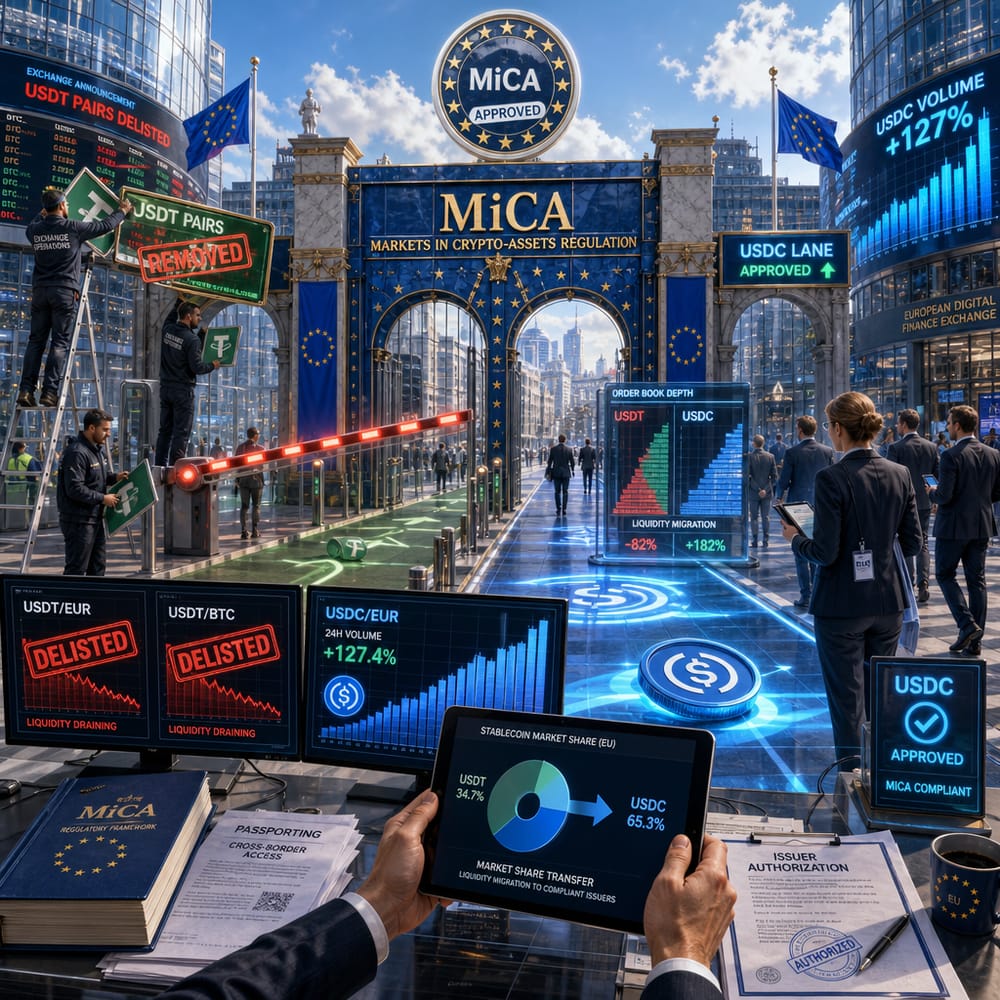
Regulators have just shaken up the stablecoin cocktail in Europe, and the tremors are rippling across the market like a splash of bitters in your whiskey sour. The buzzword on everyone's lips? MiCA. Yes, the Markets in Crypto-Assets regulation, the EU's latest attempt to tame the crypto wild west, is sending shockwaves through stablecoin spaces, especially for one heavyweight: Tether (USDT).
WHAT'S HAPPENING?
In a move that has some folks scratching their heads and others nodding approvingly, several European exchanges are hitting the brakes on USDT pairs. The reason? MiCA's stringent new guidelines, which are about as easygoing as a suit at a Friday night dive bar. These regulations are designed to streamline and secure the crypto universe, but they’ve put a target squarely on the back of Tether. With its connections frequently questioned, Tether finds itself painted as the crypto bad boy on the block.
The immediate effect? USDC — the stablecoin "good student" of the crypto class — is waltzing into the spotlight. While Tether's swagger is being sidelined, USDC is basking in the glow of increased market share and trading volumes. It's like USDC just got crowned prom king for being the reliable, trustworthy option your parents would love you to date.
WHY DOES IT MATTER?
For everyday retail investors watching the markets from their phones, this is more than just crypto gossip. It's a peek into the raw power of regulatory influence. MiCA is reshaping the playing field, nudging investors to reconsider their stablecoin dance partners. This could be the beginning of a new era where regulatory compliance isn’t just a footnote but a key player in investment decisions.
But let's park the speculation and get down to brass tacks. How exactly is MiCA influencing trading volumes in the stablecoin circuit, and what are the long-term prospects for USDT and USDC?
THE NUMBERS GAME
MiCA's guidelines are tightening the noose on stablecoins, and the effect on trading volumes is palpable. With exchanges pulling USDT pairs left and right, USDC is enjoying a trading volume renaissance. Investors are flocking to the Circle-backed stablecoin, attracted by its perceived transparency and regulatory friendliness. It’s like switching from a flashy sports car to a reliable sedan – maybe not as thrilling, but definitely more dependable when the road gets rocky.
As for long-term implications, Tether might be facing a rocky path ahead. If MiCA's approach catches on globally, USDT's current issues with transparency might become a larger liability. This could spur more exchanges to opt for USDC or other compliant alternatives, leaving Tether to ponder its next move.
On the flip side, USDC is poised to capitalize on this shift. As a stablecoin that's already jumping through regulatory hoops with ease, it could become the go-to for investors wary of the regulatory hammer. It’s like betting on the horse with the best odds and the sleekest pedigree — and right now, USDC is looking like Secretariat at the Kentucky Derby.
LOOKING AHEAD
What does this mean for you, the savvy investor watching the crypto cosmos unfold? Well, it’s time to keep your eyes peeled. Regulation isn’t going anywhere, and as the crypto landscape evolves, so will your strategies. Whether you're holding, buying, or just learning the ropes, understanding the regulatory environment is becoming as crucial as analyzing market trends.
MiCA's impact is a stark reminder of how a few lines of legislative text can ripple out to reshape a market. The stablecoin shake-up is a lesson in adaptability, reminding us that in the ever-changing crypto world, flexibility and staying informed are your best allies.
So, as the dust from MiCA settles and the stablecoin players find their footing, channel your inner market detective. Who knows? The next big shift might happen in the blink of an eye — and you'll want to be ready. Because in the high-stakes world of crypto, fortune favors not just the bold, but the informed.
This article is for informational purposes only and is not investment advice. Always do your own research or consult a licensed financial professional before making investment decisions.
© Copyright 2024. All Rights Reserved.
© Copyright 2024. All Rights Reserved.