

Meta Platforms Analyst Downgrade Signals Cautious Outlook
Saturday, August 29, 2026
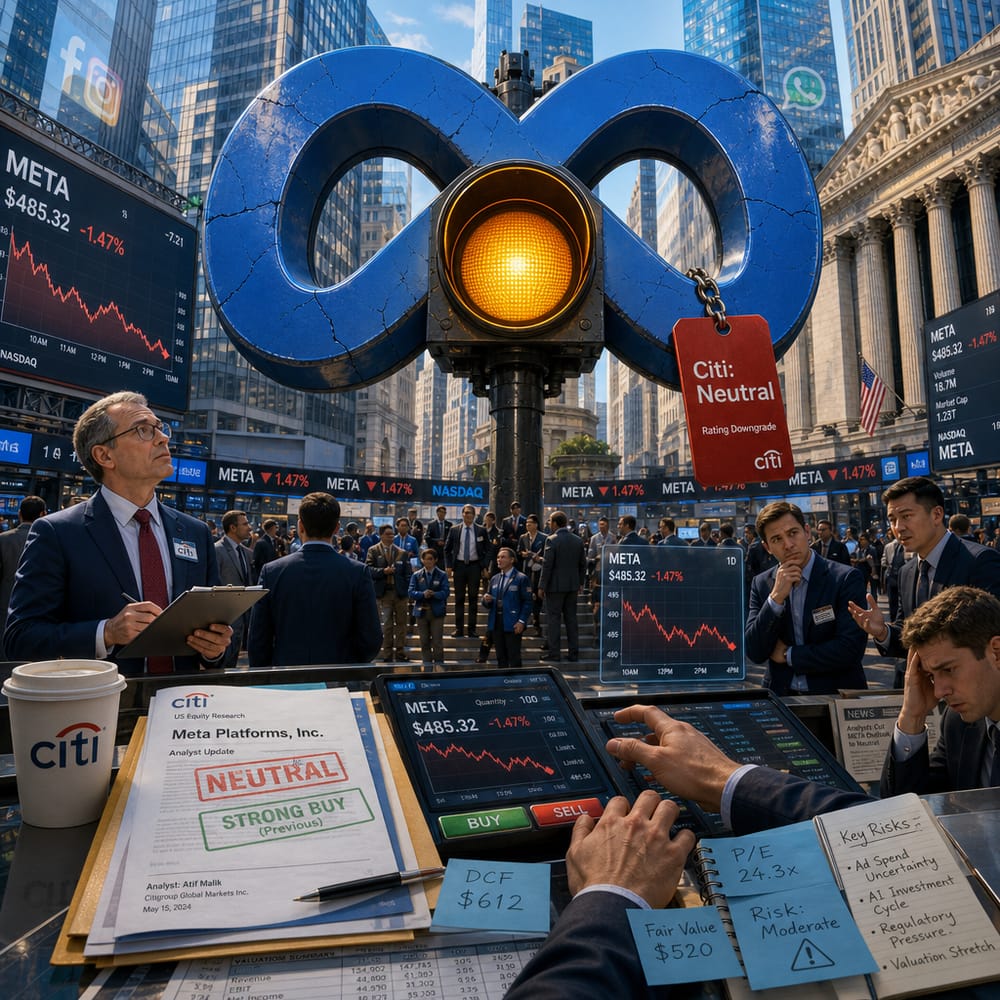
META MOMENT: WHAT DOES CITI’S DOWNGRADE MEAN FOR THE TECH TITAN?
In the ever-evolving tech jungle, Meta Platforms has been swinging from the AI vines like an acrobat in Cirque du Soleil. But hold your applause, folks — Citigroup just told the ringmaster to pull the safety net. They’ve downgraded Meta from a Strong Buy to a Neutral standing, and the market didn’t hesitate to raise an eyebrow and trim some value off their stock. So, what's lurking behind Citi's cautious approach, and should other tech titans be worried about this sudden change in forecast?
Citigroup’s downgrade isn’t just a gentle nudge; it’s a firm tap on the brakes. Their analysts have cast a skeptical eye over the sustainability of the AI-fueled rally that’s been buoying Meta’s stock like a helium-filled balloon. While Meta has been on a wild ride, embracing AI advancements like a kid in a candy store, Citi’s cautious note is a reminder that not all that glitters in the tech world is gold. The bank pointed out potential challenges in Meta's path, particularly around competition and regulatory hurdles that could resemble an obstacle course rather than a smooth racetrack.
The immediate repercussions? Meta's stock took a mild tumble, shedding a bit of its recent gains as investors digested the news. While it wasn’t a Black Monday-level crash, the market’s reaction was enough to give investors pause, triggering a reevaluation of Meta’s lofty valuations. With the stock market being a fickle beast, it’s worth remembering that today’s darling can quickly become tomorrow’s disappointment, especially when institutional eyes start narrowing.
But what does Citi's downgrade mean for the broader tech sector? Well, Meta isn’t the only megacap tech giant relying on AI to drive growth these days. If the AI engine powering Meta is sputtering or facing a steep climb, it could hint at similar bumps in the road for others in the tech realm. Companies like Apple, Microsoft, and Alphabet might be getting a sympathetic pat on the back from investors, as a shadow of doubt looms over whether AI alone can sustain the astronomic growth expectations hovering over Silicon Valley and beyond.
The downgrade also offers a glimpse into the growing concern about the valuation of AI-driven stocks. With tech giants rocking high price tags — powered by promises of an AI revolution akin to the dawn of the internet — there’s a justified worry about whether those valuations are more puff than substance. Investors are left wondering if they’re watching a thrilling blockbuster with plenty of sequels or a one-hit wonder set to fade into obscurity.
AI’s momentum might also see some friction. While AI remains the shiny new toy that's captivating industries from healthcare to finance, the cautionary tale of not putting all your eggs in the AI basket seems wise. With even Bill Gates joining the chorus calling for a careful throttle on AI's development, the picture painted isn’t just rosy — it’s increasingly complex. The market is trying to balance optimism for the transformative power of AI with trepidation about its long-term implications for jobs, privacy, and, yes, that all-important bottom line.
So, what’s an everyday investor to do in the face of this downgrade drama? For starters, keeping a steady eye on the tech sector’s dynamics is crucial. While AI won’t be packing its bags and leaving the spotlight anytime soon, diversifying investments and managing risk remains as critical as ever. Watching how companies pivot in response to regulatory challenges and competitive pressures will also be key.
Meta’s downgrade serves as a timely reminder that even the fastest sprinters can stumble. As the tech sector continues to navigate its AI-driven narrative, investors would be wise to buckle up and prepare for a ride that might not always follow a straight line. In the volatile world of tech valuations, a little caution could go a long way.
This article is for informational purposes only and is not investment advice. Always do your own research or consult a licensed financial professional before making investment decisions.
© Copyright 2024. All Rights Reserved.
© Copyright 2024. All Rights Reserved.