

Meta and Intuit Downgraded: A Shift in Analyst Sentiment
Saturday, August 29, 2026
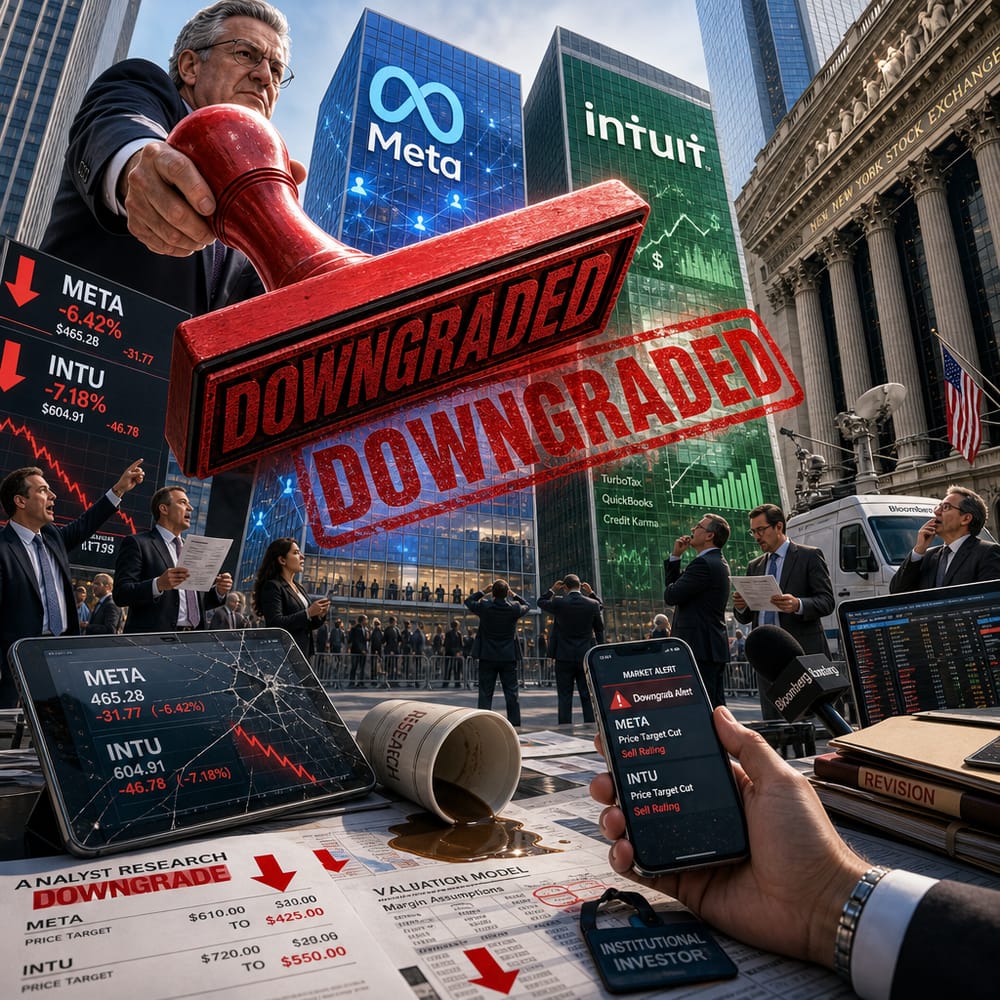
META AND INTUIT DOWNGRADED: A SHIFT IN ANALYST SENTIMENT
Remember those high-flying tech stocks that investors couldn't get enough of? Well, it looks like some of them just hit a bit of turbulence. Major Wall Street analysts have recently downgraded Meta Platforms and Intuit. If you're scratching your head, wondering why these tech darlings are now getting the cold shoulder, you're not alone.
The world of tech is glamorous and glittering, but even the biggest stars can fade. Meta Platforms, the giant behind Facebook, Instagram, and WhatsApp, recently found itself in hot water. This time, it's not just because of the usual data privacy concerns or the curiosity about what kind of lunch Mark Zuckerberg packs for himself. Significant financial settlements and growing fears over social media's impact on society’s mental health are keeping analysts up at night. It’s enough to give even the most seasoned investors a headache.
Now, throw artificial intelligence into the mix. The march of the AI giants, the likes of OpenAI and Anthropic, exacerbates concerns that the tech ecosystem could be veering off the path of public favor. People love the convenience of AI but fear its consequences — job losses and Big Brother-style surveillance loom large in the public imagination. Meta, as a key player in both social media and AI, finds itself at the center of a stormy debate, and analysts are taking note.
Intuit, meanwhile, has its own set of challenges. Known for products like TurboTax and QuickBooks, Intuit's bread and butter is helping us mere mortals make sense of our finances. But as the economy shifts into something that looks like a letter from a bowl of alphabet soup — be it K-shaped, C-shaped, or whatever — Intuit's finely-tuned business model is under scrutiny. Analysts are expressing concerns about stagnating growth and increased competition, casting a shadow on their bullish outlook.
These downgrades are more than just a couple of analysts dumping cold water on two tech titans. They reflect a broader shift in sentiment toward the tech sector. Investors and consumers alike are growing wary of tech’s dizzying expansion. At a time when inflation refuses to back down and consumer confidence is taking a nosedive, big tech's dominance might not be as unassailable as it once seemed.
The downgrades serve as a reality check and a reminder that not every sky-scraping stock is a sure thing. In this ever-evolving tech landscape, what goes up can come down — sometimes with a thud. With tech stocks having ballooned to trillion-dollar behemoths, any tremor in their stock price is bound to send ripples across portfolios.
So, what’s an investor to do in this chaotic climate? Start with a bit of caution. These downgrades could be the canary in the coal mine, signaling that it might be time to reassess tech-heavy portfolios. While it's true that missing out on the beginning of a market upswing can leave you eating Wall Street's dust, being blindsided by unexpected downturns isn’t much fun either.
Remember, though, that every analyst has an opinion, and they can be as varied as the flavors of ice cream in a Ben & Jerry's shop. Some might see the downgrades as a temporary setback, while others might interpret them as a sign of the end times for our favorite tech titans. Whatever your stance, staying informed and engaged is crucial.
In the coming weeks, all eyes will be on Meta and Intuit to see how they respond to their current challenges. Will Meta's foray into the metaverse become the stuff of investor dreams or nightmares? Can Intuit pivot in an economy that can't make up its mind about its shape?
Only time will tell. Until then, keep your eyes peeled and your ears to the ground. The tech sector is notorious for its speed, innovation, and unpredictability—making it a thrilling, albeit sometimes nerve-wracking, ride for us retail investors.
This article is for informational purposes only and is not investment advice. Always do your own research or consult a licensed financial professional before making investment decisions.
© Copyright 2024. All Rights Reserved.
© Copyright 2024. All Rights Reserved.