

Merck's Divergent Analyst Ratings: A Closer Look
Sunday, August 23, 2026
MERCK'S DIVERGENT ANALYST RATINGS: A CLOSER LOOK
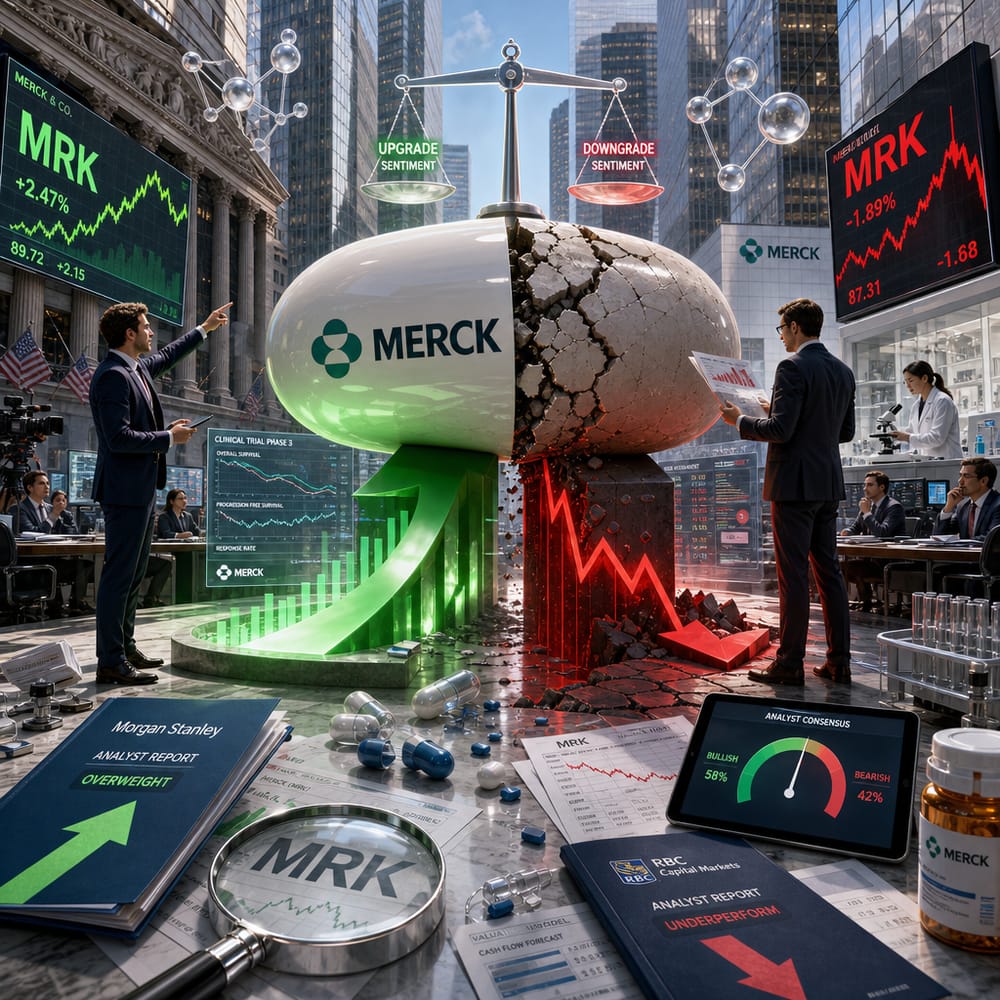
Merck's been at the center of a classic Wall Street drama—think of it as the pharmaceutical equivalent of a Shakespearean play. On one side, we have Morgan Stanley playing the part of the optimistic suitor, upgrading their view and whispering sweet nothings about Merck's potential. On the other, RBC Capital, the skeptical in-law, decided to downgrade their rating, stirring the pot and sowing seeds of doubt. So, what's got these analysts drawing swords over Merck's future?
First, let’s talk about the rosy lens through which Morgan Stanley is viewing Merck. They recently upgraded their rating, citing a few key factors that are enough to make any investor's ears perk up. At the heart of their optimism is Merck’s blockbuster cancer drug, Keytruda. This medication isn’t just any drug; it’s a powerhouse that's been raking in billions, securing Merck a top spot in the oncology market. Talk about a cash cow that’s still grazing on green pastures.
Morgan Stanley is also bullish on Merck’s pipeline. The company is betting on a slew of new treatments in late-stage trials. These aren’t just any experimental drugs—they’re treatments that could potentially redefine standards in critical areas like cardiovascular and immunology. In the high-stakes world of pharmaceuticals, a robust pipeline is like having a treasure map. If the X marks the spot, Merck might just be sitting on a gold mine.
Now, let’s switch scenes to RBC Capital, who seems to be seeing things through a different lens—perhaps a foggy monocle. They’ve downgraded Merck’s stock, raising concerns about the looming patent cliffs. For those not steeped in pharma jargon, a patent cliff is the precarious edge where a company’s exclusive rights to sell a drug expire, leading to a potential plummet in profits as generic competitors swoop in like seagulls on a beach day. Keytruda, the very drug Morgan Stanley is so fond of, is nearing that edge with patents expected to expire in a few years.
RBC isn’t just playing the patent game though; they’re also pointing to the competitive pressures in the oncology arena. As new players enter the field with their shiny new drugs, Merck might find itself in a proverbial tug-of-war for market share. And let’s not forget the regulatory hurdles that can trip up any pharmaceutical giant. These are the variables RBC is hinting could cloud Merck’s fortunes.
So, here’s the million-dollar question: what does this mean for Merck’s stock price and, more importantly, for you, the savvy investor? When big brain analyst types disagree, it usually spells volatility in the stock market. Picture a wobbly tightrope and Merck trying to keep its balance. A tug from Morgan Stanley could send the stock price soaring, while a nudge from RBC could have it teetering on the edge.
For investors, this discrepancy in ratings offers both a risk and an opportunity. If you’re the type who likes to bet on the underdog, you might see RBC’s concerns as overstated, especially if you have faith in Merck's ability to innovate and navigate the patent cliffs. On the flip side, if you’re more conservative, Morgan Stanley’s sunshine and rainbows might seem overly optimistic, prompting you to take a more cautious approach.
In the end, investing in Merck right now is a bit like buying a ticket to a play with an uncertain ending. Will Merck overcome the odds and come out on top, or will it struggle to adapt to the shifting landscape? As with any investment, it’s about weighing the risks against the potential rewards. Keep your eyes on the news, your ear to the ground, and your portfolio as balanced as possible, because in the dynamic world of pharmaceuticals, today’s hero can quickly become tomorrow’s cautionary tale.
This article is for informational purposes only and is not investment advice. Always do your own research or consult a licensed financial professional before making investment decisions.
© Copyright 2024. All Rights Reserved.
© Copyright 2024. All Rights Reserved.