

Merck (MRK) Downgraded by UBS & RBC — Bearish Signal or Short-Term Volatility?
Saturday, August 22, 2026
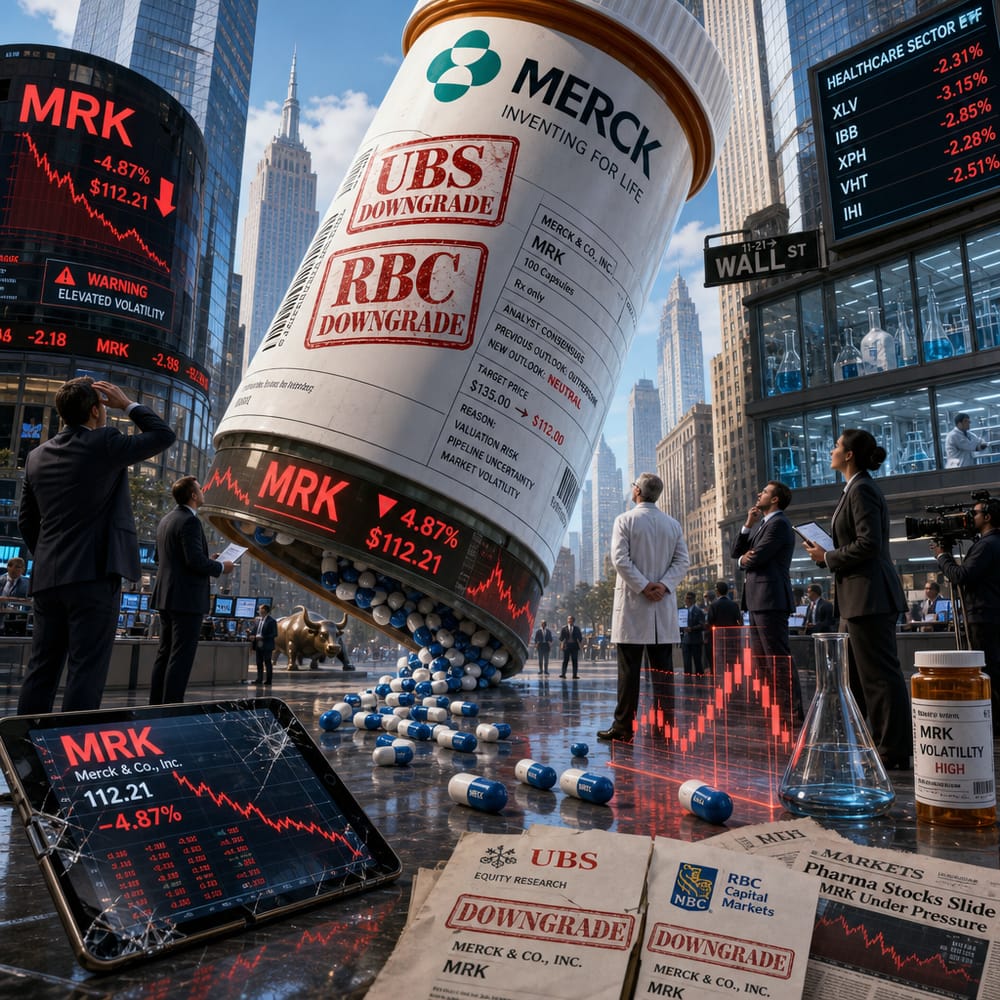
RIDING THE MERCK ROLLERCOASTER: WHAT DOUBLED DOWNGRADES MEAN FOR THE PHARMA GIANT
So, you've got a portfolio that's a little heavy on Merck, huh? Well, hold onto your hats because the pharmaceutical rollercoaster just took a sharp turn. UBS and RBC, two of the big kahunas in the financial analyst world, decided to downgrade Merck's stock. When two heavyweights of the financial world thumb their nose at a stock like Merck (MRK), you’d better believe it matters.
Imagine you're at a party, and the hosts suddenly announce they're out of guacamole. That's a bit like what happened to Merck investors last week: a sudden downgrading by UBS and RBC left some folks feeling a little queasy. UBS dropped its rating from a 'buy' to a 'neutral', while RBC also moved Merck from 'outperform' to 'sector perform'. If you’re wondering about the target price, UBS gave Merck a nudge down to $115 from $125, and RBC sliced it to $115 from $120. It’s like taking a refreshing dip during a heatwave only to find the water’s colder than expected.
But why this sudden cold shoulder? Let’s dig into the why behind these rating changes. Both UBS and RBC seem to have a mix of concerns about Merck's current trajectory, with worries that go beyond their classic cholesterol-busting, cancer-fighting portfolio. The downgrades suggest potential hiccups in their drug pipeline or perhaps financial results that don't quite meet Wall Street's lofty expectations.
So how did Merck’s stock take the news? Well, think of it like a teenager hearing their curfew’s just been moved up. It wasn't particularly thrilled. The stock took a noticeable dip post-downgrade, reflecting the market's knee-jerk reaction to the downgrades. Investor sentiment is a fickle beast; when two big firms turn bearish, you'd better believe it gets spooked.
Now, you might be asking yourself if this is a bad omen for Merck or just a bump in the road. Let's zoom out to the bigger picture. Merck isn't exactly on the ropes—they’re a stalwart in the pharmaceutical industry with a track record that most companies would trade their souls for. That said, the broader pharmaceutical sector has its own set of challenges right now. From pricing pressures to the ever-turbulent regulatory waters, it's a jungle out there.
Add to that the geopolitical tensions and trade disputes that can mess with supply chains faster than you can say "tariff," and it's clear that even giants like Merck have to navigate these shifting sands with care. The recent U.S.-Canada trade skirmish, for instance, might not directly impact Merck’s bottom line, but it contributes to an environment rife with uncertainty.
Yet, before we declare the sky is falling, let's remember that downgrades, while important, are part of the market's natural ebb and flow. It’s not the end of Merck; it’s a signal to investors to be vigilant, to stay informed, and maybe to hedge their bets if they’re feeling particularly skittish.
Here's something to chew on: the pharmaceutical industry is a marathon, not a sprint. Companies like Merck aren't just banking on their current lineup of drugs; they're constantly working the lab, aiming for the next big breakthrough. It's this unwavering focus on innovation and research that gives Merck and its peers a fighting chance, even when the market throws a tantrum.
So what should you, the savvy retail investor, do in the face of these downgrades? Well, don't panic-sell just yet. Instead, consider doing a little homework. Look into Merck's upcoming drug pipeline, check out other analyst opinions, and stay abreast of any new developments. Diversification is your ally here—just like you wouldn’t put all your chips on black at the roulette table, don’t stack your entire portfolio on any one stock.
In conclusion, while UBS and RBC’s downgrades may have taken some wind out of Merck’s sails, it’s not time to abandon ship. Keep your eyes on the long game, stay informed, and don’t let a little turbulence ruffle your feathers. After all, fortune favors the well-prepared.
This article is for informational purposes only and is not investment advice. Always do your own research or consult a licensed financial professional before making investment decisions.
© Copyright 2024. All Rights Reserved.
© Copyright 2024. All Rights Reserved.