

Merck Faces Dual Downgrades Amid Health Care Sector Caution
Monday, August 24, 2026
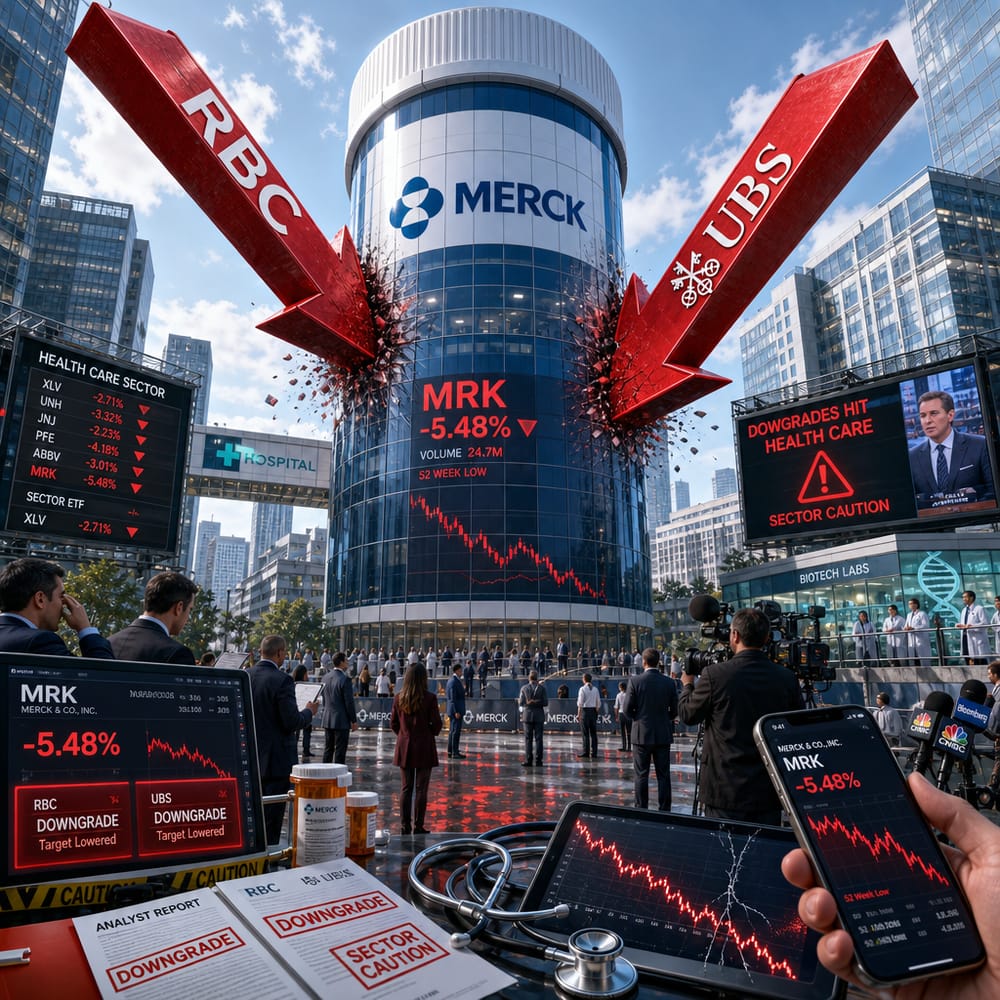
MERCK FACES DUAL DOWNGRADES AMID HEALTH CARE SECTOR CAUTION
Investors often look for stability in the health care sector—a comforting balm for portfolios battered by the capricious winds of tech stocks and international trade squabbles. But when two brawny financial institutions, RBC Capital and UBS, both decide to downgrade Merck in rapid succession, it’s a signal that even the stalwarts might be in for a rough ride.
Imagine you're at a party, and the DJ suddenly kills the music. Everyone’s left awkwardly standing, wondering what just happened. Merck, the pharmaceutical giant synonymous with life-saving meds, is now in that silent room. RBC Capital and UBS just turned down the volume on Merck's prospects.
WHAT'S GOT THE ANALYSTS NERVOUS?
RBC Capital and UBS aren’t known for quick-trigger downgrades, so when they both revised Merck's ratings, eyebrows shot up faster than a Nasdaq day trader on caffeine. The reasons? Fundamentals. UBS points to concerns over slowing sales growth and increased competition in Merck’s key markets. RBC Capital echoes these sentiments, adding that Merck's recent innovations aren’t promising enough to combat looming patent expiries.
It's like your favorite band releasing an album that just hits all the wrong notes. At some point, fans—investors—may start questioning their loyalty, leading to a dip in stock prices. Sure enough, Merck's shares started wobbling as soon as the downgrades were announced, losing some of their luster like a once-polished trophy gathering dust.
THE RIPPLE EFFECT: MERCK'S STOCK
Merck’s stock price could feel the squeeze as skittish investors reevaluate their positions. With the downgrades looming like dark clouds, it's plausible that traders might jump ship, favoring other pharmaceutical giants with rosier outlooks. Picture a game of musical chairs, but Merck’s seat is increasingly less desirable.
Let's not forget, the broader health care sector might also feel the tremors. Merck is a heavyweight in this space and serves as a bellwether for investor sentiment. If Merck coughs, the sector could catch a cold. Other companies might face increased scrutiny, especially those with similar profiles or potential patent cliffs.
A SECTOR IN FLUX
The health care sector isn’t immune to larger market forces. Rising interest rates, fluctuating tariffs, and the ever-present specter of regulatory changes in the U.S. can create an environment that's as uncertain as a cat in a room full of rocking chairs. Investors usually lean on health care for its defensive qualities, but when a big player like Merck gets flagged, it changes the calculus.
The downgrades might also prompt investors to take a second look at their broader health care holdings. In a market jittery about upcoming Federal Reserve announcements and international trade tensions (hello, Canada tariffs), these downgrades could signal it’s time to reevaluate how much risk they want in their portfolios.
THE BIGGER PICTURE
So what’s the takeaway? The downgrades of Merck might feel like a splash of cold water, waking investors from a comfortable dream that health care stocks would be their knight in shining armor against market volatility. For some, it might be the nudge needed to reassess and diversify. For others, it’s a reminder that even industry giants can stumble.
The health care sector is still packed with opportunities. Innovations in biotech, the aging global population driving demand for pharmaceuticals, and advancements in AI-led drug discovery could all present as compelling narratives. Just be prepared: the path might not be as straightforward as it once seemed.
As Merck regroups, investors should take their own pulse—consider whether their holdings align with their risk tolerance in a sector that suddenly feels a bit less stable. In the world of investing, even the most reliable beat can drop unexpectedly, and it’s those who adapt that keep on dancing.
This article is for informational purposes only and is not investment advice. Always do your own research or consult a licensed financial professional before making investment decisions.
© Copyright 2024. All Rights Reserved.
© Copyright 2024. All Rights Reserved.