

Memory Technology Stocks: A Cyclical Rebound?
Wednesday, August 19, 2026
IS THIS MEMORY STOCK RALLY TOO GOOD TO BE TRUE?
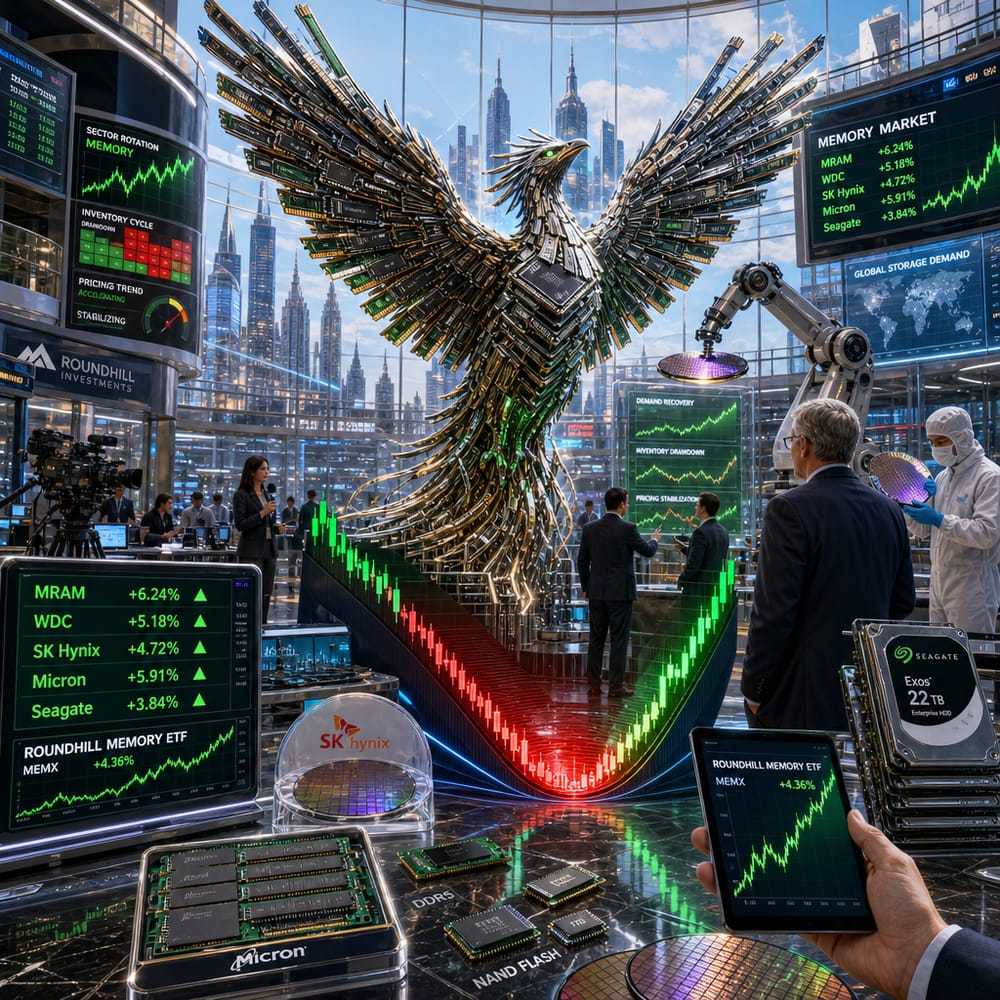
Memory stocks are having a moment. Maybe. After a period of gloom darker than your last Monday morning, it seems the sun is finally breaking through over the memory sector. Key players like Western Digital (WDC), SK Hynix, Micron, and Seagate are basking in the glory of a significant rebound, dragging the Roundhill Memory ETF along for the ride. But is this rally the real deal or just a short-lived sugar rush?
WHAT'S DRIVING THE COMEBACK?
First off, let's decode what's driving this upswing. Memory technology stocks are a bit like that moody artist friend of yours—volatile and cyclical. When the cycle's good, it's very good. When it's bad, it's horrid. After a series of unfortunate events that left these stocks out in the cold, a cocktail of improving demand and tighter supply has started to warm things up.
The memory market has seen demand pick up, thanks to the voracious appetite of data centers and the never-ending need for more storage in devices we can’t live without. Meanwhile, supply hurdles have kept the cupboards a bit bare. Think of it as the tech world's version of a trendy new diet: low supply, high demand, and suddenly everyone wants it.
Moreover, as the Federal Reserve ponders its next interest rate move with bated breath, investors are cautiously optimistic. The Fed’s internal chatter indicates some potential rate hikes if inflation doesn't simmer down—so investors are keeping a close eye on the economic tea leaves. These rate talks often affect tech stocks, but for now, the specter of hikes hasn't rained on the memory market's parade.
CYCLICAL RECOVERY OR TEMPORARY BOUNCE?
Now for the million-dollar question: is this a genuine cyclical recovery or just a fleeting bounce? The optimistic view is that this resurgence might signal the end of the hangover from previous downturns. If that's the case, the memory sector might just be ripe for a long-term uptrend.
On the flip side, skeptics caution that the rebound could be nothing more than a temporary blip. After all, memory technology isn't immune to the broader tech sector's whims. If demand stutters or supply ramps up too quickly, this rally could fizzle faster than a cheap sparkler on the Fourth of July.
SUPPLY AND DEMAND DYNAMICS
The supply and demand dynamics in the memory market are as intricate as a soap opera plot. On the supply side, we’re seeing some tightness, partly due to production adjustments from heavyweights like Micron and SK Hynix. These adjustments are a strategic move to avoid flooding the market with chips no one wants.
On the demand side, data centers continue to expand like an influencer’s follower count, gobbling up memory technology to keep pace with the growing digital world. Consumer electronics are also playing their part, with every new gadget release fueling fresh demand. If this demand keeps up, it could prop up prices and provide a more sustainable path forward for memory stocks.
TIME TO INVEST, OR TIME TO WATCH?
So, should you dive in or sit on the sidelines? If you're bullish on the long-term recovery story and believe in the enduring demand for memory tech, then dipping a toe in could be a savvy move. After all, the cyclical nature of this sector means that what goes down generally comes back up—and sometimes with a vengeance.
However, if you're risk-averse and not keen on riding the cyclical rollercoaster, it might make more sense to stay watchful. Keep an eye on how the supply-demand story unfolds and monitor the Fed's economic maneuvers like a hawk.
In the end, memory stocks are a dynamic beast. Whether they’re on the cusp of a full-blown boom or just enjoying a brief bounce will depend on how the market chessboard resets over the next few months. For now, the sector is basking in the glow of a rebound, and savvy investors are left to decide if they want to join the party or watch from afar. Either way, keep your popcorn handy—this show’s just getting started.
This article is for informational purposes only and is not investment advice. Always do your own research or consult a licensed financial professional before making investment decisions.
© Copyright 2024. All Rights Reserved.
© Copyright 2024. All Rights Reserved.