

Megacap Tech on the Defensive—AI Selloff and Macro Pressure Weigh
Thursday, August 20, 2026
MEGACAP TECH ON THE DEFENSIVE—AI SELLOFF AND MACRO PRESSURE WEIGH
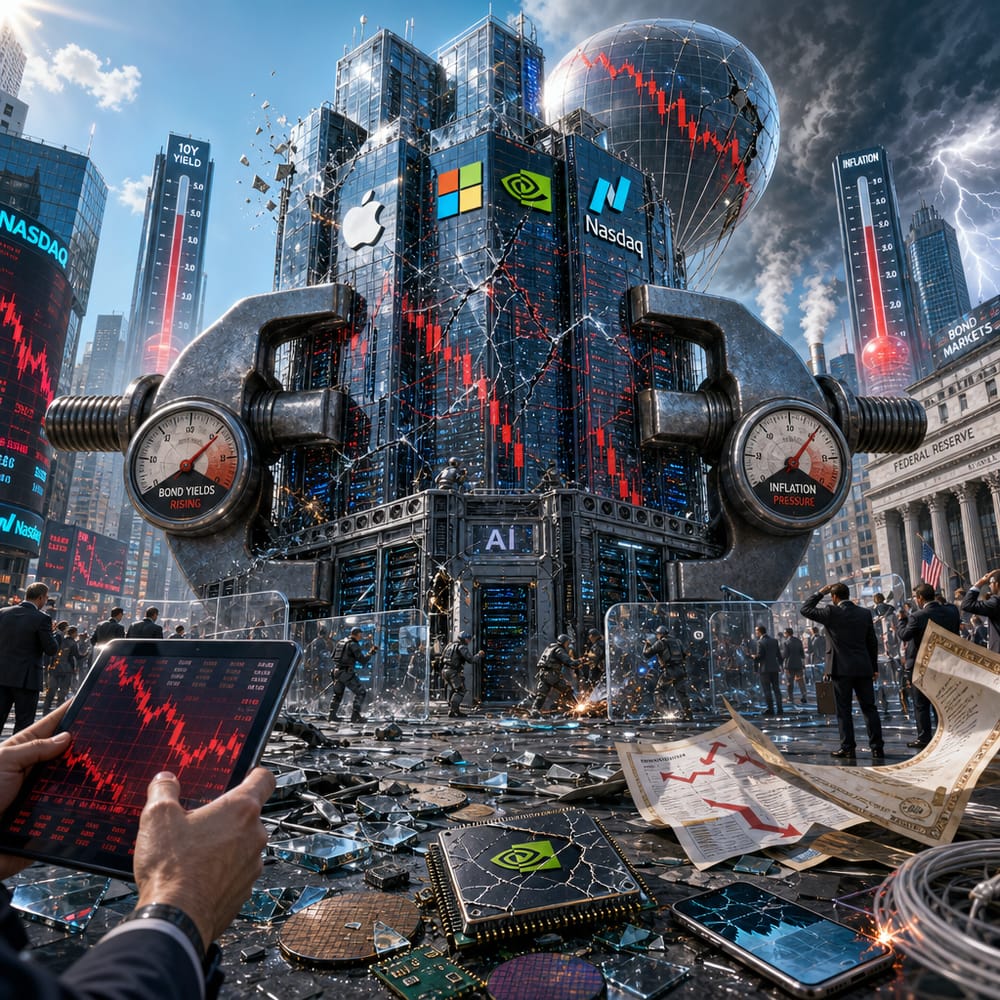
The tech gods are trembling, and Wall Street is feeling the aftershocks. Amid a selloff that’s left some megacap tech stocks battered and bruised, investors are nervously clutching their smartphones, hoping for some good news to swipe through. But as concerns grow over frothy AI valuations and looming macroeconomic uncertainties, a quick rebound might not be in the cards.
Ah, the Nasdaq—a tech investor’s dream and sometimes nightmare. When the tech titans sneeze, the Nasdaq catches a cold. And right now, it’s reaching for the tissues. Apple, Microsoft, Nvidia—these household giants are feeling the heat, and it's not just because they left their GPUs running overnight. Questions around AI’s valuation and the broader economic climate have dampened investor enthusiasm faster than you can say “machine learning.”
First, let’s address the elephant in the room: AI valuations. It feels like just yesterday everyone was riding the AI hype train, convinced it was on a one-way track to trillion-dollar valuations and robot butlers for all. But now, investors are taking a hard look at those price tags and wondering if they’re about as inflated as a Silicon Valley ego. Nvidia, with its cutting-edge AI chips, might still be the darling of tech enthusiasts, but even they can’t escape the scrutiny. The whispered question making rounds in Wall Street’s corridors: Have AI stocks become the Icarus of the digital age, flying too close to the sun on silicon wings?
Yet, it’s not just AI raising eyebrows. The broader economic landscape isn’t exactly rolling out the welcome mat for megacap tech. Rising Treasury yields, for example, are putting pressure on stocks by making bonds more attractive in comparison. It’s a classic case of investors playing hard to get when someone else—bonds, in this case—is offering a better deal. Throw in global tensions and unpredictable geopolitics, and you’ve got a recipe for a tech party that’s rapidly losing its vibe.
So, how are these tech behemoths adjusting their strategies in the face of these headwinds? For starters, expect a lot of corporate speak around “diversification.” Microsoft is likely doubling down on cloud services, hoping that what happens in Azure, stays in Azure—far away from the prying eyes of jittery investors. Apple might be secretly hoping their next iPhone comes with a feature that dispels investor anxiety.
Meanwhile, Nvidia is turning to a classic tech industry play: the pivot. They’ve announced plans to ship AI chips for China by year-end, a move that could serve as either a regional lifeline or a geopolitical headache, depending on how world leaders are feeling that week.
Analysts, always ready with a crystal ball and a cautiously optimistic smile, are split on what comes next. Some predict that tech stocks, like a resilient phoenix, will eventually rise from the ashes of investor doubt. Others suggest that the sector might just be in for a long winter’s nap, with recovery hinging on how the broader economic and geopolitical narratives play out.
The tech sector’s trajectory will undoubtedly influence the broader market. Megacap tech isn’t just a sector; it’s the engine room of the modern economy. If these giants struggle, it could mean stormy waters ahead for the entire market.
So, what’s a savvy retail investor to do as they hover over their investment app, thumb poised to buy, sell, or hold? Keeping an eye on the macroeconomic indicators—Treasury yields, geopolitical developments, and consumer confidence—might offer some clues. But as history has shown, the tech world can be as unpredictable as your favorite soap opera, with plot twists lurking around every corner.
For now, investors can only sit back, keep the popcorn ready, and watch as the market drama unfolds. Whether it leads to a triumphant comeback or a prolonged slump, the story of megacap tech and its tango with AI valuations and macro pressures is far from over.
This article is for informational purposes only and is not investment advice. Always do your own research or consult a licensed financial professional before making investment decisions.
© Copyright 2024. All Rights Reserved.
© Copyright 2024. All Rights Reserved.