

Massive AI Sell-Off and Its Mega-Cap Ripple Effect
Saturday, November 07, 2026
MASSIVE AI SELL-OFF AND ITS MEGA-CAP RIPPLE EFFECT
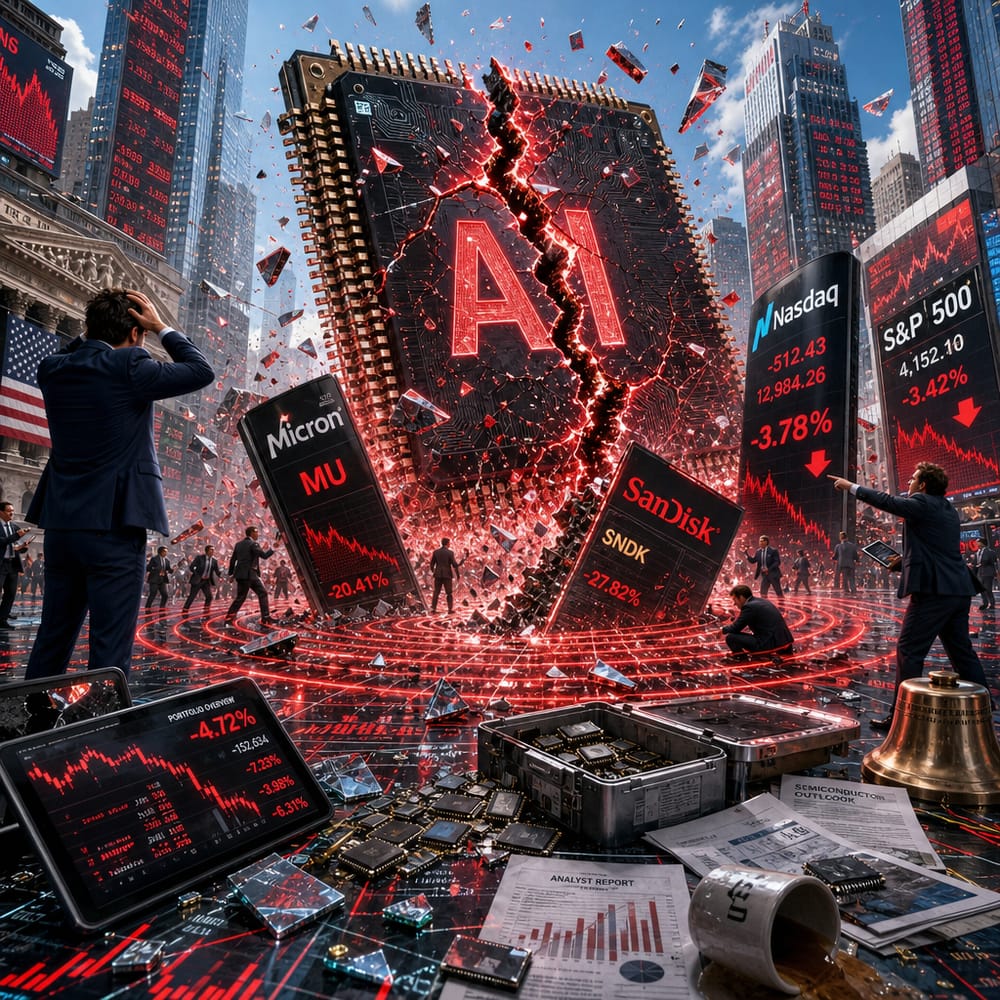
It wasn't just a small tremor in the tech world; it was a full-blown earthquake. On Thursday, AI stocks took a nosedive, dragging major indices like the S&P 500 and the Nasdaq down with them. How bad was it? Picture a $2.5 trillion wipeout. Yeah, trillion with a "T." Even if you're not fluent in Wall Street speak, you know that's enough to make any investor break into a nervous sweat.
So, what in the world is going on with AI? Once the darling of tech investors, now it's suddenly throwing a tantrum that’s shaking portfolios around the globe. Let's break it down.
THE TRIGGER
The sell-off was triggered by a cocktail of factors, with a twist of public policy concerns thrown in for good measure. In simple terms, the recent midterm elections have got a lot of people spooked about how government regulations could throttle the growth of AI. The Democrat sweep is leading to whispers (or should we say shouts?) of potential moratoriums on AI data center construction. The fear here? That these curbs could put the brakes on AI’s breakneck innovation pace.
Add to that, the market was already jittery. Companies like Anthropic, which was poised for an IPO that would make history, suddenly found themselves looking down the wrong end of a market downturn. The tech titans did not dodge this bullet either. Behemoths like Micron and SanDisk got a hefty slice of the loss pie, feeling the pinch particularly hard due to their heavy reliance on AI-driven memory demand.
HERE'S THE SILVER LINING
But don’t go burying your AI stocks in the backyard just yet. History has shown us that tech sell-offs, while panic-inducing, can also present golden opportunities. Remember the dot-com bust? It turned out to be a goldmine for those who were willing to sift through the rubble and pick up stocks on the cheap.
Right now, while it seems AI is taking a nap, it’s just resting its eyes. The underlying fundamentals of artificial intelligence remain strong, and its applications are deeply woven into the fabric of the modern economy. Think of it as a spring coil—compressed now, but with the potential to launch back with vigor.
WHAT'S NEXT?
The good news is, this isn't the end of the road for AI. Far from it. As the dust settles, those with a keen eye can find plenty of tech stocks that are now on sale. Companies are still investing heavily in AI technologies—it's a race that everyone wants to win, after all. And with AI's potential to revolutionize industries from healthcare to finance, the long-term growth prospects remain tantalizingly attractive.
Investors with a bit of patience and a tolerance for risk might want to use this dip as a buying opportunity. Diversification is key, of course. If your portfolio is a one-trick pony relying solely on AI stocks, it might be time to broaden your horizons. A balanced mix of stocks, bonds, and perhaps even a sprinkle of commodities can help ride out the storm while keeping you afloat.
THE TAKEAWAY
In the rollercoaster world of investing, the mega-cap stocks and their smaller tech counterparts have always promised thrills, chills, and, occasionally, spills. This AI sell-off is a stark reminder that investing isn't for the faint of heart. But with every drop and dip, there’s the potential for a rise.
While the current market may feel like navigating through a minefield, those who tread carefully, armed with research and a bit of chutzpah, could find themselves positioned for gains when the market eventually rebounds. Because if there's one truth about the financial world, it's this: it's less about timing the market perfectly and more about time in the market.
So, as you scroll through your phone, pondering your next move, remember this: AI isn’t going away. It’s just taking a breather. And when it wakes up, you'll want to be ready.
This article is for informational purposes only and is not investment advice. Always do your own research or consult a licensed financial professional before making investment decisions.
© Copyright 2024. All Rights Reserved.
© Copyright 2024. All Rights Reserved.