

Marketwide Reaction to Slight Inflation Overshoot Ahead of Nvidia
Saturday, August 29, 2026
THE INFLATION SURPRISE: WHAT'S NEXT FOR THE MARKET?
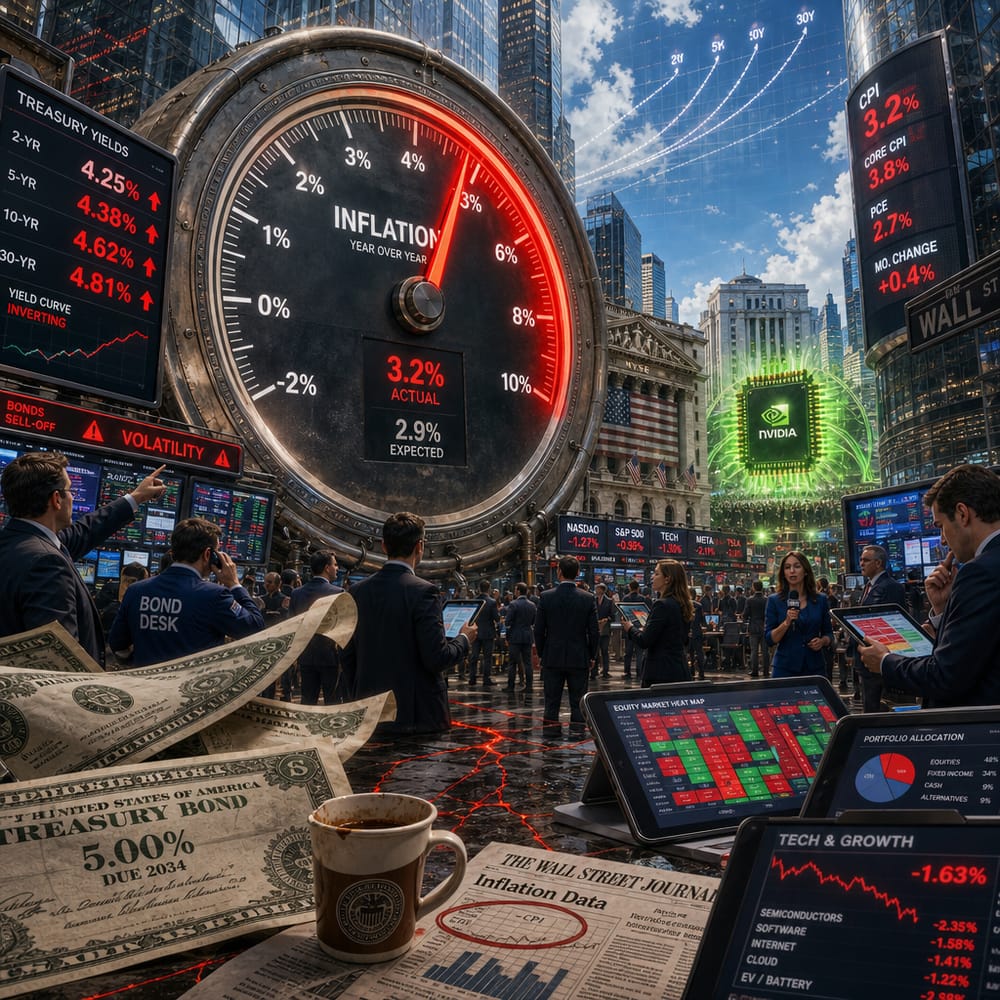
Buckle up, folks. Inflation just pulled a fast one on all of us, coming in a smidge higher than expected. Now, if you’re sipping your coffee and thinking, “So what?”, let me explain why this slight detour on the inflation highway is causing some serious skidding in the stock market lanes.
Inflation's little surprise party means investors are suddenly rethinking their game plans. Imagine you’re playing poker, and the dealer slips in an unexpected ace. That's what higher-than-anticipated inflation can do – it changes the odds. And when the odds change, investors get twitchy and start shuffling their portfolios like it’s a game of musical chairs.
This is especially true in the tech and growth sectors, where dreams of future profits are as high as a kite. These sectors thrive on the notion that they’ll make boatloads of cash down the line. But when inflation waltzes into the room, it often means interest rates might follow suit. Higher interest rates make those future profits look less appealing – like a day-old doughnut compared to a fresh one.
Treasury yields, which are basically the interest investors demand for lending money to the government, are a key player here. When they rise due to inflation fears, growth stocks in sectors like tech tend to falter. Essentially, when the yield on those safe government bonds goes up, some investors think, “Why take the risk on stocks when I can get a decent return with less drama?”
So, how are investors adjusting their portfolios amid this inflation tango? Some are shifting gears, moving towards more defensive sectors like utilities, which are traditionally more stable in turbulent times. Others might eye the financial sector, which can benefit from rising interest rates, while steering away from high-flying tech names that were once the belle of the ball.
Now, let’s talk about bond yields. They're like the canary in the coal mine for investor sentiment. When Treasury yields rise, it signals that investors expect higher inflation or interest rates. The ripple effect can cause volatility in equity markets as investors reassess their risk appetite. It’s a bit like watching dominoes fall – one tilts, and suddenly, you’re watching a whole line go down.
The tech and growth stocks, particularly those involved in artificial intelligence and data centers (yes, we’re looking at you, Nvidia), feel the sting the most. Nvidia might be the rockstar of AI chips, but even rockstars get stage fright when inflation amps up the volume. Investors are now weighing whether the future earnings growth from AI can outpace the shadow of increasing interest rates.
But it's not all doom and gloom. Savvy investors see these moments as opportunities. With market volatility comes the chance to buy quality stocks at a discount. It's like walking into a designer store and finding your favorite coat on sale. Sure, inflation complicates the landscape, but it doesn't mean the show is over.
So, what’s the smart move? Keep an eye on the Federal Reserve's next steps. How they react to this inflationary blip will guide market sentiment. Will they raise interest rates sooner than planned, or will they sit tight and watch? Either way, their decision will have investors across the board holding their breath.
In the meantime, diversifying your investments and hedging against inflation with assets like real estate or commodities could be savvy moves. Think of it as adding a bit of spice to your investment stew to keep things balanced.
In this rapidly changing financial landscape, staying informed and flexible is your best strategy. Like a skilled surfer, you’ve got to ride the waves as they come, keeping your balance and eyes on the horizon. The markets are playing a fast-paced game, and being nimble, informed, and ready to adapt will keep you in the game – and maybe even ahead of it.
This article is for informational purposes only and is not investment advice. Always do your own research or consult a licensed financial professional before making investment decisions.
© Copyright 2024. All Rights Reserved.
© Copyright 2024. All Rights Reserved.