

Markets Weaken on Rate-Hike Speculation as Bond Yields Rise
Saturday, August 29, 2026
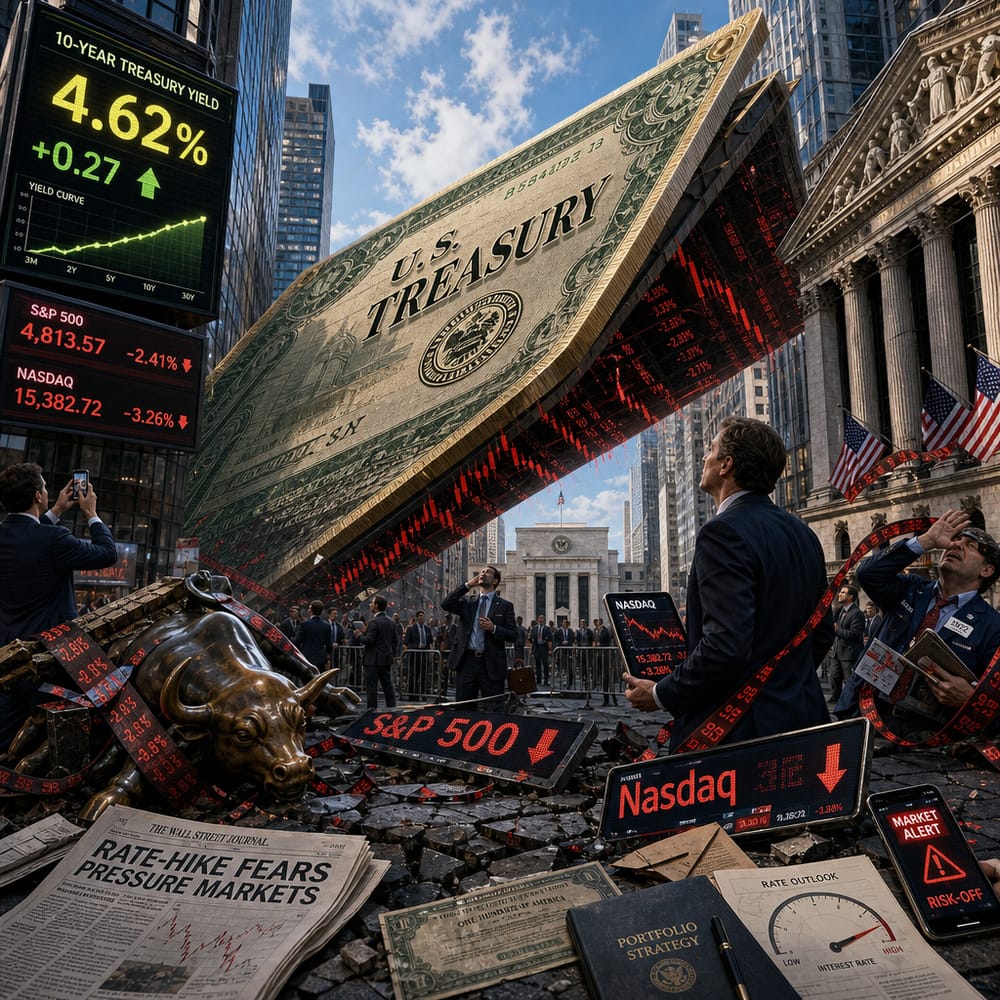
Rising bond yields and whispers of rate hikes have started to dance like storm clouds over Wall Street, and the effects could be as refreshing as a downpour for some or a hailstorm for others. It's the classic tale of risk and reward, told across the sprawling landscape of the financial markets. Buckle up, folks, because this is the nitty-gritty of how a pivot in interest rates could shake things up.
Bond yields are soaring, which essentially means that the reward for lending your money in safe government bonds is suddenly looking more attractive. And when bonds start flirting with higher yields, equities — particularly those of the growth and tech variety — might feel like they've been left on read. The S&P 500 and Nasdaq, once the darlings of investors chasing high returns, can take a hit as their shiny allure dims against the backdrop of rising fixed income.
So, why do higher bond yields create such chaos? Imagine a world where parking your money in government bonds suddenly seems like a snug, safe bet with decent returns. Investors often pull their funds out of stocks and dive into this safe haven, which can cause stock prices to tumble. Tech stocks, with their pie-in-the-sky valuations based on future growth, feel the pressure harder than a high schooler on prom night. That's because, as borrowing costs rise with those rate hikes, the cost of funding ambitious growth plans shoots up, making future earnings look a tad less rosy.
Growth sectors, like tech, are typically the most vulnerable when interest rates rise. These companies often rely on borrowing to fuel their expansion dreams. If suddenly, borrowing costs rise, it could mean a rude awakening for their balance sheets. Big names like Tesla, with its sky-high valuations, feel the squeeze more than most. If rate hikes come into full swing, the tech sector could be in for a bumpy ride — think of it as a rollercoaster powered by algorithmic trading and caffeine.
Now, while tech might be clutching its pearls, other sectors might be gearing up to dance in the rain. Defensive sectors like consumer staples — things people buy no matter what, like toothpaste and soup — often become investor favorites in times of uncertainty. ETFs like iShares U.S. Consumer Staples (IYK) have been spotlighted for their broad exposure to these essential goods, providing a steady hand when the market starts to wobble.
In times where rate hikes loom large, market sentiment can shift dramatically. It's like the financial version of a high-stakes poker game. When the Fed hints at raising rates to keep inflation in check, investors start re-evaluating their portfolios, eyeing sectors with stable earnings and less dependency on cheap credit. It's a delicate balance: the promise of a healthy economy at the cost of tightening financial conditions.
For the astute investor, the focus is on diversification — spreading your risks and not putting all your eggs in one high-tech basket. Diversification might sound like a buzzword, but in times like these, it's what separates the cool-headed from the panicked. Consider blending a mix of growth sectors with defensive staples to weather the storm.
The narrative of rising bond yields and speculated rate hikes is more than a cautionary tale; it's a reminder of the market’s cyclical nature. For now, as Wall Street holds its breath waiting for the Fed's next move, savvy investors stay agile, ready to pivot with the changing tides.
In the meantime, keep an eye on those bond yields. As they climb, they whisper tales of a market in transition. Whether you're holding onto your Tesla stock or stacking up on consumer staples, remember: the market might be unpredictable, but that doesn't mean you have to be. So, arm yourself with insight, keep your portfolio diversified, and most importantly, hold onto your hats — this financial ride promises to be anything but boring.
This article is for informational purposes only and is not investment advice. Always do your own research or consult a licensed financial professional before making investment decisions.
© Copyright 2024. All Rights Reserved.
© Copyright 2024. All Rights Reserved.