

Markets Scale Back September Fed Rate-Hike Bets After Weak Jobs Report
Monday, August 10, 2026
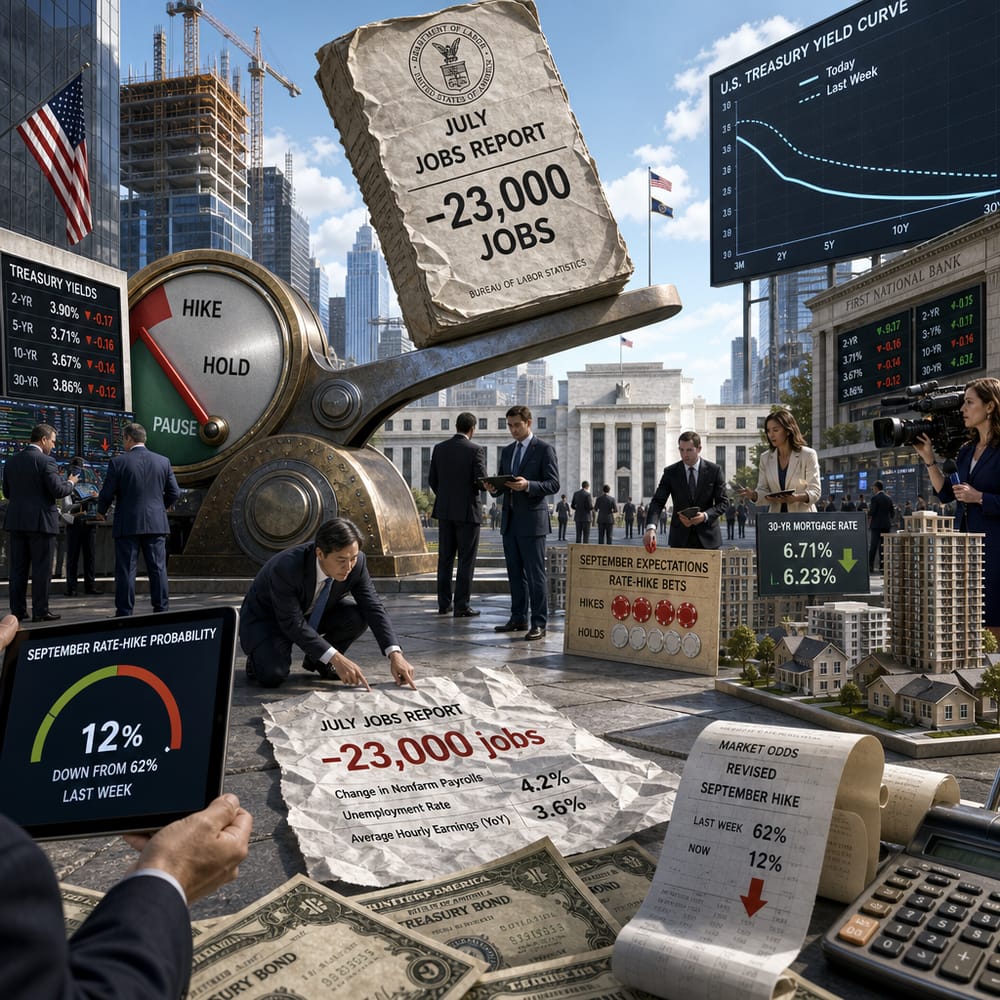
MARKETS SCALE BACK SEPTEMBER FED RATE-HIKE BETS AFTER WEAK JOBS REPORT
Well, well, well, if it isn’t the fickle mistress of economic data having the last laugh again. Just when everyone thought they had a bead on what the Federal Reserve might do next, the latest jobs report swooped in with its own twist. July’s U.S. jobs report didn't just trickle in, it made a splash by revealing a reduction of 23,000 jobs. And just like that, the odds of the Fed hiking interest rates in September took a nosedive.
So why should you care if you’re not a Wall Street wizard? Because interest rates are like the puppeteer pulling the strings on everything from your mortgage to your favorite retail stocks. Let's dive into why a less aggressive Fed could be the financial plot twist you didn’t know you needed.
THE BOND MARKET RALLY: FIXED INCOME’S NEW SWAGGER
When rate hikes are put on ice, the bond market gets to do its happy dance. Here’s the lowdown: bonds and interest rates have an inverse relationship. If the Fed keeps its paws off the rate hike lever, bond yields are less likely to shoot up like caffeine-fueled rockets. This is good news if you have your bets on bonds. Investors are likely to flock back to bonds, pushing up prices and giving bond portfolios a much-needed sugar rush.
For investors who have been clutching their fixed-income investments, this is a relief. Think of it as a reprieve from the relentless seesaw of rate hike fears. With the Fed taking a chill pill, bond investors might finally get the breather they've been craving.
RATE-SENSITIVE SECTORS: WHO’S IN THE HOT SEAT?
Not all industries shake in their boots when the Fed drops hints about interest rates. But some do, and how. Let’s talk about those sectors that are more sensitive to interest rate changes than a soap opera star is to drama.
First up, real estate. When borrowing costs are stable, or even better, low, it’s like the real estate sector gets a shot of adrenaline. Lower rates mean cheaper mortgages, and you know what that means—more buyers, more homes, and potentially more profit if you’re into real estate investments or REITs (that’s Real Estate Investment Trusts for those not in the know).
Then there’s the financial sector, which often finds itself caught between a rock and a hard place. Lower rates might sound like a party for borrowers, but banks and financial institutions see their profit margins squeezed on loans. So, if you’re thinking of banking stocks, know that they like their rates a bit higher, thank you very much.
WHAT’S NEXT FOR STOCKS? WATCHING THE RATE TEA LEAVES
So what about the broader stock market? Well, lower rate expectations can have a buoying effect. Typically, when rate hikes are off the table, it gives stocks the green light for a rally. Investors, freed from the shackles of high borrowing costs, have more wiggle room to pump money into equities.
But, and it’s a big but, markets are nothing if not fickle. They’re also keeping an eye on the inflation front. As long as inflation doesn’t rear its ugly head, stocks might continue their upward march. However, if inflation pulls a surprise move, all bets are off.
AND THE WINNER IS…
With the Fed likely pumping the brakes on rate hikes, the domino effect across markets could be significant. Interest-rate-sensitive sectors like real estate might see a resurgence, while the bond market could enjoy a renewed glow.
For the everyday investor, the reduced likelihood of a September rate hike is a reminder that market winds can shift quickly. It's a time to be nimble, perhaps reevaluate those portfolios, and keep an ear to the ground for the Fed's next move. After all, in the world of finance, the only constant is change. So, buckle up and keep those financial radars on high alert.
And remember, the market is a fickle beast, so while today’s news might seem rosy, tomorrow could be a whole different story. Stay informed, stay agile, and maybe even enjoy the ride.
This article is for informational purposes only and is not investment advice. Always do your own research or consult a licensed financial professional before making investment decisions.
© Copyright 2024. All Rights Reserved.
© Copyright 2024. All Rights Reserved.