

Markets React to Weak July Jobs Print: 10-Year Treasury Yield Dips to ~4.64%
Wednesday, August 12, 2026
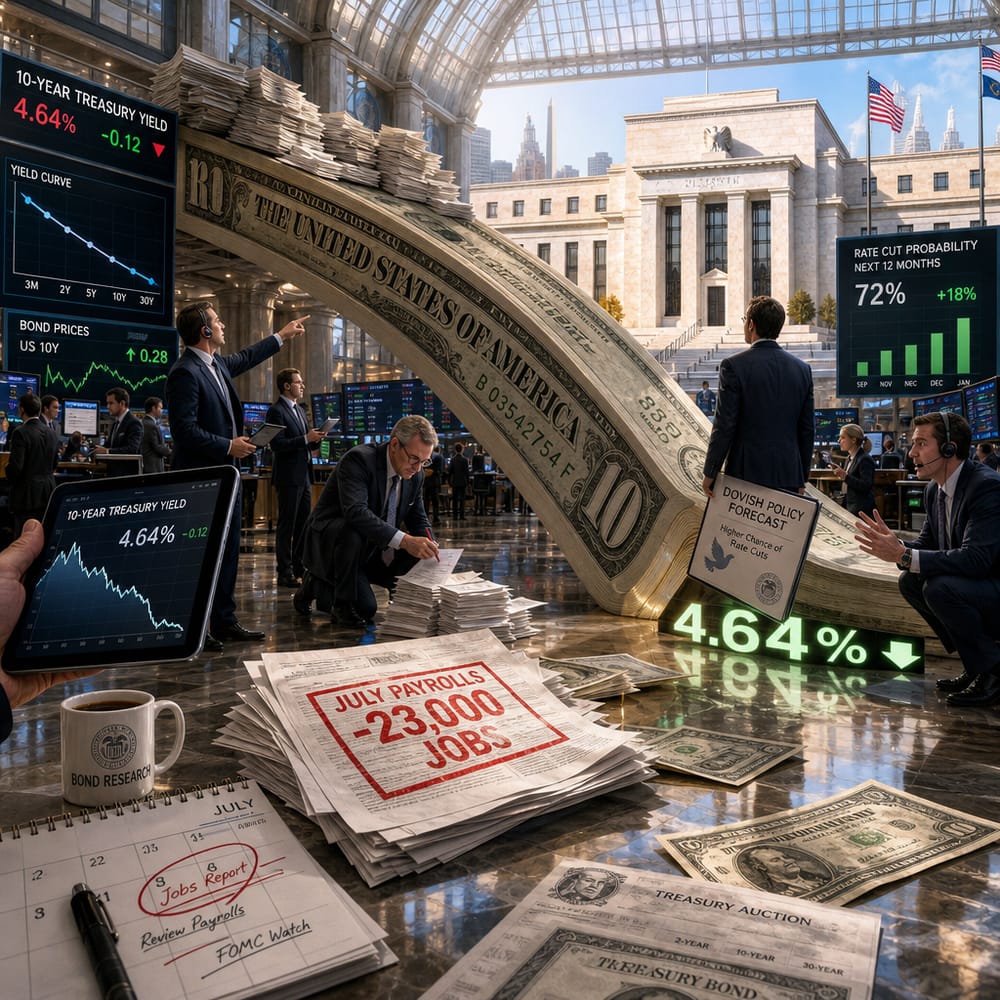
Want to see Wall Street break into a nervous sweat? Just whisper the word "jobs" when the numbers don’t quite add up. Recently, the U.S. economy shed 23,000 jobs, and now the market’s pulse is racing faster than an intern running late for a coffee run. Investors are on edge, eagerly awaiting the Federal Reserve's next move. Meanwhile, the 10-year Treasury yield has gracefully dipped its toes into the pool of 4.64%, signaling that the bond market is doing its best impersonation of a cautious ballerina. But what’s really happening under the hood, and why should you care? Let's dive in.
Let’s get to the meat of the matter. Losing 23,000 jobs when the economy is supposed to be on a growth trajectory is like discovering your favorite pizza joint is out of pepperoni. The immediate effect? Investors are adjusting their expectations for the Fed's future interest rate decisions. They're hoping the Fed will put the brakes on any more rate hikes, making borrowing more affordable, and potentially slowing the relentless march of inflation.
If you’re wondering what the big deal is, consider this: the Federal Reserve uses interest rates to control inflation. High rates make borrowing more expensive, which can cool an overheating economy. But if the Fed hits the brakes too hard, we risk a crash landing into recession territory. With these unexpected job losses, investors are whispering that the Fed might have to take it easy, playing the role of a dovish grandparent rather than a hawkish disciplinarian.
This news swayed the bond market, where the 10-year Treasury yield took a little tumble to around 4.64%. For those not fluent in "Bond Marketish," a lower yield usually means that investors are expecting interest rates to drop, making bonds more attractive relative to riskier investments like stocks. When investors rush to buy these “safe” Treasuries, the price goes up, and the yield – which moves inversely – goes down. It's a classic seesaw effect.
So, what’s the long-term scenario here? If this job loss trend continues, it could spell trouble for economic growth. Fewer jobs mean less consumer spending, which is the lifeblood of economic expansion. It’s a domino effect of ‘less money, less spending, less growth’, and nobody wants to play that game.
For the Federal Reserve, this jobs hiccup is a tricky puzzle. Should the Fed prioritize controlling inflation, which is a bit like taming a wild stallion? Or should it focus on boosting employment, which is kind of like coaxing a cat to take a bath? The dilemma is real, and each choice has its own set of consequences.
While retail investors might have their eyes glued to tech stocks like Gecko-effect AI platforms or electric car companies rivaling sci-fi innovation, this jobs report is a reminder of the market's interconnectedness. It’s a wake-up call that sectors can influence each other in ways that aren’t always obvious at first glance.
As we watch how this unfolds, here are two potential scenarios to consider: If the Fed decides to lower interest rates, borrowing becomes cheaper, which could give businesses more room to breathe and invest. But if they choose to keep rates steady, we might see a slowdown in economic activity, as businesses and consumers tighten their belts. Either way, it’s going to be a rollercoaster ride, and your portfolio might feel it.
In the midst of this financial theater, investors are like cautious gamblers, eyeing every move the Fed makes. Will it be double down or fold? Only time will tell, but one thing's for sure, the Fed’s next decision will be anything but mundane.
For those with their eyes on the market, the trick is to stay informed but calm. Keep an eye on the Treasury yields, watch for any hints from the Fed, and remember, the markets are sometimes as unpredictable as a cat on catnip.
So, as the dust settles from this month’s jobs report bombshell, keep your ears to the ground. Whether you're twiddling your thumbs waiting for the Fed's next move or just trying to make sense of it all, remember that the economic stage is vast and complex. And just like any good drama, the plot could twist at any moment.
This article is for informational purposes only and is not investment advice. Always do your own research or consult a licensed financial professional before making investment decisions.
© Copyright 2024. All Rights Reserved.
© Copyright 2024. All Rights Reserved.