

Markets React to Slightly Worse Inflation Report
Monday, August 31, 2026
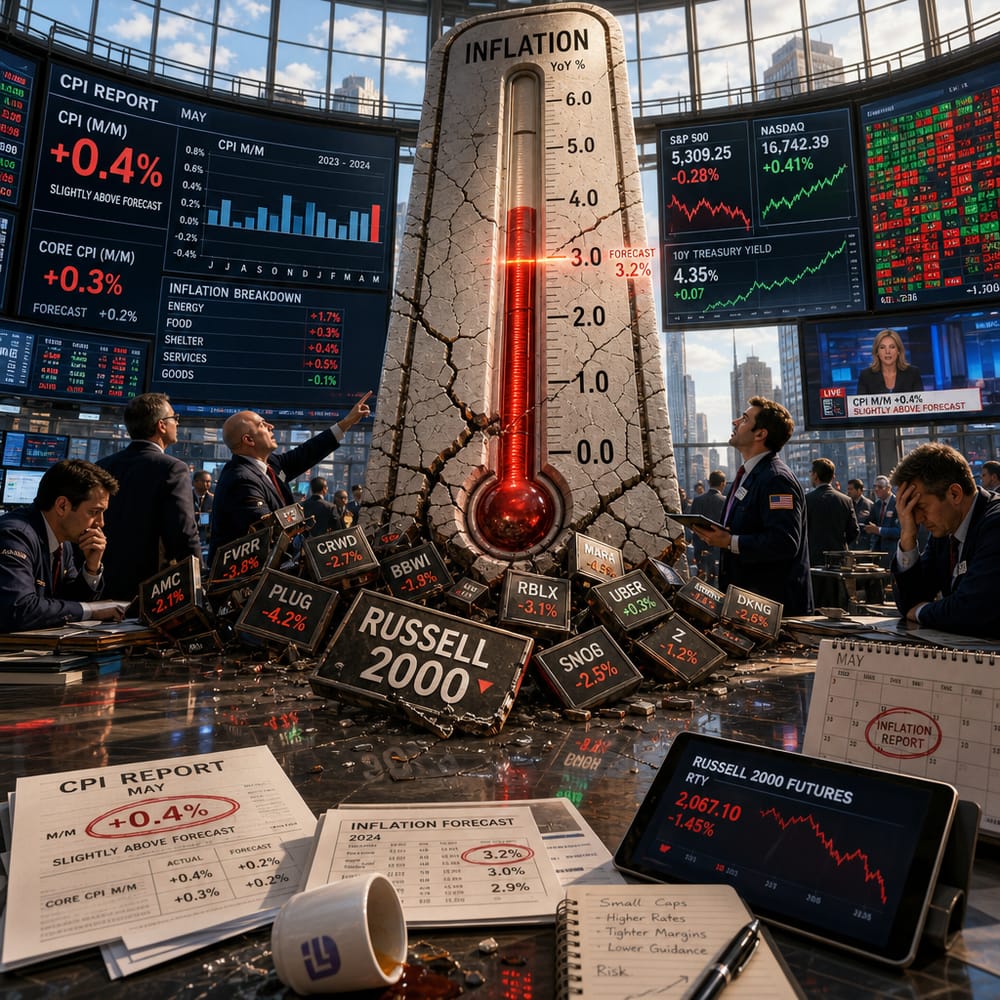
INFLATION SURPRISES: A MIXED REACTION FROM MARKETS
Oh, inflation. The economic nemesis everyone loves to hate. Just when you think it’s behaving, it decides to spice things up. Today's financial scene saw a drama unfold as fresh U.S. inflation data splattered across everyone's screens, leading to a mixed bag of emotions on Wall Street. If you’re into numbers, expectations, and the Federal Reserve’s next move, buckle up.
So, let's dive into what happened. The inflation report that dropped was a tad more spirited than economists had predicted. In the world of finance, that means instead of living up to the average Joe's expectations, inflation decided to party a little harder. It was like reading the weather forecast for sunny skies and waking up to thunder—technically not catastrophic, but definitely inconvenient.
With this slightly overcooked inflation report, the market reacted like a teenager grounded on a Friday night. The Russell 2000, which represents small-cap stocks—think the little guys in the stock market world—registered a slight dip. It’s not as dramatic as the Titanic, but more like a gentle slide down a waterslide. Meanwhile, other parts of the market held their breath, unsure of whether to cheer or jeer.
But why all the fuss over a few numbers on a report? Well, like it or not, inflation data is the crystal ball for the Federal Reserve's future actions. The Fed, which is America’s economic referee, uses this data to decide whether to raise, lower, or leave interest rates alone. Interest rates are like the volume knob on your economic boombox: turn it up, and borrowing money gets pricier; turn it down, and it’s a party for loans and credit.
Now, the Fed’s decision could ripple through the stock market, real estate, and even your savings account. With the fresh inflation figures in hand, investors are speculating like a group of gossiping neighbors. Will the Fed hike rates to calm down the spirited inflation, or will they ride the wave and see where it goes? It’s like waiting to see if a referee calls a foul or lets the game play on.
Over the past few years, the Fed has been in a balancing act tighter than a high-wire trapeze artist. They’re trying to ensure that inflation doesn’t spiral into a 1970s-style disco inferno while also not choking the economic growth that’s sweeter than grandma’s apple pie. This recent inflation hiccup might just complicate their choreography.
The folks who watch these numbers like hawks are also keeping an eye on global developments. With the Bank of England raising alarms about cyber risks and AI models potentially playing havoc with financial stability, the world is not short of external influences that could swing rates one way or another. And let's not forget the geopolitical tension that can influence oil prices and, consequently, inflation.
So, what’s next? Investors will be refreshing their news feeds more frequently than a teenager on TikTok, watching for any word from the Fed. In the meantime, Wall Street will likely continue its roller-coaster ride, with traders screaming their lungs out as stocks zig and zag.
For the everyday investor, it’s a good time to revisit your investment strategy. Consider diversification, which is more than just a fancy finance word. It’s spreading your investments across different asset types to reduce risk, like not putting all your eggs in one basket.
As we wait to see how the Fed reacts, remember that markets will always have their ups and downs—just like life. Inflation might be a bit saucier than expected, but with the right information and strategy, you can navigate these choppy waters like a seasoned sailor. Keep an eye on the markets, stay informed, and remember: even the worst storms eventually pass.
This article is for informational purposes only and is not investment advice. Always do your own research or consult a licensed financial professional before making investment decisions.
© Copyright 2024. All Rights Reserved.
© Copyright 2024. All Rights Reserved.