

Markets Rally into Weekend After Tumultuous Week—Can the S&P 500 Hold Gains Amid Bond Volatility?
Monday, August 24, 2026
MARKETS RALLY INTO WEEKEND AFTER TUMULTUOUS WEEK—CAN THE S&P 500 HOLD GAINS AMID BOND VOLATILITY?
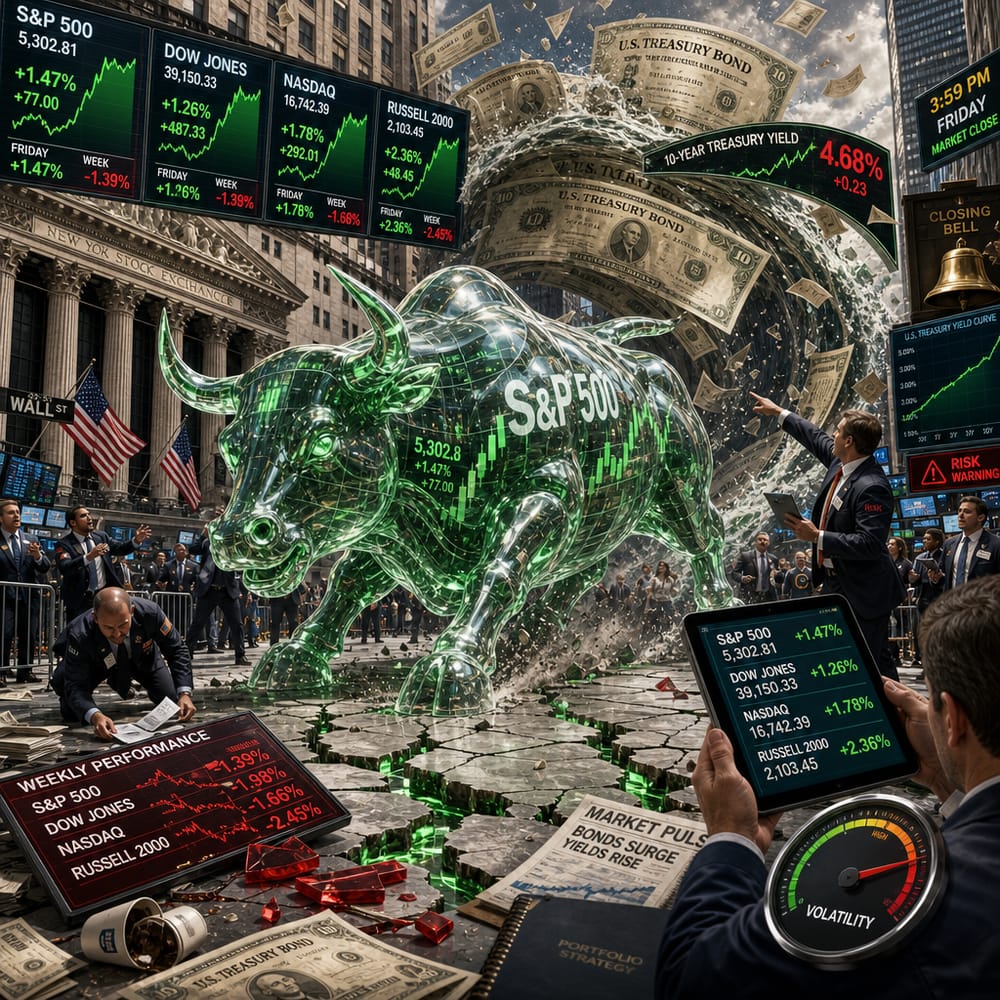
As the sun set on Wall Street Friday, traders might have felt like they just got off a roller coaster. The market’s weekly thriller ended with a surprise rally, but don’t let that Friday high fool you. Like a mystery novel with too many plot twists, the U.S. equities market wrapped up the week lower, and onlookers are left wondering: Can the S&P 500 hold its gains amid ongoing bond market turbulence?
Let’s rewind a bit. If you felt like you needed a seatbelt for this week's market ride, you were not alone. Rising U.S. Treasury yields had investors holding onto their hats all week. Yields, which are essentially interest rates on government bonds, kept climbing, casting a shadow over the stock market. Why does this matter? Well, when bond yields go up, borrowing costs for companies rise, squeezing profit margins and leaving investors clutching their pearls.
But wait, there's more. On Friday, just when you thought the market would stay down for the count, equity markets pulled a Rocky Balboa. The S&P 500, Dow Jones, and Nasdaq all rallied, leaving investors scratching their heads and whispering, "How did that happen?"
So, what breathed life into the markets on Friday? Analysts point to a mix of short-covering—a fancy term for investors buying back stocks they’d bet against—along with a steady flow of upbeat corporate earnings reports. Also, a sprinkle of optimism that inflation might be cooling down didn’t hurt. Yet, despite Friday’s flourish, the S&P 500 ended the week with a frown rather than a smile.
Now, let's talk about the elephant in the room: bond-market volatility. This isn't just a subplot; it's the main narrative. Rising yields signal that investors expect higher interest rates ahead, possibly due to persistent inflation or economic growth. If yields continue to climb, it could spell trouble for equity valuations, which are supposedly based on future cash flows discounted back at prevailing interest rates. Higher rates mean lower present values, and suddenly, that shiny tech stock doesn’t look as attractive.
For retail investors binge-watching their portfolios, the big question is, "What happens next?" The bond market’s relentless pressure suggests caution. Investors with a weak stomach for volatility might want to brace for more bumps on this journey. Opportunities could exist for those with a strong constitution and a nose for bargains, particularly if market fears drive stock prices below their underlying value.
And let’s not ignore the global stage. Trade tensions are heating up like a summer barbecue with President Trump’s latest tariff threats against Canada. Higher tariffs could disrupt trade flows and add more uncertainty to the mix. Meanwhile, AI is both a darling and a devil on Wall Street. While tech stocks like Nvidia draw attention with bold investments, some warn that the rapid spread of AI could lead to decision-making debacles, both on trading floors and within companies.
As we look to the coming week, keep an eye on economic indicators and central bank chatter. Investors will be pinning hopes on any sign of the Federal Reserve easing its hawkish stance on interest rates. For now, the smart money may be on maintaining a balanced portfolio. Think of it as equipping your financial fort with both stocks and bonds—because while the stock market swings like a pendulum, bonds offer a steady hand.
In the grand scheme of things, markets are like the weather: unpredictable but fascinating. So, whether you're trading from a beach lounger or a bustling city café, remember to keep your seatbelt fastened. We might be in for another wild ride.
This article is for informational purposes only and is not investment advice. Always do your own research or consult a licensed financial professional before making investment decisions.
© Copyright 2024. All Rights Reserved.
© Copyright 2024. All Rights Reserved.