

Markets Price Out October Fed Hike After Tepid Jobs Gain
Saturday, October 03, 2026
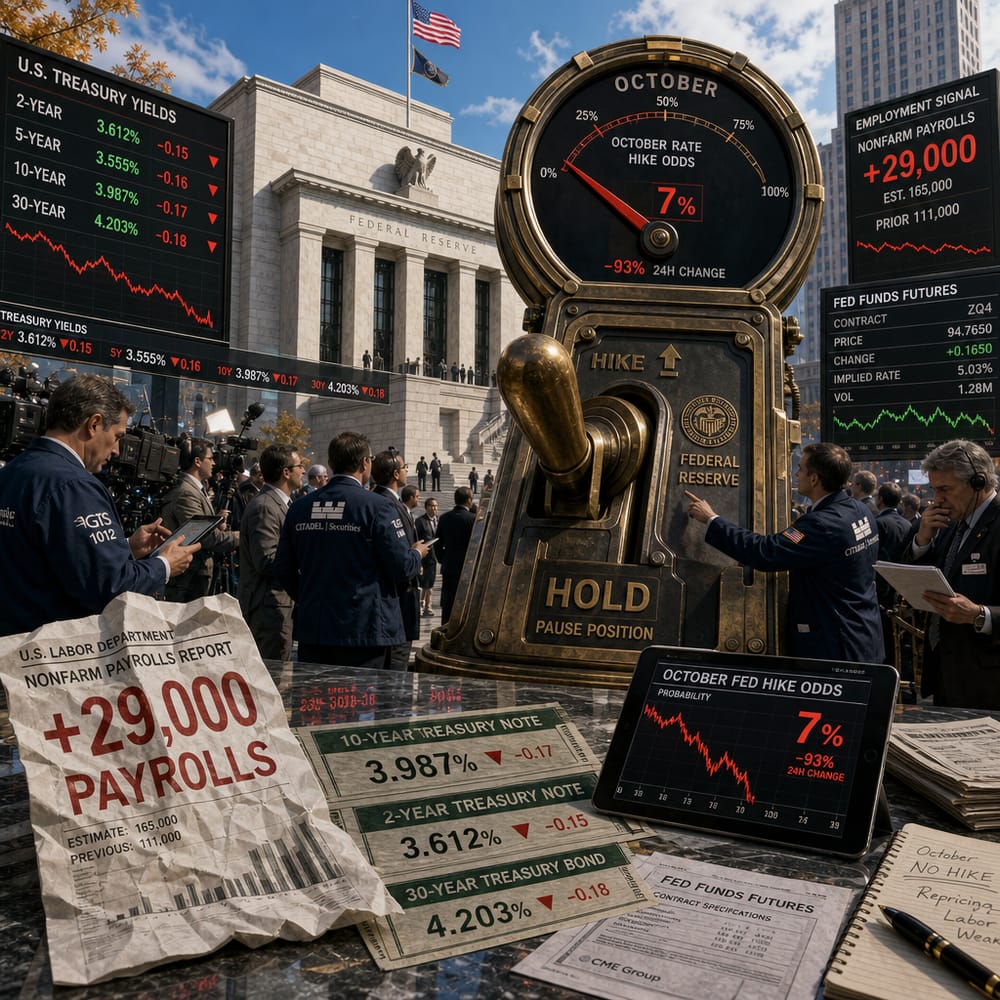
MARKETS PRICE OUT OCTOBER FED HIKE AFTER TEPID JOBS GAIN
In a plot twist worthy of a financial thriller, the U.S. labor market just threw a wrench in the Federal Reserve's grand rate-hiking plans. September's job report landed softer than a marshmallow in a foam pit, with a mere 29,000 jobs added. That’s a big fat yawner compared to what everyone was expecting. And it could be the signal the Fed needs to slam the brakes on its relentless interest rate hikes.
For the uninitiated, the Federal Reserve—think of them as the gatekeepers of the economy’s caffeine levels—has been in overdrive mode, raising interest rates to cool down the economy and keep inflation from sizzling too hot. But now, with the labor market showing signs it’s more worn out than Uncle Joe after Thanksgiving dinner, the urgency to ramp up rates might just be fading.
So, why does this lackluster job growth matter? Well, here’s the thing: many look to employment numbers as a thermometer for the economy’s health. More jobs usually mean more money flying around—which can heat up inflation. But when job growth peters out, it suggests a slowdown, which can prompt the Fed to chill out on rate hikes.
But what does this mean for you, your savings account, and that impulsive stock market app purchase you made last week? Let’s break it down.
THE FED’S RATE HIKE PLAYBOOK
First up, how does this jobs report affect the Federal Reserve’s plans to hike rates? Well, imagine you’re running a marathon but just found out you left your lucky running shoes at home. It doesn’t mean you can’t finish the race, but it might slow your pace. A weak job growth report is a bit like discovering you forgot your shoes—it suggests it's time to reassess the pace.
With fewer jobs added than expected, the Fed might hold off on a rate hike in October. The futures market—a place where traders bet on what’s next for interest rates—has already adjusted to this new reality. They're pricing out the odds of an October hike like it’s an outdated fashion trend. And without the threat of immediate rate hikes, U.S. Treasury yields might take a breather, giving borrowers a little sigh of relief.
WHAT IT MEANS FOR THE ECONOMY
Now, zooming out to the bigger picture, what does this mean for the economy as a whole? Lower employment growth can be a double-edged sword. On one hand, it might help ease inflation pressures, giving the Fed room to pause its rate hike spree. On the other hand, it could signal that the economy's growth engine is sputtering, which isn’t exactly champagne-popping news.
If the Fed decides to take a chill pill and postpone hiking interest rates, borrowing could become a tad less expensive. That’s music to the ears of homeowners looking to refinance or businesses planning to expand. But it’s not all sunshine and rainbows—if the labor market continues to weaken, it might be a heads-up that economic growth is about to take a nap, which could spell trouble down the line.
MARKET REACTIONS
So, how are markets reacting to this turn of events? Well, like a cat who's just spotted a laser pointer, they’re jittery and uncertain. The news of tepid job growth sent a shiver through the stock market, as investors recalibrated their expectations for the future. Meanwhile, bond markets—where the Fed’s rate decisions really make waves—are adjusting to the idea of a potential pause in rate hikes. U.S. Treasury yields, which were on a steady climb, might find themselves on a gentler slope going forward.
But here’s where it gets spicy for you, the retail investor. If the Fed indeed hits pause on rate hikes, stock markets might breathe a sigh of relief, as businesses face lower borrowing costs and potentially higher profits. However, it’s a delicate dance because prolonged weak job growth might eventually dampen corporate earnings if consumer spending takes a hit.
In the end, this latest jobs report has handed the Fed, and everyone else tuned into the financial soap opera, a lot to chew on. As we wait for the next move in this economic chess match, one thing’s for sure: there’s never a dull moment in the world of finance. So keep your popcorn handy and your investment strategies nimble—because the only constant in the markets is change.
This article is for informational purposes only and is not investment advice. Always do your own research or consult a licensed financial professional before making investment decisions.
© Copyright 2024. All Rights Reserved.
© Copyright 2024. All Rights Reserved.