

Markets Price in a Second Fed Rate Hike as Inflation Pressures Mount
Thursday, September 24, 2026
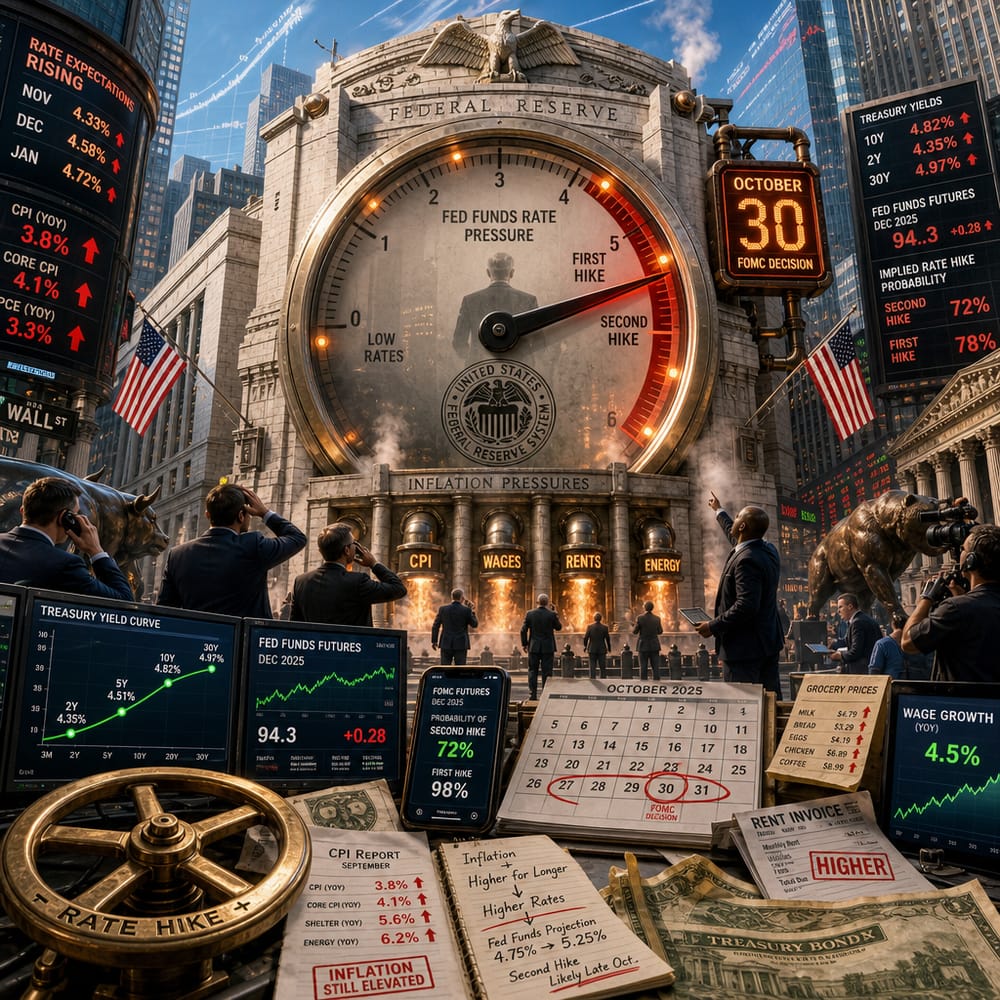
MARKETS PRICE IN A SECOND FED RATE HIKE AS INFLATION PRESSURES MOUNT
Brace yourselves, retail investors: the Federal Reserve might just crank up interest rates again, and the markets are already bracing for it. Forget the serene days of low borrowing costs; we’re wading into the choppier waters of higher rates and persistent inflation. Let's break down what's happening and what it might mean for your wallet.
Right now, the futures markets are hinting that a second rate hike could be on the horizon, possibly as soon as late October. But what’s fueling this speculation? Spoiler alert: it’s not just a hunch. Inflation is playing its stubborn role, refusing to budge and complicating life for everyone from policymakers to everyday investors.
INFLATION: THE UNWELCOME GUEST THAT WON'T LEAVE
Inflation, the economic party crasher that most would rather do without, has shown remarkable resilience. Despite the Fed's best efforts, prices are still climbing, thanks in part to higher energy costs and a global financial arms race that has everyone on edge. Treasury yields are climbing, signaling that investors are demanding higher returns to offset future inflation risks. This makes borrowing more expensive, effectively pouring cold water on growth.
THE RATE HIKE RIPPLE EFFECT
Imagine the economy as a giant domino setup. A rate hike by the Fed? That’s the hand flicking the first domino. As interest rates rise, borrowing costs for everything from mortgages to business loans go up. Consumers might think twice before taking out a loan for that new house or car, which in turn can slow down consumer spending—a key driver of the economy.
Higher rates can also put the pinch on stock investors. Companies facing heftier borrowing costs might see their profits squeezed, which often translates to less attractive stock valuations. The fallout? Stock prices could stagnate or drop, particularly in sectors that are sensitive to interest rates, like real estate and utilities.
WHAT ABOUT MY PORTFOLIO?
Alright, savvy retail investor, what does this all mean for you? If the Fed pulls the trigger on another rate hike, you might want to reassess your investments. Bonds could become more attractive, offering higher yields. But be careful: bond prices move inversely to yields, so existing bonds in your portfolio might take a hit.
On the stock front, consider the sectors that tend to weather interest rate storms better, such as technology and consumer staples—after all, people still need toothpaste and tech gadgets, no matter the economy. Keep an eye on financials too; banks might benefit from higher interest rates as they can charge more for loans.
THE WAIT-AND-SEE GAME
But why the fuss over what the Fed might do? Because central bank decisions are like the winds of change in the economy—an inevitable force that sways markets. The anticipation itself can move markets as much as the actual decision, so staying ahead of the game is crucial.
For now, keep an eye on key economic indicators like job reports and consumer price index data, which could sway the Fed's decision. The Fed’s next steps will likely depend on how these numbers shake out in the coming weeks.
In the end, the potential rate hike is more than just a line item on the Fed’s agenda. It's a pivotal moment that could shape the economic landscape moving forward. So, buckle up and stay informed. Keep your investing strategy flexible and your eyes on the prize. After all, markets are like life: unpredictable, but always full of opportunity for those who know where to look.
This article is for informational purposes only and is not investment advice. Always do your own research or consult a licensed financial professional before making investment decisions.
© Copyright 2024. All Rights Reserved.
© Copyright 2024. All Rights Reserved.