

Markets Plunge to Correction: S&P, Nasdaq, Dow, Small Caps All Under Pressure
Saturday, November 21, 2026
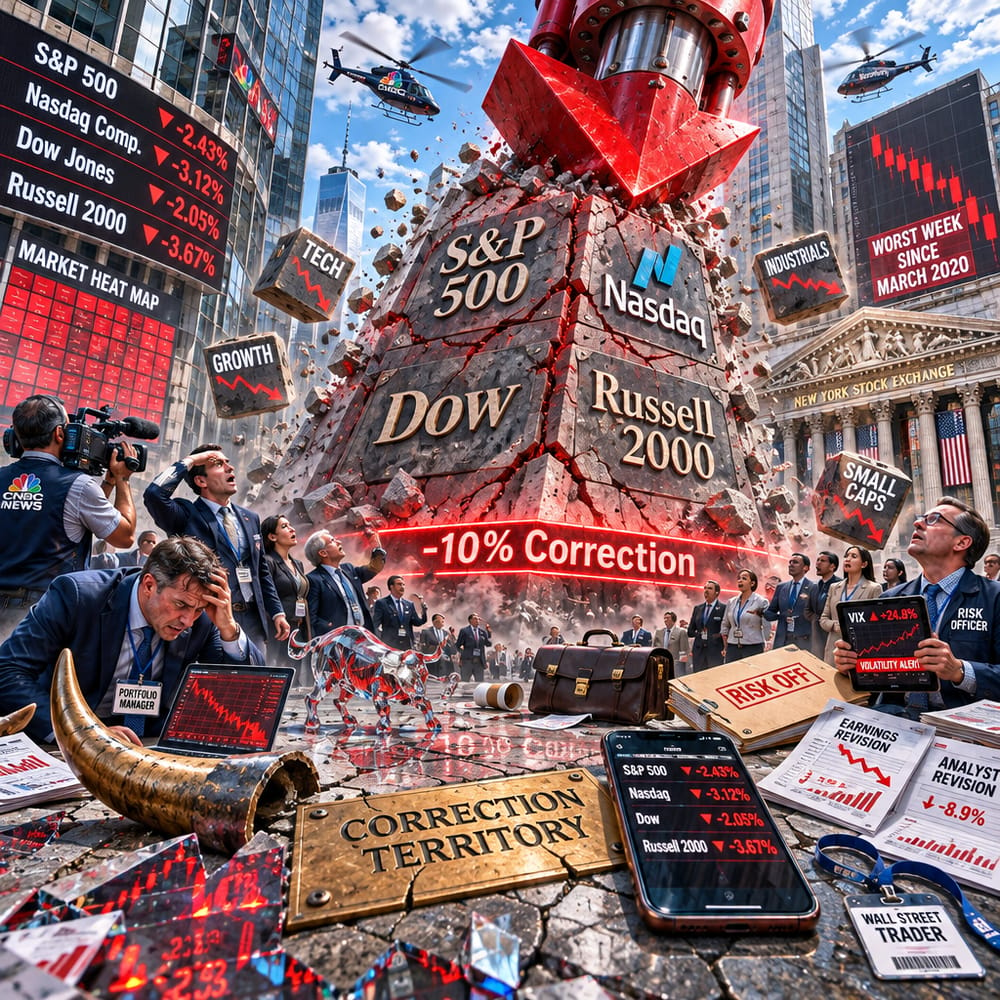
MARKETS PLUNGE INTO CORRECTION: S&P, NASDAQ, DOW, SMALL CAPS ALL UNDER PRESSURE
Take a deep breath and put down your phone, because the stock market’s recent nosedive has turned into a full-blown correction. It’s not just the S&P 500 doing the limbo with investor expectations—major indexes like the Nasdaq, Dow Jones Industrial Average, and Russell 2000 are all caught in the same downward dance. The last time we saw a collective stumble like this was back in March 2020, when the world hit pause and hoarded toilet paper. So, what's gone wrong this time, and what does it mean for the future?
Before you start frantically stuffing your cash back under the mattress, let's unpack what’s happening here. The term “correction” is Wall Street lingo for a decline of 10% or more in the price of an asset from its most recent peak. And while it sounds scary, it’s kind of like a financial spring cleaning. Overvalued stocks get a much-needed reset, and hopefully, the market emerges more balanced and less frothy than before. But getting there can be a rollercoaster of worry and second-guessing, especially for retail investors.
HISTORICAL CONTEXT: CORRECTIONS IN THE REARVIEW MIRROR
Historically speaking, market corrections are about as common as mid-afternoon coffee breaks. They happen about once every two years and can last anywhere from days to several months. Some of the most notable corrections include the dot-com bubble burst of 2000 and the financial crisis of 2008—periods that taught us painful lessons about the dangers of inflated valuations and excessive risk-taking.
Now, the burning question: Are we staring down the barrel of another major market slump, or is this just another bump in the investing road? Scanning the current landscape, several factors are stirring up investor anxiety. Concerns about lofty valuations, especially in tech and AI stocks, have been brewing for months. The recent Anthropic IPO, despite being hailed as a success, failed to calm jitters about whether we’re all just hopped up on AI hype.
INVESTOR SENTIMENT: A SWINGING PENDULUM
Investor sentiment tends to swing like a pendulum during corrections, and this one’s no different. When markets tumble, it’s easy to get swept away by the tide of negativity—not to mention, fear can zap your decision-making prowess faster than Netflix can release a new series. But here’s the kicker: Corrections often create opportunities for investors with a keen eye and a cool head. Stocks that seemed overpriced just weeks ago may soon become reasonable targets for those willing to ride out the waves.
Digging deeper, there's a mixed bag of reactions in different sectors. Companies that had been riding the AI wave—often on very high valuations—are suddenly finding themselves under the microscope. Meanwhile, some unloved corners of the market, like consumer staples, are drawing new interest. Brands like Clorox and Campbell’s are suddenly looking more heroic than humble. In shaky times, people still need their soup and bleach, after all.
WHAT’S NEXT? THE ROAD AHEAD
Looking forward, the market’s direction will hinge on several wildcards. Inflation and interest rates are likely to keep rippling through stocks like an unruly toddler on a sugar high. Investors are also keeping a wary eye on geopolitical tensions and regulatory squabbles, such as the state and federal tug-of-war over prediction markets.
Seasoned investors might remember Warren Buffett’s golden nugget of wisdom: “Be fearful when others are greedy, and greedy when others are fearful.” With the Oracle of Omaha himself quadrupling his Thanksgiving donations, it’s worth considering whether he sees this as a time to lean in rather than check out.
So, what should the everyday investor do in this sea of red? For starters, keep your emotions in check. A long-term perspective is your best friend when investing. Consider dollar-cost averaging—a strategy that involves investing a fixed amount at regular intervals, which can help smooth out the volatility. And maybe, just maybe, resist the urge to peek at your portfolio every ten minutes. Remember, market corrections, like bad haircuts, eventually grow out.
In the end, while no one can predict the market’s next move with certainty, understanding the historical context of corrections and keeping a level head can help you navigate these choppy waters. So, buckle up, stay informed, and remember: the market, much like your favorite rollercoaster, comes with its fair share of ups and downs.
This article is for informational purposes only and is not investment advice. Always do your own research or consult a licensed financial professional before making investment decisions.
© Copyright 2024. All Rights Reserved.
© Copyright 2024. All Rights Reserved.