

Markets in Free Fall: S&P 500 Slides 8.6% in Worst Week Since 2025
Saturday, November 21, 2026
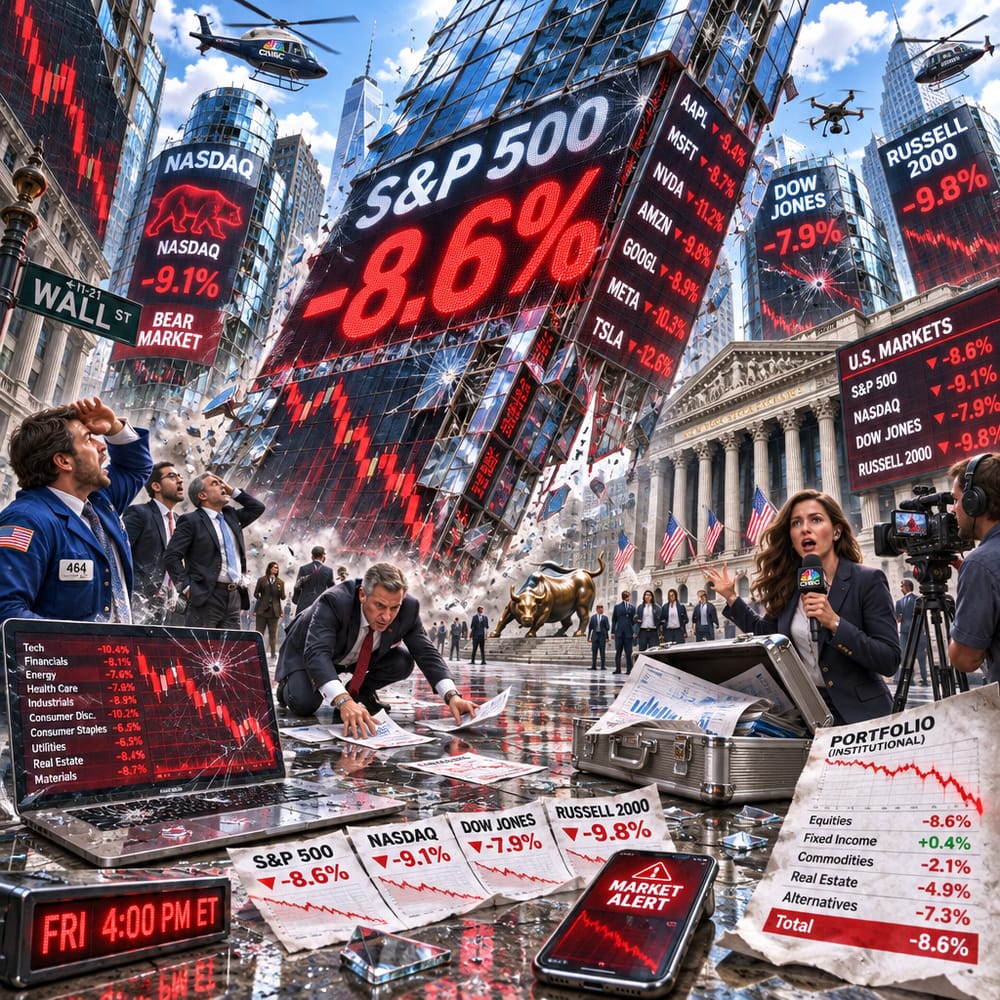
MARKETS IN FREE FALL: S&P 500 SLIDES 8.6% IN WORST WEEK SINCE 2025
Brace Yourself: Wall Street just experienced the financial equivalent of a nosedive on a rollercoaster, with the S&P 500 plunging 8.6% in what’s being dubbed its worst week since 2025. As the dust settles, investors are left wondering: Is this just a bad week, or are we staring down the barrel of a full-blown bear market?
If you're scratching your head, let's break it down. In the heart of the market's tumultuous week, the Nasdaq went and did the unthinkable—it entered bear market territory. For those less versed in Wall Street lingo, that means it’s fallen more than 20% from its recent highs. Cue the financial analysts and their charts, because everyone’s now hunting for signals as to whether this storm is passing or just beginning.
So, why the market meltdown? First off, let's talk about the coolest kid at the stock market party: Artificial Intelligence, or AI. For the past few years, AI stocks have been treated like the prom queen—everyone wanted a piece. But lately? Investors are wondering if they overpaid for the corsage. There's a creeping concern that AI stocks were overvalued, and now they're feeling the heat as expectations come down to earth. Tech companies that once basked in the glow of sky-high valuations are now taking a good, hard look in the mirror—and they’re not loving the sudden reality check.
Then there’s the macroeconomic backdrop. Interest rates are like the market’s mood ring, and right now, they're giving off some conflicting vibes. The Federal Reserve has been on a rate-raising spree to combat inflation, but with higher rates, borrowing becomes pricier. That’s a cold splash of water for businesses and consumers alike, dampening spending and, consequently, profits. And let’s not forget the global economic jitters—everything from geopolitical tensions to supply chain snafus is adding fuel to the fire.
But back to the burning question—is this just a passing squall, or are we in for a prolonged bear hug? It’s a mixed bag. Some market watchers say we're just experiencing growing pains, arguing that the fundamentals of the economy remain robust. Others are more pessimistic, pointing to the selloff as an omen of tougher times ahead.
Investors, ever the unpredictable bunch, are reacting in a myriad of ways. The cautious ones are pulling cash out of equities, wary of further losses. Meanwhile, the thrill-seekers are diving in, hoping to snag a bargain during the chaos. It’s a classic case of glass-half-full versus glass-half-empty.
Among the indices, the Dow Jones and Russell 2000 also bore the brunt of this week's carnage, tasting a cocktail of losses that left many portfolios looking hungover. Stockholders in these indices are now playing defense, reassessing their strategies and hedging their bets.
What’s next? Well, keep an eye on a few things. For starters, any signals from the Fed about interest rates could be a major catalyst for the next bout of market volatility. Then there’s corporate earnings, set to reveal whether companies are weathering the economic turbulence or floundering. And of course, global economic developments—from China’s economic policy to Europe’s energy crisis—will continue casting long shadows over the U.S. market.
For now, investors might do well to keep their seatbelts fastened. Markets could stabilize if we get positive news on any of these fronts. But as it stands, the S&P 500’s tumble is the sort of wake-up call that has everyone reevaluating their portfolios and bracing for what’s next. This wild ride might just be starting, and you’ll want to hang on tight.
This article is for informational purposes only and is not investment advice. Always do your own research or consult a licensed financial professional before making investment decisions.
© Copyright 2024. All Rights Reserved.
© Copyright 2024. All Rights Reserved.