

Markets Grapple with Hawkish Fed Signals After September Hike
Saturday, September 26, 2026
MARKETS GRAPPLE WITH HAWKISH FED SIGNALS AFTER SEPTEMBER HIKE
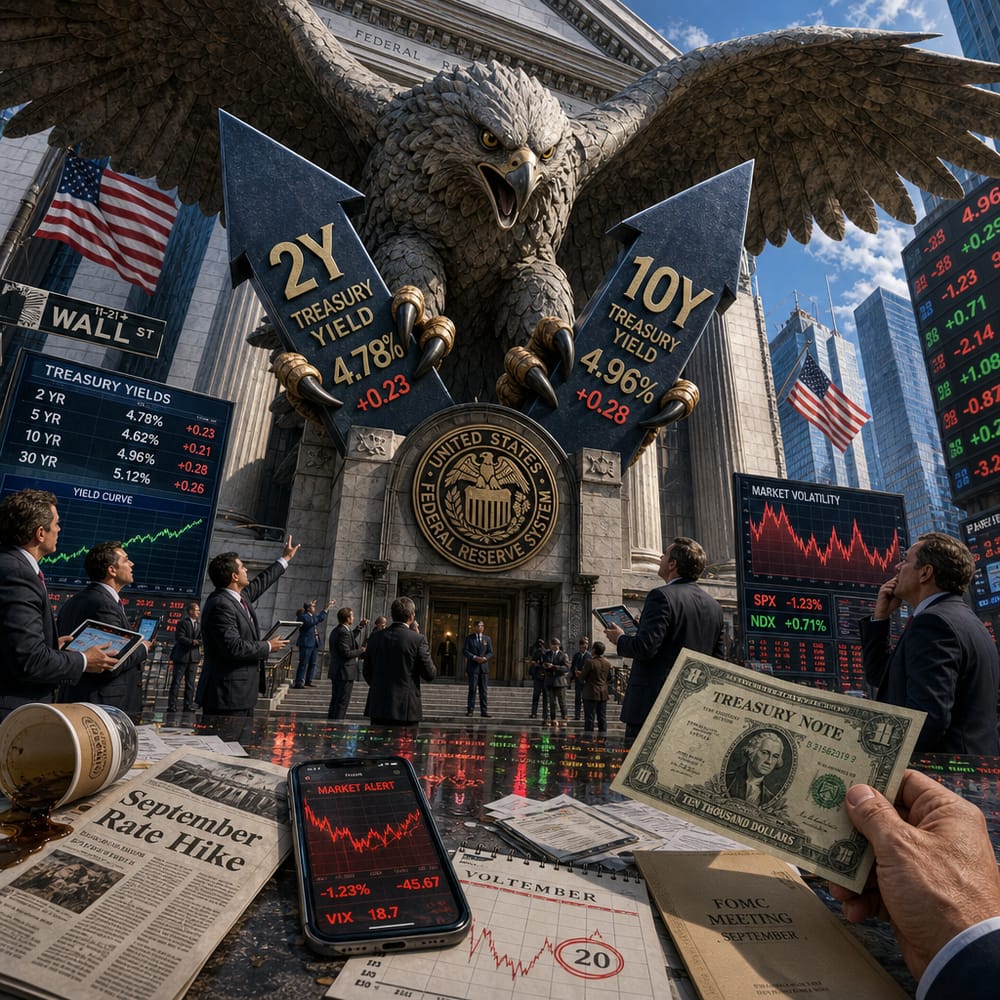
Buckle up, folks—Wall Street is riding a rollercoaster, courtesy of the Federal Reserve. Just when you thought it was safe to check your portfolio without a defibrillator nearby, the Fed drops another rate hike, sending Treasury yields soaring like a rocket strapped to a comet. The 2-year and 10-year Treasury yields are the talk of the town, with the kind of attention usually reserved for celebrity divorces and reality TV scandals.
But why should you care about a bunch of numbers and percentages, you ask? Well, understanding the Fed's trajectory influences market direction and, let's be honest, keeps your investment dreams from turning into nightmares.
THE FED'S HAWKISH STANCE
Let's break it down: the Federal Reserve is acting like your strict uncle who's always ready to tighten the reins at the first sign of inflation, and it's not afraid to show it. A hawkish Fed isn't a bird with an attitude problem; it's central bank lingo for prioritizing higher interest rates to keep inflation in check. September's rate hike was like a shot of espresso for Treasury yields, waking them up to levels not seen since your first flip phone had Snake on it.
What does this mean for future monetary policy? In plain English: get ready for more of the same. With inflation concerns bubbling like a pot left too long on the stove, the Fed is likely to keep the rate hikes coming. Investors are now glued to their screens, hanging on every word from Fed Chair Jerome Powell as if he's the Adele of monetary policy—every announcement is a chart-topper.
BOND MARKETS AND YIELDS
Now, let's talk bonds. The 10-year Treasury yield is playing the long game, touching its highest levels since the mid-2000s, and it's not alone. The 2-year Treasury yield is also on a wild ride, reflecting short-term expectations for the Fed's moves. As yields go up, bond prices go down. It's the financial equivalent of a seesaw—what goes up must come down, and vice versa.
For investors, this isn't just spreadsheet fodder. Rising yields mean higher borrowing costs across the board—think mortgages, car loans, and that swanky new kitchen remodel you had your eye on. It's like inflation is turning your American Dream into a slightly less ambitious afternoon nap.
THE VOLATILITY ROLLERCOASTER
The market volatility spurred by hawkish Fed signals isn't just a hiccup in your daily stock check; it's a full-blown case of financial heartburn. Stocks and sectors are reacting like cats in a room full of rocking chairs. Some investors are bolting for the safety of cash or gold, while others are eyeing emerging markets, hoping to snag a bargain amongst the chaos.
So, how should Joe Investor play this? With a mix of caution and curiosity, like testing the waters of a hot tub that might be a tad too hot. Keep an eye on economic indicators, and remember that today's turmoil can pave the way for tomorrow's opportunities. Diversifying your portfolio might sound like something your dad would say, but it's true—hedging your bets across different asset classes is like having a financial Swiss Army knife.
BOTTOM LINE
In this grand drama of markets and monetary policy, understanding the Fed's moves isn't just an exercise in economics—it's a survival skill. While the Treasury yield seesaw can make your head spin, staying informed is your best defense against financial vertigo. The Fed might be cranking up the heat, but with a careful eye and a steady hand, investors can navigate the frothy waters and come out the other side with their portfolios intact and maybe a new appreciation for the excitement of it all.
In the meantime, keep a close watch on those Treasury yields and Fed announcements like they're the latest season of your favorite binge-worthy show. Because in the world of finance, you never know when the plot will twist or the Fed will raise rates—again.
This article is for informational purposes only and is not investment advice. Always do your own research or consult a licensed financial professional before making investment decisions.
© Copyright 2024. All Rights Reserved.
© Copyright 2024. All Rights Reserved.