

Markets Eye Another Fed Rate Hike by Year-End as Officials Signal Persistence
Saturday, October 10, 2026
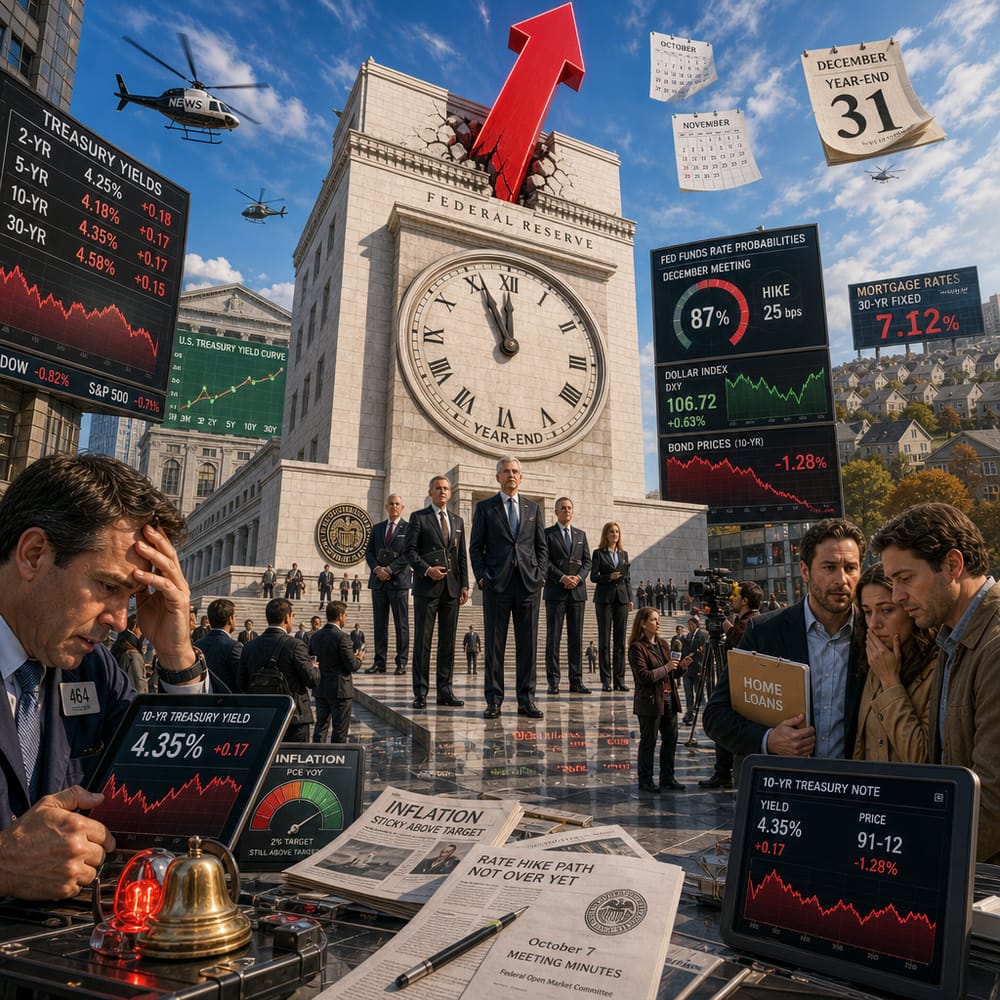
MARKETS EYE ANOTHER FED RATE HIKE BY YEAR-END AS OFFICIALS SIGNAL PERSISTENCE
If you thought the Fed's rate hikes were over, think again. The Federal Reserve seems to be channeling its inner Rocky Balboa—ready to go another round in the fight against inflation. According to the minutes released on October 7, another rate hike is likely by the end of the year, as officials are still worried about inflation creeping around like a nosy neighbor eyeing your Amazon packages.
So, what's the real story here? First, let's talk odds. The Fed has been dropping hints like a magician losing cards from his sleeve, suggesting that a December rate hike is not a pie-in-the-sky scenario but more like finding out your favorite Netflix show is getting a spin-off. In other words, it feels inevitable.
A December hike isn't just idle chatter in the Fed's group chat. Concerns about persistent inflation are alive and kicking. Inflation is that party guest who doesn't know when to leave, and it’s affecting everything from consumer borrowing to mortgage rates. If you're dreaming of buying a home, brace yourself: mortgage rates could climb higher than your expectations for the next season of "The Crown."
Now, about those mortgage rates. They're as sensitive to Fed rate hikes as I am to spoilers. When the Fed lifts rates, borrowing costs follow suit like a well-trained puppy. A December hike would likely nudge mortgage rates up again, making it even pricier to finance a home. Essentially, if you're in the market for a house, you might want to lock in your rate quicker than it takes to regret your DIY kitchen renovation.
But it's not just homebuyers who need to pay attention. If you love swiping that credit card, a rate hike means higher interest rates on unpaid balances. So unless you enjoy shelling out extra dollars to your bank, it’s time to consider paying off that shopping spree a bit faster.
Beyond the personal finance hit, a rate hike sends ripples through the broader markets. Investors have already been jittery, with equity markets feeling like they're on a seesaw, lifted one minute and dropping the next. Higher rates can cool off stock market enthusiasm faster than a surprise snowfall in April. This is because higher rates often make it more expensive for companies to borrow and grow, which can lead to lower earnings and, you guessed it, lower stock prices.
But hey, it’s not all doom and gloom. For those of you with a penchant for U.S. Treasury bonds, higher rates could mean better yields. If you’re the conservative investor type, now might be a great time to check out those bond markets. Remember, one investor’s turmoil is another’s opportunity—or so the saying goes.
Here’s where it gets interesting: the Fed’s resolve to tackle inflation shapes a kind of economic chess game. The stakes are high, and everyone is watching to see if the Fed can manage a soft landing—bringing inflation down without triggering a recession. It’s like walking a tightrope over the Grand Canyon, and everyone’s holding their breath to see if they’ll make it across without a wobble.
Yet, questions remain. Can the Fed continue hiking rates without pressing the self-destruct button on consumer spending? Will the housing market shudder under the weight of even higher mortgage rates, or will buyers adapt like they always seem to? And how will businesses balance the cost of capital with the need to innovate and grow?
As we gear up for what could be a pivotal end to the year, one thing is clear: stay informed, keep your financial wits about you, and maybe keep a stress ball handy—2026 is shaping up to be a roller coaster ride, and we're all strapped in.
This article is for informational purposes only and is not investment advice. Always do your own research or consult a licensed financial professional before making investment decisions.
© Copyright 2024. All Rights Reserved.
© Copyright 2024. All Rights Reserved.